
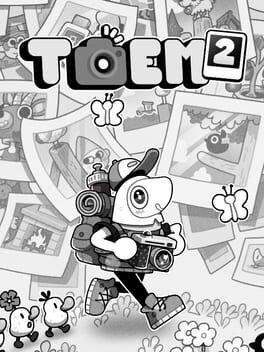

TOEM 2 now has a September 29, 2026 release date for PS5, PC, and Nintendo Switch, with new camera tools, richer 3D art, and the original game's cozy stamp-hunting structure returning.
Image: IGDB
Store links: Toem 2 on Steam
TOEM 2 now has a firm September date, after missing summer
TOEM 2 will launch on September 29, 2026, giving Something We Made’s photography sequel a concrete date after an earlier summer release window. Eurogamer reports the date for Nintendo Switch 1 and 2, PC, and PS5, while Niche Gamer, Console Creatures, MonsterVine, and Nintendo Everything all cite September 29 for Switch, PS5, and PC or Steam. Niche Gamer notes that the date slightly misses the original summer window.
That small timing shift is the tension around an otherwise clean announcement. TOEM 2 is still arriving in 2026, but the new date moves it from a broad seasonal promise into the busy early autumn corridor where indie games often need a sharper identity to be noticed. TOEM has one. It is the rare photo adventure whose hook is immediately legible: take pictures, help strangers, earn stamps, move on, and leave with a scrapbook of tiny discoveries.
The sequel’s release date trailer, cited by Eurogamer and Nintendo Everything, appears to be brief, and the available details remain selective rather than exhaustive. We have platforms, date, broad mechanics, and a clearer sense of how the sequel expands the original’s structure. We do not yet have confirmed pricing, file size, performance targets, physical edition plans, or any upgrade-path details between Nintendo Switch and Switch 2.
The confirmed platforms are clear, except for one Switch 2 wrinkle
The safest confirmed platform list across the available reporting is PS5, Nintendo Switch, and PC, with Steam specifically named by Niche Gamer and MonsterVine via the game’s Steam listing. Console Creatures also lists PS5, Switch, and PC. Nintendo Everything focuses on the Nintendo Switch release date and says the Switch version had been shared earlier this year during an Indie World Showcase.
Eurogamer goes a step further by reporting Nintendo Switch 1 and 2, PC, and PS5. That creates a useful distinction for readers: the broader reporting consistently supports a Switch release, but only the supplied Eurogamer text explicitly separates Switch 1 and Switch 2. Until platform holders, Something We Made, Popagenda, or storefront listings clarify version specifics, owners of Nintendo’s newer hardware should treat Switch 2 support as reported by Eurogamer rather than fully detailed in the wider announcement materials here.
Popagenda is named as co-publisher by MonsterVine and Nintendo Everything, while Something We Made remains the developer repeatedly cited across sources. For PC players, the practical pointer is simpler: Niche Gamer and MonsterVine both identify Steam as the PC storefront currently tied to the announcement. The Steam page is also where players are most likely to find final pricing, system requirements, and launch-day availability details once those are posted.
What made the first TOEM stick was its confidence in smallness
The original TOEM found an audience because it understood the pleasure of looking closely. Eurogamer’s 2022 review, which awarded the game an Essential badge, described a grayscale newsprint world where the player travels from bus stop to bus stop with a camera. At each stop, photographs solve conundrums for local characters. Solved conundrums earn stamps, and enough stamps unlock the next ticket. The reward is not power escalation or a sprawling checklist. It is the roll of photos documenting the places and people you noticed along the way.
That structure gave TOEM a rare gentleness without making it passive. The player still had to observe, frame subjects, read social clues, and figure out what an odd request really meant. Console Creatures, which recommended the original in 2021, highlighted its charm, wit, goofiness, presentation, and photography mechanics, while saying the game respected the player’s time. In an indie scene full of cozy games that can blur together, TOEM’s camera was a mechanical lens as much as an aesthetic one.
The game’s reception was not limited to warm review quotes. Eurogamer notes that TOEM went on to win Best Debut at the 18th British Academy Games Awards. That award helps explain why a TOEM sequel arrives with expectations that are unusually specific. Returning players are not simply looking for another black-and-white postcard. They are looking for the same precision of interaction: puzzles that ask you to notice, places that reward lingering, and characters whose weird errands build a sense of community rather than padding a quest log.
The sequel is expanding the body, not abandoning the camera
The most important design signal in TOEM 2 is movement. According to the feature description quoted by Niche Gamer and Nintendo Everything, players will run, jump, and climb through new cozy environments while uncovering hidden paths, scenic viewpoints, and small details. That is a meaningful expansion for a series built around stillness and framing. If the first game made bus-stop areas feel like little dioramas of curiosity, the sequel appears to be giving players more physical verbs before they even raise the camera.
The camera remains central. The same descriptions say players will take pictures to solve puzzles, uncover secrets, document discoveries, and help fill out a critter compendium. The new twist is attachments. Niche Gamer, MonsterVine, and Nintendo Everything all cite upgraded camera attachments that can be used in unconventional ways to overcome problems in each region. That is the mechanic returning players should watch most closely, because it could change TOEM’s puzzle language from recognition-based photography into something closer to tool-based environmental interaction.
There is a craft risk there. The first TOEM’s charm came partly from how cleanly the camera, stamp book, and travel rhythm connected. Extra tools can add texture, but they can also overcomplicate a game whose appeal lies in clarity. The encouraging detail is that the announced feature set still frames attachments around problem-solving within regions, rather than combat, speed, or challenge escalation. For now, TOEM 2 sounds like it is widening the lens without turning the series into a different genre.
The art has had a visible upgrade while keeping the black-and-white identity
Eurogamer points to the sequel’s art as the most obvious change, saying the original’s stylised blend of 2D elements and simple polygons has been upgraded while retaining its black-and-white look and embracing far more detailed 3D. That matters for a photography game because visual density is gameplay information. More detailed spaces can support richer hidden-object puzzles, better scenic composition, and more rewarding environmental storytelling, but they can also make important targets harder to parse if the readability is not carefully tuned.
TOEM’s original grayscale presentation worked because it was bold and legible. A player could scan a scene, pick out silhouettes, and learn the joke or the puzzle from the composition. A more detailed 3D treatment gives Something We Made room to make environments feel more tactile, especially if running, jumping, and climbing are now part of the exploration loop. The question is whether the sequel preserves the original’s visual grammar: the sense that every strange creature, landmark, and character request can be understood through patient observation.
For players who loved the first game’s monochrome postcard look, the good news is that the black-and-white identity is still present in the reported footage and descriptions. The change to watch is not color, but density. TOEM 2’s screenshots, trailer snippets, and eventual demo or previews will be worth reading for how easily the eye can separate interactable detail from decorative detail.
Stamps, pace, and completion pressure are returning in familiar form
TOEM 2 is again built around stamps. The feature rundown quoted by Niche Gamer and Nintendo Everything says players will fill a journal with stamps by completing quests, documenting discoveries, and expanding a critter compendium. Those stamps also function as the ticket to the next region, echoing the original’s bus-stop progression described in Eurogamer’s review. That continuity is important because TOEM’s structure was always a soft gate: it nudged players to engage with a place before moving forward, without turning exploration into a grind.
The sequel is also being positioned as welcoming for both returning fans and first-time players, according to the official-style description reproduced by Niche Gamer and Nintendo Everything. That suggests TOEM 2 is not being sold as a lore-heavy continuation that demands homework. Its premise has players setting off after a newly awakened passion for discovering and photographing mysterious events known as TOEMs. MonsterVine similarly says the sequel follows players as they track strange events known as Toems.
The most reassuring line for cozy-game players is about pace. Niche Gamer and Nintendo Everything both cite the game as having no time limits and no tricky or hard requirements for full completion, with room to sit on a bench, listen to music, smell the flowers, and take in the sights. That does not tell us how long TOEM 2 will be, or how demanding its optional objectives may feel in practice. It does confirm the intended tempo: curiosity first, pressure last.
Practical guidance before September 29
If you missed the original TOEM, there may be a timely reason to catch up. Console Creatures reports that the first game is currently 90 percent off on PS5 and PC to mark the sequel’s announcement, and MonsterVine likewise says the original is 90 percent off on Steam and PlayStation 5. Sale timing can change quickly by storefront and region, so check the actual PS Store or Steam listing before assuming the discount is still live.
For returning players, the main things to watch between now and the TOEM 2 release date are the camera attachments, the feel of traversal, and how the more detailed 3D art affects puzzle readability. Those are the areas where the sequel is changing the most based on the reported feature list. If you mainly want the original’s low-pressure photo errands and stamp collection, the announced design language is promising. If you are wary of sequels adding systems until the quietness disappears, wait for longer gameplay footage or hands-on impressions.
For new players, the available sources suggest TOEM 2 is designed as an accessible entry point rather than a sequel that requires prior completion. Still, the original is short enough in concept, and currently discounted according to Console Creatures and MonsterVine, that it is the best way to learn whether this indie photo adventure’s rhythm works for you. The sequel launches September 29, 2026 for PS5, PC, and Nintendo Switch, with Steam specifically cited for PC and Switch 2 support reported by Eurogamer but not equally detailed across every supplied source.