
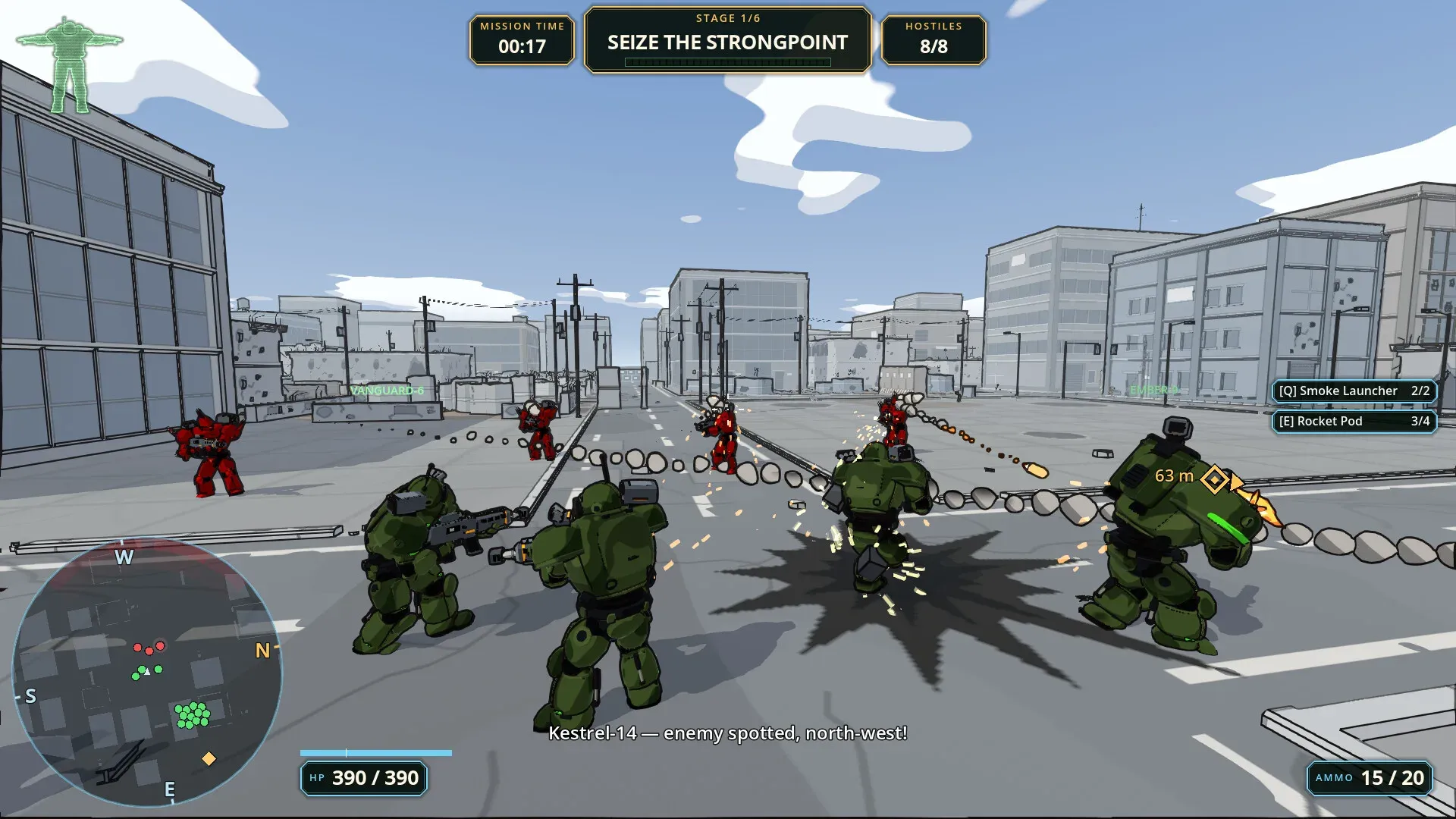

Tin Coffins launches on Steam on December 7, bringing cel-shaded mech roguelite shooting, short lethal squad battles, online co-op, and a $14.99 price to PC, Mac, and Linux.
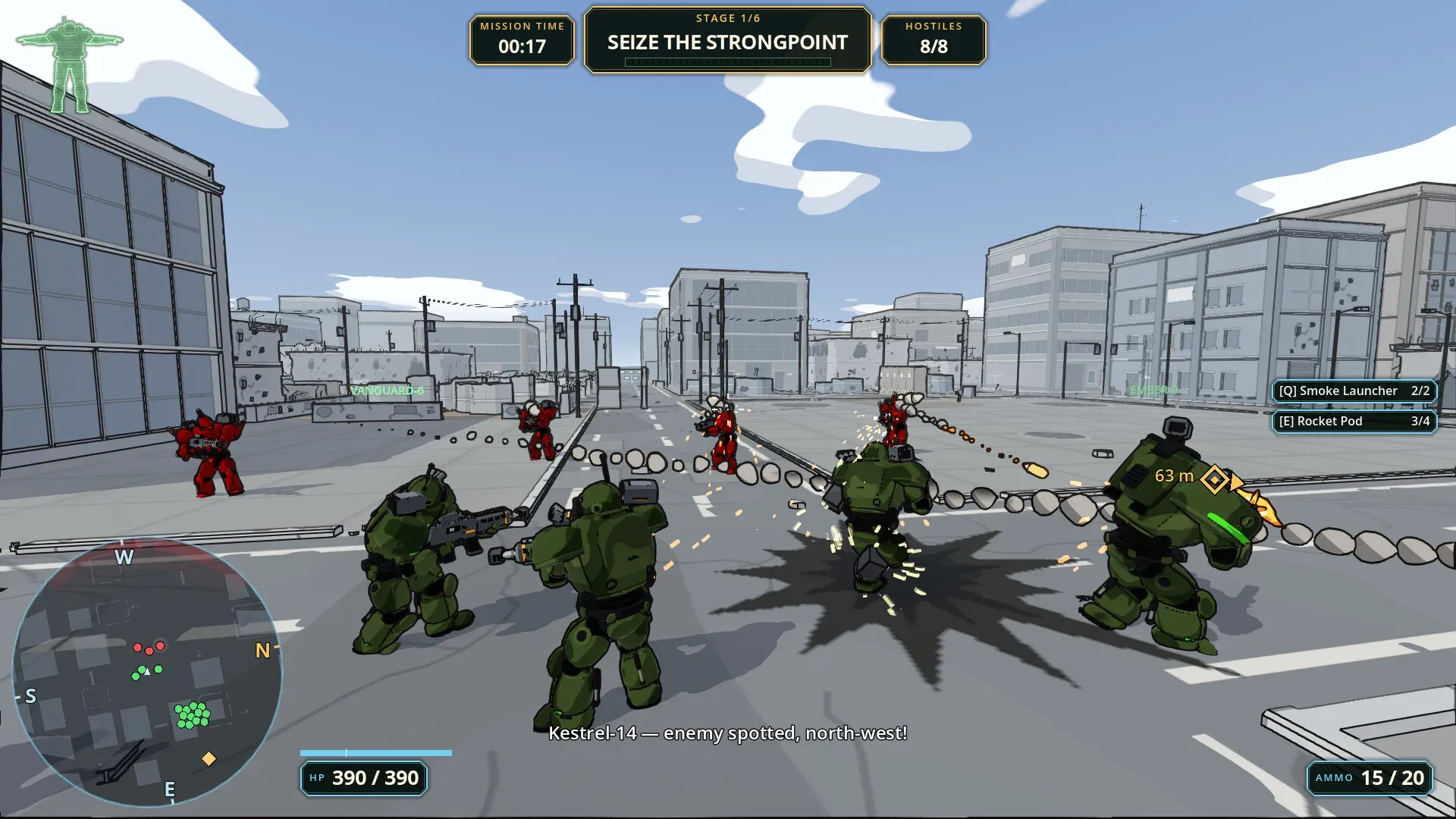
Image: impress.games
Tin Coffins locks in a December 7 Steam launch
Tin Coffins now has a confirmed release date: Hexmonger’s cel-shaded mech roguelite shooter is scheduled to launch on Steam for PC, Mac, and Linux on December 7, 2026, according to the Games Press release circulated on November 26. The same announcement lists the price at $14.99 USD.
That puts the Tin Coffins release date inside a crowded late-year Steam window, but its pitch is unusually sharp for shooter players scanning December 7 Steam games. This is a mech combat game built around short, lethal squad fights in procedurally generated war-torn cities, with online co-op for up to four pilots and CPU squadmates filling empty seats.
IGN’s release date trailer listing also confirms the December 7 Steam date and presents Tin Coffins as a cel-shaded mech roguelite shooter. GamingOnLinux separately reports that the release includes Linux support, matching the PC, Mac, and Linux platform list in the press release.
The hook is squad-based mech combat, not arena cleanup
The strongest read on Tin Coffins is that it wants its fights to feel like squad engagements rather than target galleries. The press release says players face enemy squads that flank, suppress, and hold the line. For shooter fans, that detail matters because it points toward pressure from positioning and crossfire instead of raw enemy count alone.
The setup casts the player as Talon-22, a combat clone “printed this shift,” after twenty-one previous versions failed to return. That fiction gives the roguelite structure a clean combat reason: when a pilot dies, the next clone deploys. The source material does not spell out upgrade trees, weapon pools, build variety, or run modifiers, so those parts of the roguelite loop remain unconfirmed from the provided listings and announcement.
What is confirmed is the fight format. Hexmonger describes short, deadly squad battles through procedural city spaces. That suggests pacing closer to repeated sorties than one long campaign push, which could make Tin Coffins easier to sample between larger December releases if the shooting lands.
Procedural cities and destructible chaos are the technical swing
Solo developer Nathaniel Voorhies frames the game around scale and destruction. In the Games Press quote, Voorhies says Tin Coffins is the game he wanted to play, describing “up to a hundred mechs tearing through a city at once” and buildings coming down around the player. GamingOnLinux carried the same developer statement.
That is the most ambitious promise attached to the project, and it is also the part shooter players should watch closest at launch. A mech shooter with many units on screen has to keep targets readable, impacts legible, and performance stable when the battlefield starts collapsing. The provided sources do not include system requirements, frame-rate targets, Steam Deck status, benchmark data, or hands-on performance impressions, so there is no grounded way to judge how well Tin Coffins handles that load yet.
Voorhies’ background adds useful context without answering those launch questions. He says he spent a decade helping design graphics chips before moving to game development. That is relevant to a mech shooter selling itself on scale, city destruction, and visual style, but it remains a credential, not proof of shipping performance.
Co-op is built into the plan, with CPU fill-ins and random squads
Tin Coffins is not limited to solo runs. The announcement says up to four pilots can fly sorties together in online co-op outside the campaign, with CPU pilots occupying empty seats. Players can invite friends through Steam, share a squad code, or use a “RANDOM SQUAD” option to join strangers. Push-to-talk voice chat is also listed in the press release.
That combination is practical. Four-player co-op can break down fast if the game assumes a full premade squad every session, so CPU fill-ins and random matchmaking give Tin Coffins a better shot at staying playable for solo players who still want squad structure. It also gives shooter groups a reason to check the Tin Coffins Steam page before launch, because the game is priced like a small-team co-op impulse buy rather than a premium release.
The unanswered part is netcode quality. None of the supplied sources mention server model, region support, cross-platform multiplayer between PC, Mac, and Linux, host migration, matchmaking filters, or latency handling. For a co-op shooter, those details can decide whether the game becomes a regular squad pick or a one-week curiosity.
A solo-developed shooter with family fingerprints
Hexmonger is the studio behind Tin Coffins, and the Games Press release identifies Nathaniel Voorhies as the solo developer. Voorhies says the game was built on his own, but adds that family members voiced the characters and made the music. That gives this release a very different production profile from most mech shooters competing for attention on Steam.
That smaller scale cuts both ways. On one side, Tin Coffins has a focused premise: clones, mechs, short sorties, procedural cities, and co-op. On the other, the source material does not mention a publisher, post-launch roadmap, demo availability at release, console versions, or planned content cadence. The Steam listing linked by IGN is the central availability point in the provided material.
For players, the cleanest expectation is a compact indie shooter launch at $14.99, not a live-service mech platform. If Hexmonger has longer-term plans, they have not been detailed in the supplied announcement.
Should shooter fans put Tin Coffins on the December radar?
Tin Coffins earns a watchlist spot if your shooter taste leans toward pressure, co-op coordination, and quick failure-retry loops. The confirmed ingredients line up well for that audience: mech combat, procedural battle spaces, lethal squad fights, up to four-player online co-op, CPU squadmates, random squad joining, and a lower $14.99 entry price on Steam.
The wait-and-see points are just as clear. We still need real information on weapon feel, enemy variety, run progression, map readability, performance under large mech counts, and online stability. Those are not small details for a mech roguelite shooter. They are the difference between a strong December surprise and a game with a good pitch that needs patches.
For now, the practical guidance is simple. If you want a compact roguelite shooter on PC, Mac, or Linux and the idea of cel-shaded mech squads tearing through procedural cities sounds like your lane, Tin Coffins is one of the December 7 Steam games to track. If your buy decision depends on gunfeel, co-op reliability, or system performance, wait for launch impressions before committing.