
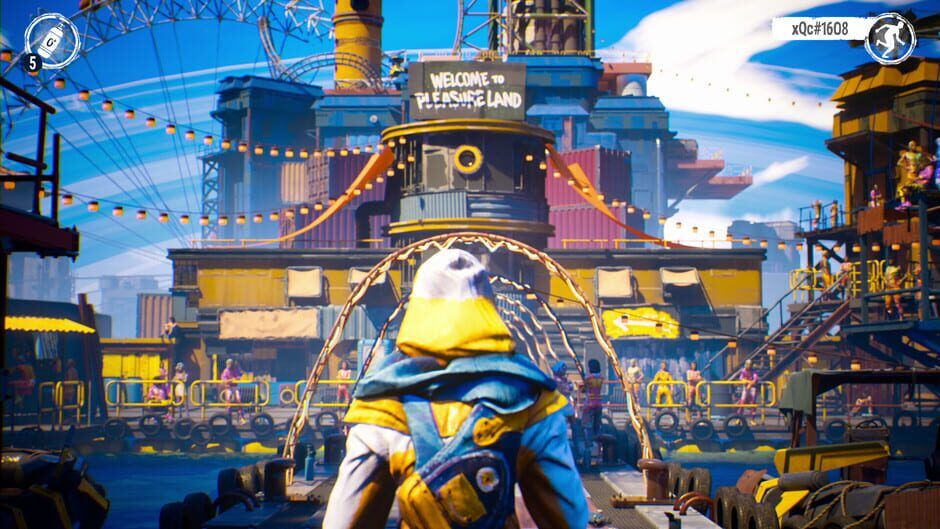

DigixArt has pushed Tides of Tomorrow to April 22, turning a short delay into a crucial window to tune its branching story, shared-world structure, and community-driven choices. Here’s how early feedback is reshaping this ambitious follow up to Road 96.
Tides of Tomorrow was never pitched as a simple follow up to Road 96. DigixArt’s new sci fi adventure is trying to merge a strongly authored narrative with a shared world of overlapping player stories, where your choices can ripple into someone else’s game. With its release now moved to April 22, the studio is using the extra time to do something increasingly rare in narrative design: respond meaningfully to large scale early feedback.
What the delay actually means
DigixArt announced the delay via Steam, shifting Tides of Tomorrow from its original February window to April 22 on PC, PS5, and Xbox Series X|S. In the statement, the team framed the move as a need for “a little extra time before launch,” leaning on a light joke about almost renaming it “Tides of the Day After Tomorrow.” The tone was casual, but the context is more serious. The current demo remains live and unchanged, which suggests the foundations are in place and the extra work is about refinement rather than redesign.
Crucially, the delay follows what’s described as extensive feedback from players and partners. For a game built on systemic narrative, where countless choices feed into a shared network of stories, that kind of feedback is less about bug reports and more about validating how the world reacts. If Road 96 taught DigixArt anything, it is that player expectations for reactive storytelling are very specific, and that rough edges in pacing or payoff can overshadow strong ideas.
A shared world of intersecting stories
Tides of Tomorrow is set on Elynd, an oceanic planet recovering from the Great Flood and threatened by a creeping phenomenon known as deadly plastification. On paper it is another story driven adventure, but its structure is closer to an online, asynchronous anthology. You follow a cast of characters trying to survive and adapt to a world that is literally reshaping itself, while your own decisions thread into a larger fabric of runs played by friends, streamers, and strangers.
The hook is that Tides of Tomorrow lets you actively track other players’ adventures. You can follow specific people, see the path they carved through Elynd, and then confront the consequences of their decisions in your own sessions. The game treats these imported choices as part of your reality. A settlement that prospered in a streamer’s run might show up as a powerful ally in your story. A desperate decision that got someone killed on a friend’s save could echo back as a rumor, a lost opportunity, or even a direct threat.
This structure demands an unusually robust narrative backend. Every major situation must be authored to handle several possible histories, some of which come from people you will never meet in game. The delay gives DigixArt more time to tune that underlying logic, making sure the world of Elynd feels consistent whether you are playing mostly solo or fully immersed in the social layer.
Branching choices under community pressure
DigixArt is clear that community driven choices are not just cosmetic. Tides of Tomorrow aims for the kind of branching that Road 96 flirted with, but at a broader scale. Each route through the game is designed to be short enough to replay, yet dense with decision points that alter relationships, resources, and the fate of key locations across Elynd.
Early feedback has likely hit three familiar pressure points for branching narrative games: clarity, consequence, and coherence. Players want to understand what a choice roughly represents without feeling manipulated. They want outcomes that are meaningfully different across multiple playthroughs. And they want the world’s internal logic to hold together even when their path diverges sharply from that of their friends.
A few extra months gives DigixArt space to rebalance those factors. That can mean rewriting choices so intent maps more cleanly to outcome, adding connective scenes that explain how the world adjusted, or improving the way the game surfaces the impact of a decision that was actually influenced by another player’s prior run. The studio has already shown a willingness to heavily rework content based on feedback with Road 96’s post launch updates, and here that attitude is baked into the schedule.
Lessons carried over from Road 96
Context for all of this sits in DigixArt’s previous breakout hit, Road 96. That game was an episodic road trip across an authoritarian country, built from modular encounters that reshuffled each time you started a new hitchhiker’s journey. It delivered sharp character writing, a strong sense of place, and a clever mix of minigames tied to narrative beats. What it struggled with at launch were exactly the elements now under scrutiny for Tides of Tomorrow.
Some players felt certain choices in Road 96 resolved too neatly or too vaguely, with political outcomes that sometimes seemed disconnected from the series of small personal decisions they had made. Others treated it like a roguelike and expected deeper mechanical changes between runs. DigixArt responded post release with tweaks, updates, and eventually a prequel story, Road 96: Mile 0, that tried to flesh out the world’s setup.
Tides of Tomorrow appears to internalize those lessons. Rather than waiting for post launch patches to realign expectations, the studio is absorbing feedback before the game locks. The shared world angle, where your path might be influenced by a popular streamer’s catastrophic misstep, raises the stakes further. If that kind of imported chaos feels arbitrary or under explained, the whole premise risks collapsing into noise. Road 96’s mixed reception on the weight of its endings is likely a strong motivator to get these systems into shape before release.
Why an extra window matters for narrative adventures
Delays are often framed in terms of fixing bugs or hitting performance targets, but narrative heavy games gain a lot from late stage iteration. Once thousands of people have touched a demo, patterns emerge. Which choices players gravitate toward, which branches feel like dead ends, how often they notice when another player’s decision has altered their world. Those patterns can then be used to tighten pacing and elevate under served paths.
For a game like Tides of Tomorrow, that can translate into subtle but important improvements. DigixArt can smooth difficulty spikes that derail emotional arcs, adjust resource distribution so more players see experimental storylines, and re script or re stage scenes whose intent was misread. Even UI or presentation changes, like clearer signaling that a key event came from a friend’s past playthrough, can make the shared world layer feel less like a gimmick and more like the backbone of the experience.
It also gives more time to stress test the online and social components. If Tides of Tomorrow is going to reliably pull other players’ decisions into your campaign, the surrounding infrastructure has to be invisible. Sync issues, mismatched data, or inconsistent story imports would quickly undermine the promise of a living, communal narrative.
Setting expectations for April 22
With the new date set, Tides of Tomorrow is lining up as a more confident attempt to blend authored storytelling with community driven variation. Road 96 proved that DigixArt can build intimate, character focused vignettes that hold up across repeated playthroughs. Tides of Tomorrow extends that idea across an entire shared planet, where each decision could be both personal and social.
If the extended development window pays off, the launch version should feel less like an experimental platform still finding its shape and more like a cohesive narrative world that happens to be inhabited by thousands of other decision makers. The delay might be short on the calendar, but for a studio trying to redefine how branching stories respond to real players, it could be the difference between an interesting concept and a new template for narrative adventures.