

Breaking down Tides of Annihilation’s new boss‑fight gameplay, how the Dual Frontline Battle system and dimensional shifts actually work, and where this Arthurian character‑action contender might land alongside Bayonetta and Stellar Blade when it finally dates.
An Arthurian character‑action contender finally shows its teeth
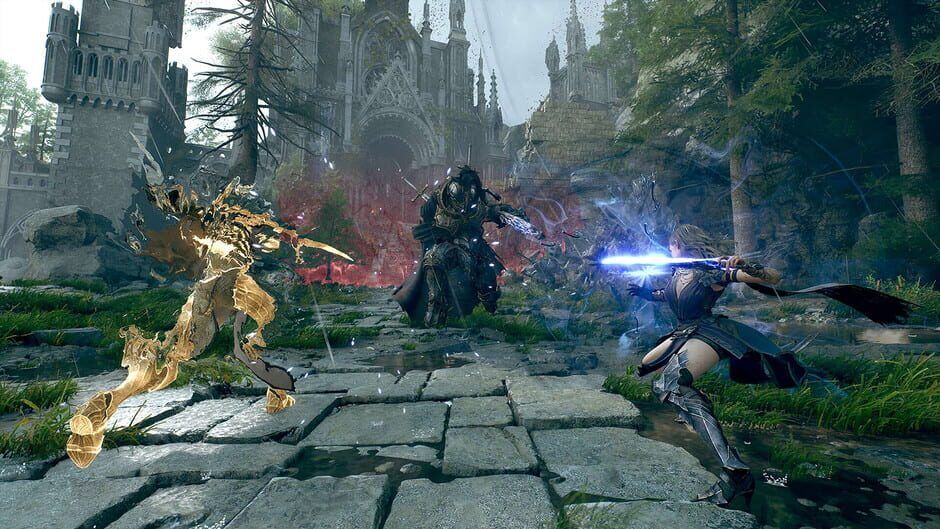
Tides of Annihilation has been quietly impressive across a handful of trailers, but the latest boss‑fight showcase is the first time Eclipse Glow Games has really laid its systems bare. Set in a warped modern London infused with Arthurian legend, the new footage puts protagonist Gwendolyn in a full multi‑phase duel with Tyronoe, a towering winged monstrosity that literally splits reality in half.
What emerges is a clearer picture of Tides as a true character‑action hopeful. There is the expected flurry of air juggles, step‑dodges and cinematic finishers, but the real hook lies in how Gwendolyn fights alongside spectral Knights of the Round Table, turning each arena into two overlapping battlefields that can be manipulated in real time.
How the Dual Frontline Battle system actually plays
At the heart of the new demo is the Dual Frontline Battle system, a setup that effectively gives you two offensive lines to manage at once. Gwendolyn is the primary, player‑controlled frontline, built around rapid ground strings, launchers and aerial combos in the Bayonetta mold. Layered on top of that is a configurable roster of spectral knights that act as both cooldown‑based abilities and fully controllable partners.
You can prepare two sets of knight loadouts before combat, fielding up to four knights at once. Each knight occupies a specific tactical niche. Some act like crowd control specialists who drop time‑stop fields or gravity wells to pin lesser enemies in place. Others are more defensive, projecting barriers or parry windows that let you stay aggressive against bosses with huge tells. The important part is that they are not just passive stat sticks. They are deliberate tools you weave into your combo routes.
The footage repeatedly shows Gwendolyn calling in a knight mid‑string, letting that spectral ally continue pressure while she repositions or pivots into another attack arc. Knights can be swapped in the middle of combos, so you get sequences where a juggle launched by Gwendolyn is carried on by one knight, then extended by another that tags in with a different elemental property. It has a similar flavor to tag‑team canceling in fighting games, just blended into a single character’s kit.
Importantly, the Dual Frontline system is not just about more damage. The trailer hints at enemies that are only vulnerable, or at least most efficiently cracked, when specific knights are in play. Tyronoe’s armor plates, for instance, seem to react differently when slammed by a heavy knight compared to being carved up by Gwendolyn’s standard blade strings. If Eclipse Glow leans into that idea, the result could be a combat loop that pushes you to think about knight composition as much as your own input execution.
Dimensional shifts turn boss fights into layered arenas
The other pillar of the boss demo is Tides’ fascination with fractured realities. Tyronoe does not just roar and change moves in later phases. It tears open a mirrored Folded Realm that overlays the entire arena, twisting skyscrapers and streets into a Doctor Strange swirl of glass and concrete. The key twist is that combat continues on both sides of the mirror at once.
This is where Sir Lamorak comes in. Mid‑fight, Gwendolyn calls in Lamorak and the perspective splinters. You retain direct control over Gwendolyn in the original space, but Lamorak is now mirroring your inputs in the Folded Realm, striking shadow versions of Tyronoe’s limbs and weak points. Attacks from one plane influence the other, staggering the boss or forcing it to expose vulnerable spots back in the main arena.
Tides uses this to create the sense of two synchronized offensives running in tandem. You might dodge a wing swipe in Gwendolyn’s space while Lamorak is busy punishing the same animation from the other side of the mirror. The trailer makes it look natural, but the design implication is ambitious. Done right, it effectively doubles the expressiveness of your inputs without demanding split‑character micromanagement.
Later in the fight the dimensional gimmick escalates further. Tyronoe pulls more of the stage into the Folded Realm, the color palette inverts, and Lamorak is eventually absorbed into Gwendolyn, folding his moveset into her summon wheel. It is a neat narrative touch, but also a mechanical one. The knight you have just spent a phase learning as a partner becomes another asset you can drop on command, reinforcing the idea that encounters are as much about acquiring and fusing knight powers as they are about simply surviving.
Spectacle dialed toward cinematic excess
If the Dual Frontline system is the mechanical spine of Tides of Annihilation, its presentation is the sales pitch. The new footage leans into blockbuster comparisons openly referenced by the developers. Reality bends and tessellates in ways that recall Inception’s folding cities and Doctor Strange’s kaleidoscopic mirror dimension. Debris hangs in the air during slow‑motion dodges, glass erupts in spiraling patterns when Tyronoe screeches, and the camera tracks Gwendolyn through acrobatic wire‑fu flourishes.
Crucially, the spectacle is not confined to cutscenes. A lot of the most striking visual beats appear to be tied directly to your defensive play. Perfectly timed evasions slow the world to a crawl for a heartbeat, giving you a window to punish with both Gwendolyn and whatever knights you have active. The mix of time dilation, environmental distortion and multicolored particle effects sells each successful read as a miniature setpiece.
The art direction benefits from the Arthurian twist more than you might expect, too. Tyronoe is not just another grey kaiju. Its design pulls hints of gothic stained glass and avian heraldry into a towering, almost cathedral‑like silhouette. When it tears the Folded Realm open, the broken glass and fluttering feathers feel thematically natural, like a corrupted church exploding into the skyline rather than a generic dark‑souls boss teleport.
Where it might sit next to Bayonetta and Stellar Blade
With no release date in sight, it is too early to crown Tides of Annihilation the next standard bearer for stylish action. Still, this boss fight trailer offers enough data points to start sketching where it could fall in the genre landscape occupied by series like Bayonetta and recent entries such as Stellar Blade.
Structurally, the combat reads closest to Bayonetta. You have a central heroine with high animation priority, a focus on readable telegraphs that invite last‑second dodges, and a clear attempt to celebrate mechanical mastery with explosive visual rewards. If the knight system ultimately feels like a twist on Bayonetta’s weapon sets and demon slaves, Tides might end up sitting in that sweet spot of familiarity with a fresh gimmick layered over the top.
Compared to Stellar Blade, the differences are sharper. Stellar Blade leaned heavily into parry‑centric, weighty timing and deliberate stamina cycles. Tides looks lighter under the thumbs, closer to pure combo sandbox than measured boss dueling. Where Stellar Blade built much of its identity around brutal one‑on‑one clashes, Tides is positioning its signature moments as swirling multi‑plane setpieces that trade some clarity for sheer excess.
The big question is depth. The Dual Frontline system and dimensional shifts look spectacular, but the genre lives or dies on how systems feel after dozens of encounters. If Eclipse Glow can give each knight real personality and utility, tune enemy behavior to reward varied loadouts instead of a single optimal lineup, and keep experimenting with reality tricks without turning them into repetitive QTEs, Tides has a real chance to carve out its own corner of the character‑action space rather than existing purely as a visual showpiece.
Right now, it resembles a stylish hybrid. It has Bayonetta’s flair and crowd‑pleasing attack density, filtered through cinematic spectacle that sits closer to Stellar Blade and recent Final Fantasy. Wrap that around an Arthurian mythos that feels underused in action games and you have a promising, if still hypothetical, rival waiting in the wings. Whenever Tides of Annihilation finally puts a date on the calendar, it will not be entering an empty arena, but the latest boss footage suggests it is bringing enough reality‑splitting weirdness to stand toe‑to‑toe with the genre’s current leaders.