
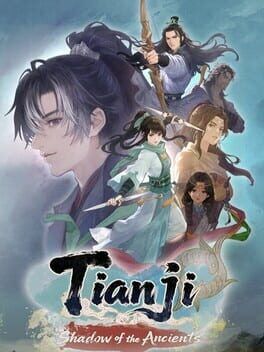
Justdan International has announced Tianji: Shadow of the Ancients, a Tang Dynasty turn-based RPG planned for 2027 on PS5, Switch 2, Switch, and PC.
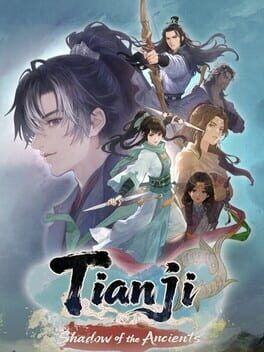
Image: IGDB
Store links: Tianji: Shadow of the Ancients on Steam
Justdan’s new RPG has a 2027 target and a slightly messy platform picture
Tianji: Shadow of the Ancients has been announced as a 2027 turn-based RPG from Justdan International, with Gematsu reporting PlayStation 5, Nintendo Switch 2, Nintendo Switch, and PC via Steam as the confirmed launch platforms. Nintendo Everything’s coverage focuses on the Switch 2 and Switch versions, while Push Square frames the reveal around PS5 and describes the game as a new adventure from Taiwanese developer Justdan.
That makes the clearest current read fairly practical: Tianji Shadow of the Ancients is coming to modern PlayStation, both Nintendo generations, and Steam, but it does not yet have a specific release date, price, edition breakdown, or platform performance details. Gematsu, citing Justdan International’s overview, also reports language support for English, Japanese, Traditional Chinese, and Simplified Chinese, which is an important signal for players outside Chinese-language markets who follow classic party RPGs.
There is one platform wrinkle worth keeping separate from the confirmed list. Techtroduce’s report lists Xbox Series X|S alongside PS5, Switch 2, Switch, and PC. The other supplied reports, including Gematsu’s account of Justdan International’s announcement and the Nintendo and PlayStation-focused coverage, do not include Xbox. Until Justdan International or a storefront listing confirms an Xbox version, GameLoop is treating Xbox as unannounced rather than part of the settled platform lineup.
A Tang Dynasty mystery built around masks, memory, and Bashu ruins
The premise places Tianji: Shadow of the Ancients during the Tianbao era of the Tang Dynasty, in the Bashu region. According to Justdan International’s overview as published by Gematsu, the Imperial Court’s secret Tianji Guard investigates a millennium-old ruin, only for its commanding general to put on an eerie bronze mask, lose his mind, and spiral out of control. Months later, the Xuanxin Order rises in the region using masks and spiritual arts.
Players control Shangguan Shuo, described in the official overview as an amnesiac protagonist and Tianji Guard soldier. He awakens in one of the Xuanxin Order’s strongholds with only two clues to his identity: a Tianji Guard fish token and a strange mask. Nintendo Everything’s version of the overview similarly says Shangguan Shuo explores ancient subterranean ruins for fragments of the past, gradually uncovering a hidden scheme tied to his own history and witnessing the awakening of a millennium-old city.
For RPG players, the notable detail is how personal identity, political collapse, and archaeological horror appear to be tied together from the start. The announcement materials do not describe a morality system, romance structure, faction route, or ending variations, so it would be premature to present Tianji RPG as a choice-driven narrative in that sense. What is confirmed is a story frame with an amnesiac soldier, a secret imperial organization, a mask-centered cult threat, and an underground city whose age reaches back a thousand years.
The combat pitch: turn-based commands with combo pressure
Justdan International is positioning Tianji: Shadow of the Ancients as a turn-based RPG, but its battle system is being pitched around combo momentum rather than static menu exchanges. Gematsu’s official overview names Chain Skills, Weak Points Exploitation, Pursuit Skills, Block Counters, and a No DMG Bonus as combat systems. Nintendo Everything’s excerpt also emphasizes combo chains, enemy weaknesses, vulnerable states, Pursuit Skills, equipment, and Core effects.
Push Square reports that the press release describes battles as combining “the satisfying impact of an action game” with “deep strategic play.” That wording is promotional, so it should be read as the developer’s intent rather than proof of how the finished game will feel. Still, the systems named in the announcement suggest a turn order RPG where the interesting decisions may come from sequencing attacks, setting up follow-ups, and building party members around Core effects, rather than selecting the highest damage option every round.
The encounter structure is also relevant for players who like to control pacing. Gematsu reports that enemies appear on the map through a visible encounter system, allowing players to decide whether to engage. The same overview says players can use level advantages to instantly clear weaker foes. If implemented cleanly, that could reduce late-area cleanup friction, especially for completionists sweeping towns, ruins, and side paths after outleveling early mobs. The announcement does not yet explain experience rewards, difficulty options, boss rematches, or whether instant clears affect loot tables.
Exploration leans on traversal, town schedules, and companion utility
The reveal does more than promise battles. Nintendo Everything’s overview says players will traverse the world through climbing, swimming, and environmental puzzles. It also says towns support day and night switching, with events, obtainable items, and NPC interactions changing dramatically depending on time of day. Gematsu describes high-definition 2D hand-drawn art, with environments incorporating the brushstrokes and charm of traditional landscape paintings.
The progression hook that stands out most is companion utility. Nintendo Everything reports that each companion has a unique skill, including cooking, refining equipment, upgrading Cores, and trading rare items. Those skills develop as personal side stories unfold. That is the kind of structure classic party adventure fans should watch closely, because it can turn optional character quests into mechanical growth rather than lore-only detours.
There are still key unknowns. The announcement does not specify party size, whether companions can be freely swapped in combat, how Core upgrades are gated, or whether crafting materials come mainly from exploration, shops, enemy drops, or side quests. It also does not clarify whether day and night changes run on a clock or through manual switching. Those details will determine whether Tianji feels like a dense quest RPG with meaningful town revisits or a more linear adventure with scheduled flavor scenes.
The hand-drawn presentation gives the Switch 2 RPG and PS5 turn-based RPG versions a shared identity
Push Square notes that Tianji: Shadow of the Ancients is hand-drawn and says the overworld map shown in the trailer helps it stand out. Gematsu’s overview describes the visual direction as high-definition 2D hand-drawn art with traditional landscape painting influence. For a Taiwanese RPG entering a crowded 2027 field, that identity matters because the game is not being introduced through photoreal spectacle or franchise recognition. Its first impression is built around painterly environments, historical fantasy, and a battle system that tries to make turn-based play look kinetic.
The Switch 2 version will naturally draw attention from RPG players looking for new third-party support on Nintendo’s newer hardware, while the original Switch version raises a practical technical question. The sources do not provide resolution, frame rate, load time, cartridge details, or any Switch 2 upgrade path. Since Tianji is also planned for PS5 and PC, the spread covers machines with very different performance profiles. Nothing in the source material confirms whether the Switch and Switch 2 versions will share identical assets, target different performance modes, or launch with cross-generation upgrade options.
For now, platform choice should be based on patience rather than assumption. If portability is the priority, wait for Switch and Switch 2 footage shown side by side. If clean image quality and load times are the priority, PS5 and PC details will matter. If Steam Deck compatibility is part of your buying decision, Gematsu’s Steam listing link confirms a PC storefront presence, but no handheld verification or requirements have been provided in the supplied materials.
A classic RPG lineage signal, but no franchise connection has been announced
Gematsu reports that Tianji: Shadow of the Ancients is internally developed at Justdan International and directed by “the father of the Xuan-Yuan Sword series.” That credit will catch the eye of players familiar with long-running Chinese-language RPG traditions, where historical fantasy, mythic artifacts, party building, and philosophical conflict often carry as much weight as combat progression.
The announcement, however, does not state that Tianji is part of Xuan-Yuan Sword, connected to its setting, or licensed from that series. The safer reading is that Justdan is using an experienced RPG director as part of Tianji’s identity while launching a separate property. That distinction matters because fans should not expect returning characters, systems, terminology, or canon unless Justdan says so later.
As an introduction, Tianji: Shadow of the Ancients has a clear pitch: a Tang Dynasty mystery, an amnesiac guard, mask-driven supernatural conspiracy, visible encounters, combo-focused turn-based combat, hand-drawn maps, and companion skills tied to side stories. The buying questions remain unanswered in the ordinary ways for a newly announced 2027 RPG. We still need a firm date, price, demo plans, platform comparisons, PC requirements, and confirmation on whether every listed version arrives simultaneously worldwide. Until then, Tianji is best filed as one to wishlist rather than preorder.