
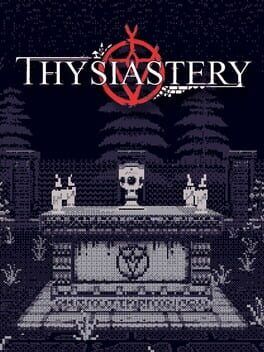

DIRGA's turn-based roguelike dungeon crawler Thysiastery is coming to Nintendo Switch on December 3, bringing permadeath, procedural labyrinths, teachable skills, and retro limited-palette art to the eShop.
Image: IGDB
Store links: Thysiastery on Steam
DIRGA brings Thysiastery to Switch on December 3
The concrete news is simple, and useful for anyone tracking the next new Switch RPG: developer DIRGA has announced that Thysiastery will launch for Nintendo Switch on December 3, 2026. Nintendo Everything reported the Switch version from DIRGA's announcement, while Gematsu and RPGamer add that the same date also applies to PlayStation 5, PlayStation 4, Xbox Series X|S, and Xbox One.
That broader console rollout matters because Thysiastery is no longer only a PC curiosity. Gematsu reports that the game first launched for PC via Steam on March 9, and RPGamer likewise identifies the console release as an expansion beyond that earlier PC debut. The Switch version is therefore arriving with the benefit of an existing PC release, but the current source material does not provide Switch-specific pricing, file size, frame rate, touchscreen support, save-transfer options, or any technical comparison with the Steam version.
For Switch players scanning a crowded weekly eShop update, the hook is not a licensed name or a huge publisher push. Based on DIRGA's own overview, the pitch is systems-first: turn-based dungeon crawling, roguelike structure, procedurally generated areas, randomly generated characters, permadeath, difficulty modifiers, and a party of cursed or chosen wanderers trying to escape a hostile Labyrinth.
A dungeon RPG built around risk, chance, and party attrition
DIRGA describes Thysiastery as a turn-based, dungeon-crawling roguelike role-playing game rendered in a retro-inspired art style. The player controls a group of "bearers of the Brand" who have been drawn into a vast Labyrinth and must search for a way out. That setup immediately places the game closer to run-based dungeon RPGs than to story-forward, town-to-town console RPGs.
The combat description is short but revealing. According to DIRGA's overview, battles are turn-based and built around choices that let players capitalize on chance and weakness, while also allowing enemies to exploit those same openings. That suggests a game where party composition, skill access, and risk management may matter as much as raw leveling. It also implies that bad decisions can compound, which is important because the feature list includes permadeath.
Permadeath changes the emotional temperature of a dungeon crawler. If characters can be lost permanently, then random character generation is not simply flavor. It becomes part of the progression economy. The player is likely to evaluate recruits, skills, and survival odds with the knowledge that a promising party member may not survive a deeper push. The sources do not spell out exactly how death, replacement characters, or long-term account progress work, so that remains an open question for the Switch release.
The skill system is the detail RPG players should watch
The most intriguing line in DIRGA's feature list is that Thysiastery includes "a great number of skills" for characters to learn and discover, then teach further to other characters. In a roguelike dungeon RPG, that kind of teachable skill structure can be the difference between a run that feels disposable and one that produces meaningful planning.
If the final game leans into that system, the interesting decisions may come from who learns what, which characters become knowledge carriers, and how much risk a player accepts to preserve a valuable build path. A randomly generated character with access to a rare or well-synergized skill could become more than a temporary party slot. They could become the hinge of a run, especially if teaching allows the party to spread useful tools before the Labyrinth takes someone away.
That is interpretation based on the announced systems, not a confirmed mechanical breakdown. DIRGA's overview confirms skills can be learned, discovered, and taught to other characters, but it does not detail class structures, skill inheritance limits, respec options, or whether taught skills persist beyond a character death. For RPG players, those are the key questions to answer once the Thysiastery Switch version is live.
The Labyrinth pitch leans on discovery rather than map completion
Thysiastery's premise gives its dungeon structure a lore frame. DIRGA's overview says the bearers of the Brand are drawn into a vast and enigmatic Labyrinth, with the line, "The Brand has called you in. The Labyrinth hungers once more. Or is it all just a sign of madness?" That framing leaves room for ambiguity, and it gives the procedural structure a narrative excuse: the place itself is strange, hungry, and possibly psychological.
The announced environments are broader than stone corridors. DIRGA cites buried forests, underwater cities, ancient secrets, mysterious objects and artifacts, and friendly natives of the Labyrinth. That matters for a dungeon crawler because procedural spaces can blur together if their rooms exist only to host fights. The overview suggests exploration objects and NPC encounters are part of the texture, though the sources do not confirm how quest-heavy those encounters are or whether dialogue choices alter outcomes.
For completion-minded players, the practical question is whether Thysiastery supports mastery through repeated runs or whether its randomization makes completion a softer target. Procedurally generated areas and randomly generated characters point toward replayability rather than a fixed checklist. The presence of difficulty modifiers may help players tune that experience, but DIRGA has not, in the provided material, listed the specific modifiers or explained whether they affect rewards, achievements, or progression.
Why it could stand out on the eShop without needing spectacle
The Switch eShop gets a steady flow of smaller releases, and many RPGs can blur together when their store descriptions lead with familiar promises: retro visuals, tactical combat, big mysteries. Thysiastery's best chance to stand apart is that its confirmed feature set is unusually concentrated. It is not presented as a cozy retro homage or a lightweight fantasy quest. The announcement emphasizes failure states, random party identity, procedural dungeon structure, and adjustable difficulty.
That combination is especially suited to handheld play if the run pacing holds up, although no source currently confirms Switch performance or session-length features such as quick resume behavior beyond the platform's normal system sleep function. A turn-based structure is naturally friendlier to stop-start play than real-time action, and limited-palette retro art may be easier to read on a portable screen than heavily detailed environments, but those are expectations rather than tested facts for the Switch version.
The art direction could also help. DIRGA describes the game as retro-inspired and drawn in limited color palettes. In a storefront full of pixel art, limited color work is a specific aesthetic choice, one that can give dungeon areas clearer identity if used well. The cover art and announced environments point toward a stranger, more austere mood than the average fantasy crawler, but the current sources do not provide enough to judge visual variety across a full run.
What is confirmed, what is still missing, and whether to wait
Confirmed information is straightforward. Thysiastery comes to Nintendo Switch on December 3, 2026. Gematsu, RPGamer, and Techtroduce report that it is also coming to PS5, PS4, Xbox Series X|S, and Xbox One on the same date. Gematsu and Techtroduce report that the PC version launched on Steam in March 2026, with Gematsu specifying March 9. DIRGA's overview confirms turn-based combat, roguelike dungeon crawling, permadeath, procedurally generated areas, randomly generated characters, teachable skills, multiple environments, mysterious objects and artifacts, friendly Labyrinth natives, difficulty modifiers, and retro limited-palette art.
Still unannounced in the provided sources are the Switch price, install size, supported languages, publisher details beyond DIRGA's role as developer, performance targets, control options, and whether the console editions include any changes from the PC release. No source here confirms a physical edition, demo, preorder discount, cross-save feature, or Switch 2-specific enhancement.
The buying advice follows from that gap. If the phrase "turn-based roguelike dungeon crawler with permadeath" sounds like a promise rather than a warning, the Thysiastery Nintendo Switch release is worth putting on the December 3 watchlist. If you need fixed party members, predictable builds, or a traditional narrative RPG arc, wait for console impressions and store-page specifics. This is a new Switch RPG whose appeal appears to rest on accepting uncertainty, learning from losses, and turning a dangerous Labyrinth into a system you can read before it reads you.