
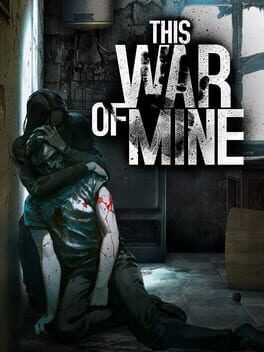
11 bit studios is not just remastering This War of Mine but fully reimagining it as a modern survival experience. Here is what that means in design, tech, and long‑term support, and why the studio is returning to one of its most important games now.
11 bit studios is going back to one of the most important games it has ever made, but it is not interested in a simple upscale. The studio has confirmed that a full reimagining of This War of Mine, internally codenamed P15, is in the works as part of its long term strategy. That choice says as much about where 11 bit is heading as it does about the legacy of its breakthrough anti war survival game.
Not a remaster: what a full reimagining actually means
The original This War of Mine launched in 2014 and has already seen multiple editions, DLC story episodes and a Final Cut update. Technically, it has been maintained for modern platforms and remains playable. That is why the studio is careful to frame P15 as a reimagining rather than a remaster. A remaster would typically keep the underlying structure and systems, clean up art, UI and performance, and maybe bundle in DLC. By contrast, 11 bit describes the new project as a fully modern, fresh take that is being rebuilt in Unreal Engine. That implies new pipelines for art, animation and lighting, plus a chance to revisit the moment to moment interactions that defined the original.
Because the game is still in the concept phase, the studio is not detailing specific mechanics. However, investor comments already highlight new content, visual upgrades, gameplay changes and at least one unrevealed feature. That language suggests that systems like scavenging, shelter management, stealth and moral choice could be redesigned rather than simply recreated with higher resolution assets. The goal is to arrive at a This War of Mine that feels native to current hardware and player expectations instead of a preserved piece of 2014 design.
Why return to This War of Mine now
From the outside, revisiting a decade old game can look like a conservative business move, but for 11 bit it lines up with a broader strategic shift. Alongside P15, the studio has laid out a roadmap that includes Frostpunk 1886, a major return to its frozen city builder, a new Frostpunk universe project in a different genre, and two original IPs. It is not abandoning experimentation, but it is clearly trying to turn its strongest ideas into enduring pillars.
This War of Mine is a natural candidate for that treatment. It is not just a commercial success but the game that defined 11 bit’s self described philosophy of making meaningful entertainment. Its civilian perspective on war, its focus on moral ambiguity and its grounded tone have kept it relevant in discussions of games as political and humanist works. The studio has seen it used in schools, referenced in debates about games and ethics, and kept alive by modders and community storytellers.
At the same time, the original’s age is starting to show. Its interface was built around older resolutions, its art pipeline reflects a different era of PC hardware, and its control scheme can feel clumsy next to more recent survival games. As the studio pushes Frostpunk forward with a full remake, leaving This War of Mine anchored to 2014 would create a strange split in its catalog. Reimagining it lets 11 bit unify its library on modern tech and design standards while keeping one of its most iconic titles active for a new generation of players.
There is also the simple reality of reach. The original sold well but also launched in a very different landscape for premium indie releases. Today, 11 bit has stronger publishing muscle, better console relationships and a clearer identity. A rebuilt This War of Mine can be marketed not as an archival rerelease but as a modern flagship that sits alongside new IP instead of behind it.
Rebuilding the design for modern expectations
Design wise, a ground up reimagining opens doors the team never had when it first built the game. The core fantasy remains the same: you manage a small group of civilians trapped in a besieged city, scraping through days and nights, making choices that scar both your characters and the player. The question is how to express that fantasy using the last decade of survival, narrative and systemic innovations.
The original’s side on shelter view, simple icon based interactions and day night cadence were efficient, but also restrictive. Modern interface design could make group management more readable and responsive without losing the sense of fragility. Smarter pathfinding, context sensitive controls and better feedback around stealth, noise and line of sight could lower friction while preserving tension. On the narrative side, tech that supports richer state tracking and branching outcomes could allow the game to remember more of what you have done and reflect it in how characters behave, not just in text pop ups.
Survival games since 2014 have also shown how dynamic systems can create stories without heavy scripting. A reimagined This War of Mine could lean harder on emergent interactions between civilians, factions in the city and environmental conditions. Weather, structural damage, disease and social reputation could all feed into the nightly decision of where to scavenge and how far you are willing to go. None of that needs to turn the game into a sandbox, but a more reactive city would amplify the sense that you are barely holding together a life in motion instead of pressing buttons on a static board.
Presentation and atmosphere in a new engine
Moving to Unreal is not just about sharper textures. Visual identity is central to This War of Mine’s impact. The original relied on a desaturated, sketch like aesthetic, heavy grain and stark lighting to underline its themes. With modern rendering, the team can push that philosophy further. Volumetric lighting, more detailed destruction, expressive character animation and environmental storytelling can all make each ruined apartment, sniper alley and makeshift hospital feel more specific and lived in.
The risk is in polishing away the rawness that gave the original its bite. A full rebuild will need to find a way to make the world more detailed without making it comfortable. That might mean leaning into harsher contrast, more oppressive sound design and environmental details that tell small stories about the city’s population. Modern audio pipelines can help here too. Spatial audio and more dynamic mixing can make each night raid feel like a physical space, with distant shelling, muffled cries and the creak of floorboards all feeding the player’s nerves.
Cinematic presentation is another likely area of change. Cutscenes, camera work and animation can do more of the heavy lifting in setting up scenarios and consequences, especially if the team wants to expand the cast or add new stories. The challenge will be to keep those touches sparse enough that they do not overpower the player driven rhythm of managing the shelter and choosing where to go next.
Long term support and a platform mindset
The way 11 bit talks about its remakes makes it clear that it sees them as long term projects, not one off launches. Frostpunk 1886 is framed as a multi year pillar supporting expansions and updates, and it is reasonable to expect the same mindset for a rebuilt This War of Mine. That could mean a more modular structure designed from the outset to accept new scenarios, characters and mechanics without feeling bolted on.
The original already experimented with this through its Stories DLC and the Final Cut, but those additions existed within constraints set years earlier. A ground up architecture in Unreal gives the team room to plan for future growth. Seasonal or thematic updates, community driven challenge variants and deeper mod support are all plausible directions. If 11 bit commits to updates over several years, the reimagining could shift from being a single finite campaign to something closer to a platform for exploring different civilian perspectives on war, each with slightly different rules and pressures.
That long view also aligns with the studio’s business needs. Recurring updates help a premium title stay visible on storefronts, justify revisits from press and influencers, and keep community channels active between completely new releases. If P15 launches into that framework, it can share infrastructure, tools and even audience flow with Frostpunk and the studio’s new IPs.
Balancing legacy and reinvention
Reimagining a game as personal and politically charged as This War of Mine carries obvious risks. The original’s slower pacing, awkwardness and rough edges are part of what made it feel like a desperate scramble rather than a smooth power curve. Modernizing systems and presentation without numbing that discomfort will be the central design challenge.
Yet the alternative is letting the game age into a historical artifact that fewer people actually play. By committing to a rebuild instead of a remaster, 11 bit is betting that it can preserve the emotional core while speaking the current language of survival design, visual storytelling and long term support. If it works, the new This War of Mine could stand not only as a respectful restoration but as the definitive version of the studio’s most important statement, capable of carrying its themes into another decade of players and platforms.