
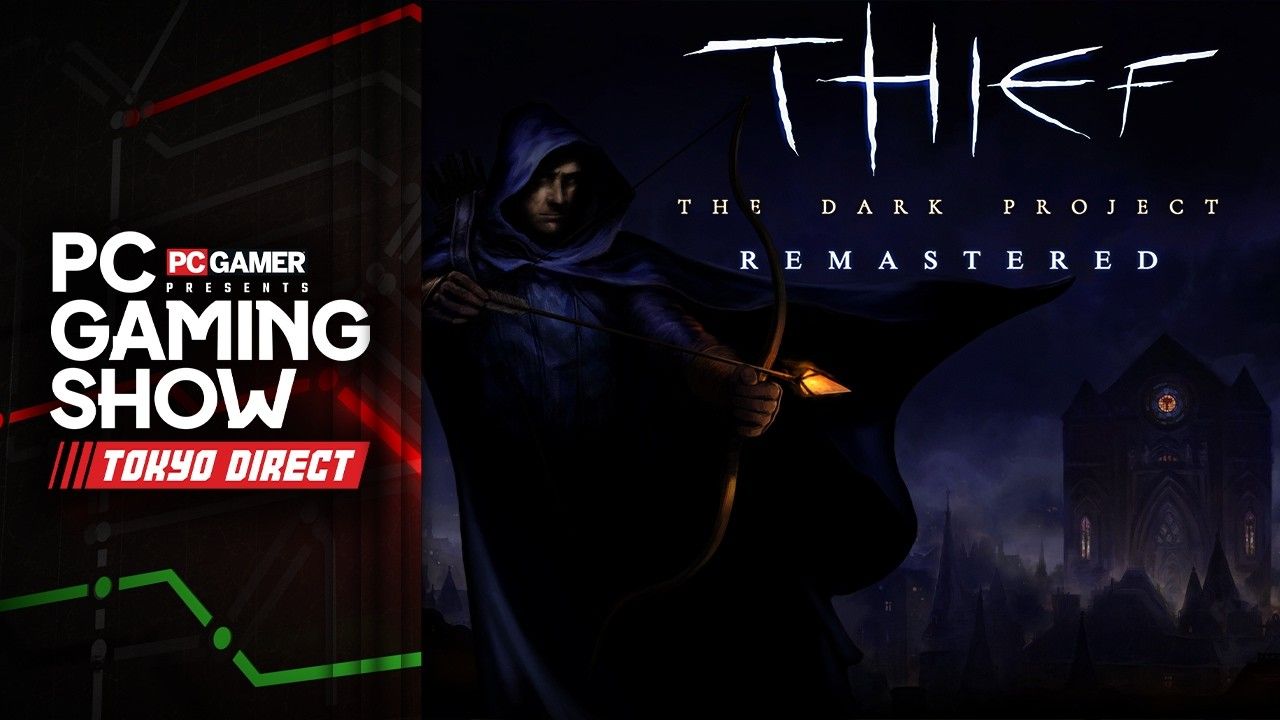

With Nightdive’s first Thief remaster built around Thief Gold, the Thief 2 Remastered conversation has shifted toward whether a future update should revive the unrealized Thief 2 Gold instead of only polishing The Metal Age.
Image: pcgamer.com
Nightdive’s first Thief remaster has reset expectations for the sequel
The most concrete development is not a Thief 2 Remastered announcement. It is Nightdive Studios’ confirmed work on Thief: The Dark Project Remastered, which is being positioned as a preservation-minded update of Looking Glass Studios’ 1998 stealth classic. According to Press Play Media’s Gamescom preview, the remaster is developed by Nightdive and published by Atari, runs on Nightdive’s KEX Engine, and is based on Thief Gold rather than only the original 12-mission release. GamingOnLinux, citing the game’s trailer and prior press materials, also lists the Gold content as part of the package, including three additional missions, five new enemy types, modern controller support, achievements, a mission selector, a behind-the-scenes Vault, and built-in support for custom campaigns.
That choice has given the Thief 2 Remastered debate its shape. PC Gamer has already framed the argument directly with the headline that Thief 2 Remastered should be Thief 2 Gold, and the outlet’s available text describes Nightdive’s Thief remaster as looking like a carefully judged but transformative update. The tension is obvious: if the first game is returning in its expanded Gold form, should any future classic PC game remaster of Thief II: The Metal Age treat the sequel as a finished museum piece, or as a chance to address the lost expanded edition that Looking Glass never shipped?
For now, the confirmed facts stop at the first game. GamingOnLinux says there is still no release date for Thief: The Dark Project Remastered. Press Play Media lists planned platforms as PC, PlayStation 4, PlayStation 5, Xbox Series X|S, Nintendo Switch, and Nintendo Switch 2. No source provided here confirms Thief 2 Remastered as announced, dated, priced, or in development. The current argument is therefore about precedent, expectation, and preservation philosophy rather than a live product page.
Thief 2 Gold is the ghost in the machinery
The reason fans keep returning to Thief 2 Gold is that it was never a normal wishlist item. According to the Thief Wiki’s compilation of development history, Thief II Gold was a planned rerelease of Thief II: The Metal Age, intended to add new levels, revise an existing level, and introduce a new weapon. The same entry says the project was being developed alongside Thief III and was meant to restore or expand material after Thief II’s rushed development cycle. Looking Glass Studios closed before the rerelease could ship.
That history gives the Thief 2 remake debate a different charge from the usual remaster checklist. With many older games, the argument is about widescreen support, controller mapping, frame rate, cleaned-up textures, and whether old lighting still reads correctly. With Thief II, there is an extra question sitting in the shadows: should a remaster attempt to become the expanded edition that the original studio never completed?
The available evidence for Thief 2 Gold is partial, and that matters. The Thief Wiki says the project was never officially announced, though it points to at least two sources for planned additions: designer Emil Pagliarulo’s development journal, reportedly acquired by a fan in 2004, and an outline with rough DromEd map files that level designer Daniel E. Todd posted on TTLG in 2006, said to have come from an undisclosed source. The wiki also notes that lead designer Tim Stellmach mentioned Thief II Gold in an interview after Looking Glass closed, without elaborating. The same entry cautions that unsupported claims about the project should not be treated as established fact.
That caution is the heart of the argument. A future immersive sim remaster could restore known fragments, but filling the gaps would require interpretation. At that point, preservation and authorship begin to overlap.
A polish-only remaster would solve fewer Thief II problems than it seems
On paper, Thief II looks like an easier candidate for a straightforward remaster than the first game. PCGamingWiki lists Thief II: The Metal Age as a Windows release dated March 21, 2000, placing it two years after Thief: The Dark Project. Its reputation rests on the same first-person stealth grammar: shadows, sound propagation, patrol routes, tool selection, lockpicking, scouting, and missions that behave less like corridors than hostile civic spaces.
But Thief has never been a series where surface polish carries the whole experience. Press Play Media’s preview of the first remaster emphasizes how much of the design still turns on the light gem, noisy surfaces, guard reactions, alarms, and tools such as the blackjack, sword, and specialized arrows. Those systems create the rhythm. A polished wall texture does little if the darkness stops feeling legible, if footstep audio loses its menace, or if a new control scheme makes Garrett feel too fast, too clean, or too forgiving.
That is why some fans see Thief 2 Remastered as a potential test case for the whole idea of an immersive sim remaster. The genre’s drama sits in systems colliding. A guard hears a careless step on tile. A rope arrow changes a route. A blackjack swing solves one problem while creating another body to hide. The set-piece design is spatial rather than cinematic, built through pressure, patience, and player improvisation.
A polish-only release could still be valuable if it improved compatibility and accessibility while preserving behavior. PCGamingWiki’s Thief II page already points players toward community solutions such as NewDark, T2Fix, and the OldDark Legacy Patch, which shows how much fan labor has gone into keeping the original usable on modern PCs. The higher bar for an official remaster is that it must offer something cleaner, safer, and more coherent than the patchwork players already know, without sanding down the nervous pacing that defines The Metal Age.
Nightdive’s current feature list creates a sequel-sized question
The first Thief remaster’s published feature list explains why the debate has resurfaced now. GamingOnLinux reports that Thief: The Dark Project Remastered includes KEX Engine work, up to 4K and 120fps visuals, enhanced textures, models, and animations, small fixes to original level design, achievements, a weapon and item wheel, mission selection, and modern gamepad support with rumble plus motion and gyro controls on compatible hardware. Press Play Media also notes built-in custom campaign support for PC players and says the remaster includes a Vault of development material.
Those are not radical remake features, but they are broader than a bare resolution bump. They suggest a remaster that wants to make an old stealth game playable for modern audiences while leaving its original logic mostly intact. Nightdive CEO Stephen Kick, quoted by GamingOnLinux from an earlier press release, said the studio had “preserved the tension and intelligence of the original while enhancing it for modern players.” Eidos-Montréal general manager Patrice Baig, quoted in the same report, said Thief set a standard for immersion and atmospheric storytelling and that the remaster lets a new generation experience its influence.
If that philosophy carries into a hypothetical Thief 2 Remastered, the central question becomes how far “enhancing” can go. Including Thief Gold content is straightforward because Thief Gold was a released product. Treating Thief II like Thief 2 Gold would be harder because Thief II Gold was unfinished and, according to the Thief Wiki, most intended additions never moved beyond early development.
That distinction changes the job. For The Dark Project, Nightdive can point to an existing expanded edition as the source. For The Metal Age, any attempt to create a Gold-style edition would need to disclose what comes from recovered material, what comes from design notes, and what has been newly built. Without that transparency, a restoration could easily be mistaken for a reconstruction.
The fan demand is really about mission design, not nostalgia packaging
The phrase Thief 2 Gold can sound like a branding request, as if fans simply want a deluxe subtitle attached to a new executable. The deeper demand is about mission design. Thief II’s identity is bound to elaborate infiltration spaces, stealth pacing, and objectives that encourage players to read architecture as a threat. The sequel leaned harder into industrial, mechanical, and urban tension than the first game, and any expansion would be judged by how well it understands that cadence.
The Thief Wiki’s summary of the canceled Gold plan says new levels were expected, with Daniel E. Todd’s outline reportedly naming four. The provided source text only identifies one in detail, Raid on Willard Square, described as a slums-set mission and the furthest along among the planned missions. That is enough to show why the idea still pulls at the community, but not enough to prove what a finished campaign would have looked like.
This is where the argument becomes sharper than a normal classic PC game remaster debate. A new mission in Thief II is not interchangeable bonus content. It has to manage darkness, sound, guard density, patrol timing, loot placement, objective escalation, readable verticality, and the fragile comedy of player plans going wrong. Add too little and the restored content feels like an archival curiosity. Add too much and the remaster begins to overwrite the historical record it claims to honor.
The first remaster’s custom campaign support may be the quietest but most important clue. GamingOnLinux says built-in support will give access to “thousands of hours” of additional content. If a future Thief 2 Remastered followed that path, it could preserve the shipped game, document the Gold material, and give players a cleaner route into fan missions without pretending every missing piece can be officially completed with certainty.
What readers can safely expect, and what remains wishful thinking
For anyone tracking Thief 2 Remastered, the practical guidance is simple: do not treat the current debate as confirmation of a sequel remaster. The sources provided confirm Thief: The Dark Project Remastered, not Thief II: The Metal Age Remastered. They also confirm that the first remaster has no release date yet, according to GamingOnLinux, though Press Play Media lists a broad platform plan including PC, current and last-generation PlayStation and Xbox hardware where applicable, and both Nintendo Switch systems.
There is no confirmed Thief 2 Remastered release window, price, upgrade path, platform list, trailer, or store page in the supplied material. There is also no confirmed plan from Nightdive, Atari, Eidos-Montréal, or any rights holder to reconstruct Thief II Gold. What exists is a pressure point created by Nightdive’s handling of the first game and by long-running fan interest in a canceled expansion that has been documented through journals, outlines, rough files, interviews, and community research with varying levels of certainty.
If you want to play Thief II today, the PC version remains a community-supported classic, with PCGamingWiki highlighting unofficial fixes such as NewDark and T2Fix. If you are waiting for an official modern version, the first remaster will likely be the better indicator of Nightdive’s approach than any speculation around the sequel. Watch how it handles mission flow, input, lighting, sound, and custom campaigns, because those choices would matter even more in The Metal Age.
The strongest version of a future Thief 2 Remastered would not be the shiniest one. It would be the most honest one: clear about what Looking Glass shipped, clear about what Thief 2 Gold was planned to become, and careful enough to let Garrett move through the dark with the same dangerous silence players remember.