
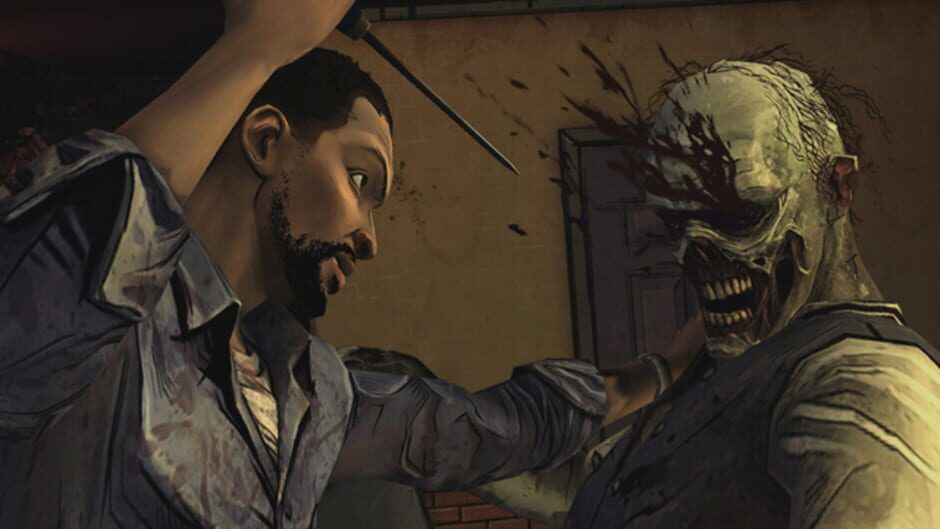

TRAILMARK Games and AMC take The Walking Dead back to the arcade with Streets of Survival, a side-scrolling beat ’em up that reimagines the All-Out War saga with pixel art, playable fan favorites, and a focus on crunchy combat over moral choices.
"The Walking Dead" has been many things in games: a narrative adventure, a survival FPS, a co-op shooter, even a VR experiment. The newly announced The Walking Dead: Streets of Survival throws all of that aside and asks a much simpler question: what if All-Out War played like a classic arcade beat ’em up?
Streets of Survival is a side-scrolling brawler from TRAILMARK Games and AMC Global Media that reimagines one of the TV show’s most explosive arcs as punchy, stage-based action. A Steam demo is already live, and the full release is planned for PC, PlayStation 5, Xbox Series X|S, Nintendo Switch, and Nintendo’s next Switch successor.
An arcade-first take on The Walking Dead
Where most Walking Dead adaptations lean into grim survival or branching dialogue, Streets of Survival is built like something you would have found in a 90s arcade cabinet. Stages scroll from left to right, enemies pour in from both sides, and you clear screens with a mix of melee strings, ranged attacks, and satisfying specials. Walkers shamble in as disposable fodder while human enemies from Negan’s Saviors bring more dangerous patterns and weapons.
The structure leans into replayable, combat-driven missions rather than open-world scrounging or resource meters. Each encounter is about managing crowds, juggling threats at different ranges, and timing big moves to keep yourself from being overwhelmed. It is The Walking Dead through the lens of Final Fight and Streets of Rage, not DayZ or Telltale.
That tonal shift changes how the source material lands. All-Out War becomes a sequence of punchy, self-contained brawls, taking you from one battleground to the next with minimal downtime. It is less about agonizing over who to save and more about how stylishly you can clear a lane of walkers before a Savior with a rifle lines up a shot.
Playable icons: Rick, Daryl, and Michonne
At launch, Streets of Survival puts three fan favorites in your hands: Rick Grimes, Daryl Dixon, and Michonne. Rather than simply reskinning one moveset, TRAILMARK leans into their signature weapons and personalities so each character feels distinct in the thick of a fight.
Rick plays like a balanced frontliner, leaning on close-quarters combos with the option to pull out his revolver for clutch crowd control. His toolkit suits players who want to be in the middle of a scrap, staggering enemies in a line and finishing them with a precise shot when needed.
Daryl offers more range and mobility. His crossbow gives him safer options against gun-toting Saviors and tougher walkers, and his melee looks more evasive, weaving in and out of danger instead of simply trading blows. In a genre that often rewards aggression above all else, Daryl’s hit-and-run style gives careful players a different rhythm.
Michonne unsurprisingly feels like the heavy-hitting specialist. Her katana slices through clustered enemies and rewards good spacing, carving through groups of walkers before pivoting to priority targets in the back line. If Streets of Survival follows through on its promise of character-specific abilities, Michonne could become the ideal pick for players who love managing enemy waves with precise arcs and wide swings.
All three characters use their TV designs and weapons, grounding the arcade action in recognizable imagery from the show. The game’s first trailer and early descriptions hint at character-specific finishers and powerful special moves tailored to each hero’s fighting style, which should help keep repeat runs fresh.
Pixel-art apocalypse
The most immediate surprise in Streets of Survival is its look. Instead of gritty realism or comic-book cel-shading, TRAILMARK opts for retro-inspired pixel art that sits somewhere between 16-bit and modern indie brawler.
Characters are chunky and expressive enough that you can recognize Rick, Daryl, and Michonne at a glance even when they are clearing a screen full of walkers. Animations lean into snappy impact, selling the weight behind a bat swing or katana slice while still reading clearly amidst busy crowds. Walkers shamble with exaggerated lurches, and Saviors stand out thanks to distinct silhouettes and weapons.
The environments pull from some of the TV show’s most iconic war-era locations. Alexandria’s streets, Hilltop’s barricades, and the industrial sprawl of the Sanctuary all appear as side-scrolling stages, rearranged into lanes, platforms, and hazard-filled arenas that make sense for a beat ’em up. Background details nod to specific episodes and battles while keeping the foreground clean enough to read enemy telegraphs.
The pixel treatment has a second benefit: it lets Streets of Survival lean into gore and chaos without veering into pure shock. Blood sprays and dismembered walkers read as crunchy arcade feedback rather than photoreal carnage, which fits its quarter-muncher inspirations.
All-Out War as a stage-by-stage brawler
Narratively, Streets of Survival zeroes in on the All-Out War arc, covering the escalating fight between Rick’s alliance and Negan’s Saviors. Rather than recreating entire seasons beat for beat, the game plucks out the most battle-ready sequences and strings them together as consecutive stages.
You roll through the frontlines of Alexandria, push out toward Hilltop, and eventually march on the Sanctuary. Along the way, the game mixes human firefights with desperate defenses against walker hordes, treating both as opportunities for big set-piece brawls.
Boss fights are where the fan service dials up. Negan is the headliner, swaggering into frame with Lucille in hand for a marquee showdown. Simon shows up as another major encounter, and the game digs into some of the series’ most memorable walkers for special boss-style fights, including the armored Winslow and the infamous Well Walker. These encounters are tuned as pattern-based duels that draw from old-school arcade design, swapping QTEs and cutscene kills for attack cycles to learn and punish.
Story sequences appear to be lean, bridging missions with enough context to place each fight in the broader war without slowing the pace. It is a retelling built for momentum, not a full rewatch.
How Streets of Survival differs from past Walking Dead games
Streets of Survival is a stark pivot from almost every major Walking Dead release so far. Telltale’s series built its identity on moral choices, dialogue, and long-term consequences, with action largely confined to quick-time events. Overkill’s The Walking Dead and The Walking Dead: Saints & Sinners framed the apocalypse as gritty, first-person survival, focusing on scavenging, stealth, and tense resource management.
By comparison, Streets of Survival is linear, focused, and deeply mechanical. There is no inventory Tetris, no morality meter, and no open maps to comb for supplies. The core loop is about mastering combos, prioritizing targets, and using character-specific moves to keep control of the screen. Encounters are built to be replayed for higher proficiency and potential scoring rather than navigated once for narrative resolution.
The shift to pixel art and an arcade ruleset also reframes The Walking Dead’s trademark brutality. Instead of slow-burn dread or gut-wrenching narrative turns, the tension is rooted in whether you can survive another wave with slivers of health left and a special meter ready to blow. It is a different flavor of stress that trades emotional devastation for the thrill of a hard-won clear.
In doing so, Streets of Survival opens the door for fans who love the world and characters of The Walking Dead but prefer skill-driven action to dialogue trees. It also has room to pull in players who have no attachment to the TV series and just want a new co-op-ready brawler, provided TRAILMARK leans into difficulty curves, enemy variety, and character depth as development continues.
With a demo already available on Steam, it will not be long before players can test whether this mash-up of grim TV drama and quarter-crunching combat really works. If it sticks the landing, The Walking Dead: Streets of Survival could stand out as one of the franchise’s most surprising and replayable spin-offs to date.