
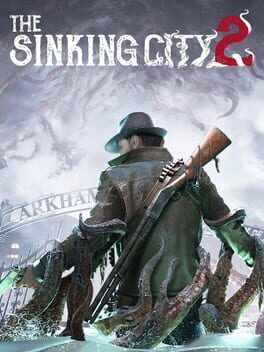
Frogwares rip up their own rulebook for The Sinking City 2, pivoting from open-ended sleuthing to tightly wound survival horror. After going hands-on, we look at how its flooded Arkham, brutal combat, and stripped-back investigations stack up against Resident Evil and Silent Hill, and whether this is finally the right balance of clues and terror.
A Different Kind of Drowning
The Sinking City 2 does not waste time pretending it is a detective game first. Within minutes of stepping into flooded Arkham as Calvin, a man wrecked by grief after a failed ritual to resurrect his lover, it becomes obvious that Frogwares has rebuilt this sequel around survival horror. The case files, clue boards, and optional wandering of the original are still present, but they orbit a very different sun now: tight, oppressive levels where every bullet matters and every corridor could be your last.
It feels less like another open-city mystery and more like a lost sibling to Resident Evil 2 and Silent Hill 2 that washed ashore somewhere in Lovecraft country.
Flooded Arkham as a Survival Horror Stage
Arkham is still semi-open, but the city has become a stage for paced horror rather than a playground for freeform sleuthing. You skim its canals by boat, gliding past collapsed tenements, drowned storefronts, and the occasional light burning too warmly behind broken glass. Rather than push you to endlessly fan out for clues, the layout now funnels you into discrete scenarios.
The hands-on slice focused on two of these: an early church investigation and a later visit to Akeley Hospital. Both areas mirror the best of Resident Evil and Silent Hill level design, just filtered through a sodden, barnacled aesthetic. Doors remain stubbornly locked until you secure a specific key or tool. Shortcuts click open as you loop back through hallways you know too well. The map fills in room by room, helpfully flagging spaces that still hide items in arterial red until they are fully picked clean.
Where the original Sinking City sometimes felt directionless as you trudged through an entire town searching for the one right lead, the sequel’s Arkham channels that energy into self-contained horror vignettes. You are still an investigator at heart, but the city no longer lets you roam far enough to dilute the dread.
Atmosphere: Between RE’s Panic And Silent Hill’s Dread
Resident Evil has always been about sharp shocks, jump scares, and the scramble of survival. Silent Hill leans into slow psychological erosion. The Sinking City 2 tries to inhabit the narrow space between them. Lighting is key here: shimmering reflections from floodwater crawl up the walls, while unreal, almost stage-like illumination singles out clues or ritual sites. It is less garish than Resident Evil’s recent remakes, but more legible and “gamey” than the fog-choked dreamscapes of Silent Hill.
The church section uses that clarity to generate tension. You can see the desecrated altar from the far end of the nave, lit like an accusation, yet every step toward it feels heavier as whispers slither in under the sound of the water. In Akeley Hospital the tone shifts from religious dread to clinical decay. Here the influence of Silent Hill is stronger: tiled floors stained with something that was not always water, wards where beds seem positioned to watch each other, and corridors that echo with something between coughing and chanting.
Where Resident Evil would punctuate this with big monster reveals and explosive setpieces, Frogwares prefers the slow knife. Encounters come in short, vicious bursts, but the real horror is the constant suspicion that the world is flexing around you. Background mutterings sync up too perfectly with your actions. Doors that were quiet on your first pass rattle on the second. The game keeps nudging you toward the feeling that Arkham itself, not any single enemy, is the thing you are trapped with.
Combat: Resident Evil Muscle With Lovecraftian Fragility
The original Sinking City never felt comfortable as a shooter. Guns were clumsy, enemies were spongy, and firefights were more obligation than thrill. The sequel’s over-the-shoulder combat is far closer to modern Resident Evil, but with its own rhythm. Weapons have punch, crosshairs tighten satisfyingly when you steady yourself, and every idiotically spent bullet can and will come back to haunt you.
Basic foes are staggeringly human at first glance, twisted only slightly out of shape, which plays nicely into that Lovecraftian discomfort of seeing the too-familiar corrupted. Their weak points invite deliberate, controlled firing, but the cramped rooms and their lurching speed push you toward panic. More agile horrors scramble and juke around your aim, dragging the fights away from methodical headshots and toward desperate space control. Melee exists, and there are environmental traps to exploit, but neither feels safe enough to lean on as a default plan.
Resident Evil’s clear color-coded weak spots and generous animation tells are mostly absent. The Sinking City 2 wants you to be uncertain. Shots land, creatures scream, but the line between “safe enough to loot” and “one more thing is about to round that corner” is stubbornly blurry. On the hospital floors especially, combat sits in a sweet spot between competence and fear. You are capable enough to feel accountable for your mistakes, but never secure enough to relax into power fantasy.
Survival Systems: Borrowed Tricks, Different Goals
Frogwares is absolutely using the modern Resident Evil toolkit. There are safe rooms stocked with storage chests and manual saves, the comforting clunk of a door you know will not be kicked down behind you, and an inventory that cannot possibly hold everything you want. Healing and ammunition can be crafted from scavenged materials. The map clearly marks which rooms still have something left to scavenge.
The important difference is what these systems are in service of. In Resident Evil they often become a light optimization puzzle in their own right, encouraging efficient route planning. Here, the focus is on psychological strain. Arkham throws just enough supplies at you to keep you moving, but rarely enough to let you feel stocked. Crafting is less about making optimal use of parts and more about bargaining with yourself: spend some precious materials now to feel safer, or hoard them in fear of something worse just out of sight.
The dream essence upgrade system hints at a longer arc of character growth that runs counter to the fragility of survival horror. Instead of flashy active abilities, you invest in slightly faster reloads, firmer hands, small boosts to survivability. These upgrades feel more like scars than skill points, little acknowledgements of what you have endured rather than keys to a power curve that turns you into an action hero.
Investigations: Trimmed Back, Sharpened Edges
The biggest question for returning players is what survives of The Sinking City’s investigative core. The answer is that Frogwares has pruned aggressively. There are still clue boards, still fragments of information you stitch together to form deductions, but these now sit inside contained scenarios rather than sprawling across the city.
In the church, investigating is almost foreplay for the horror. You examine ritual paraphernalia, connect witness statements with physical evidence, and eventually piece together the shape of the disaster that claimed the congregation. Solving the board does not trigger a big narrative branch; it recontextualizes the space and primes you for the encounter that follows. You are not deciding the fate of Arkham, you are figuring out just enough to know what you are about to be locked in with.
Akeley Hospital shows the new balance more clearly. Here, clue-hunting is woven into classic key item puzzles. Case notes hint at secret storerooms, patient files suggest which locked doors might hide more than dusty linens, and offhand diary entries point to environmental solutions that are easy to miss if you speed through with gun raised. You are still reading, still thinking, but the game no longer asks you to cross-reference half a dozen city archives to progress.
Compared to Silent Hill’s more abstract puzzle style and Resident Evil’s brisk, often prop-driven riddles, The Sinking City 2 lands somewhere between. Its investigations are concrete and grounded, usually focused on who did what in a specific room, yet they carry an undercurrent of unreality. Characters recall sequences that could not have happened. Objects appear to have been moved by hands that do not exist. The deduction boards capture that uncertainty nicely, offering logical conclusions that still feel tainted by something you cannot quite articulate.
Pacing: Finally Pulling In The Same Direction
The first Sinking City often seemed torn between Frogwares’ detective lineage and the expectations of an action-horror open world. Story beats, clue gathering, and creature encounters all felt like they were arguing over the same space. In this sequel, pacing is far more disciplined.
Each location in the preview had a clear spine. You enter, you orient yourself, you scavenge and solve, then the screws tighten. Exploration and investigation dominate the opening stretch of a zone, slowly seeding dread. Combat spikes as you push toward your objective, forcing you to cash in the resources and knowledge you have been banking. A short, sharp climax usually follows, before the game lets you breathe again in your next safe room or boat ride across the water.
It is a rhythm much closer to Resident Evil’s modern remakes, with their loop of calm exploration, escalating threat, then release. Where The Sinking City 2 diverges is in how often it stops to let you think, even when monsters are somewhere on the floor below. Notes, environmental storytelling, and clue boards are not bolt-ons; they are the pacing valves that let Frogwares stretch or compress a sequence without resorting to filler combat.
Silent Hill fans may find the structure more traditional than they expect, but the mood leans heavily that way. Sequences linger just a little too long, conversations trail off into unnerving silence, and even objective markers feel reluctant, as if the game would rather you wander a while and soak in how wrong this world has become.
Is This The Right Balance?
Based on this early slice, The Sinking City 2 feels like the most confident thing Frogwares has made. The studio has spent years refining their idea of detective play, only to realize that sometimes the best way to serve that fantasy is to pull back. By chaining investigations to tightly designed survival horror spaces, they give every clue tangible stakes. You are not solving puzzles for their own sake; you are clawing for the information that might keep you alive ten minutes longer.
Compared directly to Resident Evil, The Sinking City 2 is less polished in its action and less laser-focused on pacing, yet it comes closer than expected to that series’ sense of constant, procedural dread. Against Silent Hill, it cannot fully match the sheer psychological weirdness, but it channels a similar sense of guilt-soaked spaces and unknowable judgement, all while offering investigative tools that those classics never attempted.
Whether it will hold that tension over a full campaign is still an open question. Systems that feel beautifully taut in a handful of hours can sag across a dozen if the resource drip falters or the monster roster wears thin. But for now, Frogwares appears to have found a much clearer identity: a survival horror game where you investigate not just to progress the story, but to understand what the city is doing to you.
Arkham may be smaller and more constrained this time, but in those drowned streets and suffocating corridors, The Sinking City 2 at last feels like it knows exactly what kind of nightmare it wants to be.