
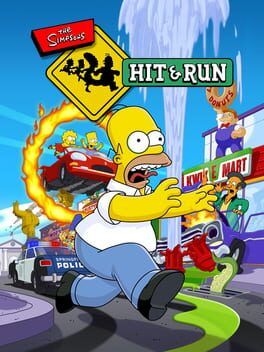
Why The Simpsons: Hit & Run still has unusual cultural pull in 2026, what showrunner Matt Selman actually said about a remake or sequel, and the messy licensing and publisher hurdles that stand between fan nostalgia and an actual new game.
In 2026, there are plenty of cult classics people say they want back. Very few of them trend every few months, inspire full-blown fan remakes that get hit with takedowns, and keep getting name‑checked by the people who actually work on the license. The Simpsons: Hit & Run is one of the rare ones that will not leave the conversation.
Every time someone with "Simpsons" in their job title hints at the game, the internet tries to manifest a remake into existence. The latest round of speculation comes from showrunner and Hit & Run writer Matt Selman, who has once again been asked the same question fans have been asking for years: will Springfield’s favorite open‑world knockabout ever come back?
The answer, once you strip away the hopeful headlines, is basically this: people who make The Simpsons know you want Hit & Run. They are not promising you anything. And even if they wanted to, getting it made would be a legal and logistical maze.
What Matt Selman actually said this time
Across recent interviews with IGN, Push Square and Nintendo Everything, Selman’s message has stayed consistent. When asked about a Hit & Run remake or sequel, he said fans should "never say never," adding that the team behind The Simpsons is acutely aware of the game’s popularity. In one of the pieces, he flatly notes that "we know they want it" when talking about demand for a PS5‑era return.
There are a few important nuances buried under the hype.
First, Selman is talking about interest, not an in‑development project. There has been no announcement of a remaster, no teaser, no platform list, no developer attached. His comments land more as "we’re not blind to this" than "watch this space."
Second, his tone is notably more optimistic than in 2021, when he famously described Hit & Run’s rights situation as a "complicated corporate octopus." Back then, the implication was that everyone involved knew it would be cool, but untangling the contracts would be a brutal job with unclear payoff. Now, with the game’s cult status only more obvious, Selman sounds more open to the idea. That shift in tone is exactly what has re‑ignited the conversation.
Third, the optimism is still conditional. Across the coverage, Selman keeps circling back to the same point: fan demand matters, but it is only one factor. Internal priorities on The Simpsons, Disney’s broader plans for the brand, and the realities of modern video game production all sit between a nice quote and an actual greenlight.
So "never say never" is not a coy tease that something is secretly happening. It is closer to "it is not impossible, if a lot of pieces line up."
Why Hit & Run has such strange staying power in 2026
If you look at it in purely mechanical terms, The Simpsons: Hit & Run should have aged into obscurity. It is a licensed game from 2003, built in the shadow of Grand Theft Auto 3, with floaty platforming and escort‑style missions that feel downright hostile by modern standards. Yet players in 2026 are still hunting down used copies, modding the PC version, and making hour‑long retrospectives about why it "still holds up."
Part of the answer is timing. For a huge slice of players now in their mid‑20s to mid‑30s, Hit & Run was the perfect storm of after‑school TV and after‑school gaming. You watched The Simpsons every evening, then booted up a game that let you run around Springfield with a level of freedom no episode could match. The connection between show and game was unusually tight. Voice actors, writers and the art style all lined up, so it felt like an extension of the series rather than an off‑brand tie‑in.
There is also the simple fact that Hit & Run delivered something even modern Simpsons games have not: an open, explorable Springfield that felt alive. The town was carved into big, looping districts that rewarded messing around. You could drive the family sedan off jumps, discover bizarre secret vehicles, and stumble into references pulled from all over the show’s history. Springfield has always been a character in The Simpsons, and Hit & Run let you hang out with that character.
Compared with other licensed games of the era, it was shockingly authentic. Many early 2000s TV tie‑ins outsourced writing and leaned on generic mission structure. Hit & Run had jokes that felt like the show, cutscenes that played like mini‑episodes, and levels that poked fun at open‑world game design while still delivering the fantasy. That is why you still see clips of Homer quoting in‑game lines on TikTok in 2026 and why streamers regularly revisit it.
The broader context matters too. The Simpsons itself is wrestling with its legacy after almost four decades on air. Arguments about when the show "fell off" are older than some of its viewers. Hit & Run has become part of the "golden age" package in people’s minds, bundled with seasons and jokes that defined the series for them. When players ask for a remaster, they are often asking for a preserved slice of the version of The Simpsons they grew up with.
Finally, the drought helps. Big, console‑scale Simpsons games have essentially vanished. Mobile titles and event tie‑ins exist, but nothing has stepped into Hit & Run’s space. In an industry that has brought back everything from PS1 mascot racers to obscure Dreamcast curios, the absence of a new Simpsons game that lets you mess around in Springfield feels more glaring every year.
The messy reality behind a Hit & Run revival
If cultural cachet were the only thing that mattered, The Simpsons: Hit & Run would already have a deluxe remaster on every platform. In practice, the path from fan nostalgia to a shipping product is tangled.
The first layer is licensing. The Simpsons is a Disney property via 21st Century Fox, which already means multiple corporate groups care about how and where the brand appears. Any new Hit & Run project would require Disney’s games and licensing teams to sign off, likely alongside the show’s producers. Even if everyone likes the idea on paper, it needs to fit into whatever long‑term transmedia and merchandising plans Disney has for The Simpsons as a whole.
Then there is the original game’s rights history. Hit & Run was developed by Radical Entertainment and published by Vivendi Universal Games, which later got swept into the Activision Blizzard machine. Tracing exactly who owns which slice of which version of the code, the art, the audio and the publishing rights is rarely simple two decades later. Some elements may be cleanly owned, others might sit in old contracts written for a pre‑streaming, pre‑Game Pass world.
On top of that sits the usual pile of music and likeness issues that dog older licensed games. Hit & Run uses music, background gags, billboards and parodies that echo real‑world brands and songs. Some of that was cleared for the original release in ways that might not map cleanly to 2026 platforms and territories. Every one of those questions has to be answered before you can confidently ship a remaster on modern storefronts.
There is also a platform strategy problem. In 2003, releasing on PS2, Xbox, GameCube and PC covered essentially everyone. In 2026, you are talking about PlayStation 5, Xbox Series consoles, Switch’s successor, PC, maybe cloud or subscription services, and potentially mobile. Each of those platforms has certification requirements and content guidelines that did not exist in the early 2000s. Even small things like mission descriptions or jokes could invite extra scrutiny now.
That is before you even ask "who actually makes it?" Radical Entertainment as it existed in 2003 is gone, although veterans have regrouped as New Radical Games, which is part of why fans are so eager to link them to a hypothetical Hit & Run project. Getting a modern studio to touch 20‑year‑old code can be painful. Some licensed remasters end up rebuilt on new tech partly because no one wants to wrestle with a custom engine written for the original Xbox.
From a publisher’s perspective, all of this tallies into cost and risk. Hit & Run has a loud fan base and solid name recognition, but it still competes for budget with new games that might build new intellectual property instead of resurrecting old ones. Any deal involving Disney’s license, legacy rights holders and a modern studio will be complex to negotiate, and that negotiation has to be worth the trouble.
What a realistic path to a comeback actually looks like
If anything happens with The Simpsons: Hit & Run, it is more likely to be slow, cautious and incremental than a sudden "full remake" bombshell.
The safest move on paper is a lightly modernized remaster or "classic edition." That would clean up resolution and performance, patch out the worst technical issues and perhaps offer a few quality‑of‑life tweaks like better checkpoints, modern save systems and accessibility options, while taking extreme care not to break what people remember. This path appeals to nostalgia and keeps costs somewhat contained, but it still runs into the full gauntlet of licensing and rights work.
A ground‑up remake is much riskier. Rebuilding Springfield in a contemporary engine, re‑recording dialogue where needed and designing modern mission structure would all be expensive. Worse, changing too much risks alienating the very fans who pushed for the project. When a game’s cultural cachet is tied to how it felt at a very specific point in time, a remake has a narrow target to hit.
There is also the question of whether a hypothetical "Hit & Run 2" would work better than a straight revival. A sequel could be set in a contemporary version of Springfield, reflect how the show has changed, and avoid some of the re‑licensing issues of the 2003 game by starting fresh. That approach would let a studio bring in new mechanics and structure tuned for 2026, while still leaning on the nostalgic power of the name. But it is even harder to pitch a full‑scale sequel if you have not first proven that the audience will support a rerelease.
From the outside, a modest remaster that tests the waters looks like the logical first step. It is the path we have seen with many other licensed favorites. Only if that succeeds would a more ambitious remake or sequel become likely.
Keeping expectations grounded
Matt Selman’s "never say never" has done exactly what it was always going to do: send a fandom already obsessed with Hit & Run spinning into another cycle of theories and wishlists. Underneath the headlines, though, his comments are careful. He acknowledges the love for the game, hints that it is not off the table, and stops well short of saying it is actually happening.
In that gap between interest and reality sit Disney’s priorities for The Simpsons, a web of old publishing contracts, the cost of making games in 2026, and the question of which studio would even take it on. None of those problems are unsolvable, but together they are heavy enough to keep Hit & Run hypothetical for now.
The reason the conversation keeps coming back is simple: The Simpsons: Hit & Run captured something licensed games rarely do. It nailed the tone of its source, gave fans the Springfield playground they always wanted, and landed at the precise moment an entire generation was ready to obsess over it. That is why it still has unusual cultural weight all these years later.
As of early 2026, that weight has bought fans a sympathetic showrunner, a lot of nostalgic thinkpieces, and some cautiously hopeful quotes. Until those "never says" turn into a concrete announcement with platforms and dates attached, The Simpsons: Hit & Run remains exactly what it has been for the last decade: a beloved relic that feels one good deal away from the revival everyone keeps imagining, but not yet close enough to count on.