

A deep pre‑launch look at The Seven Deadly Sins: Origin, its Ghibli‑esque open world, multiverse crossover hook, and how Netmarble is lining it up against Genshin Impact, Wuthering Waves, and Solo Leveling Arise.
Platforms: PS5, PC, iOS, Android
Model: Free‑to‑play, online, gacha
Launch: PS5/PC March 16, mobile March 23
Netmarble is not pretending The Seven Deadly Sins: Origin is anything other than an anime gacha heavyweight contender. Every trailer and feature drop positions it in the same mental space as Genshin Impact, Wuthering Waves, and Solo Leveling Arise, but with one key twist: it is selling a soft Ghibli‑style adventure layered over a multiverse crossover playground for one of the most merchandised shounen IPs of the last decade.
This is a pre‑launch preview and ecosystem analysis, not a scored review, but it is already clear why Origin is getting traction across both anime and gacha circles.
A Ghibli‑esque Britannia Built For Wandering
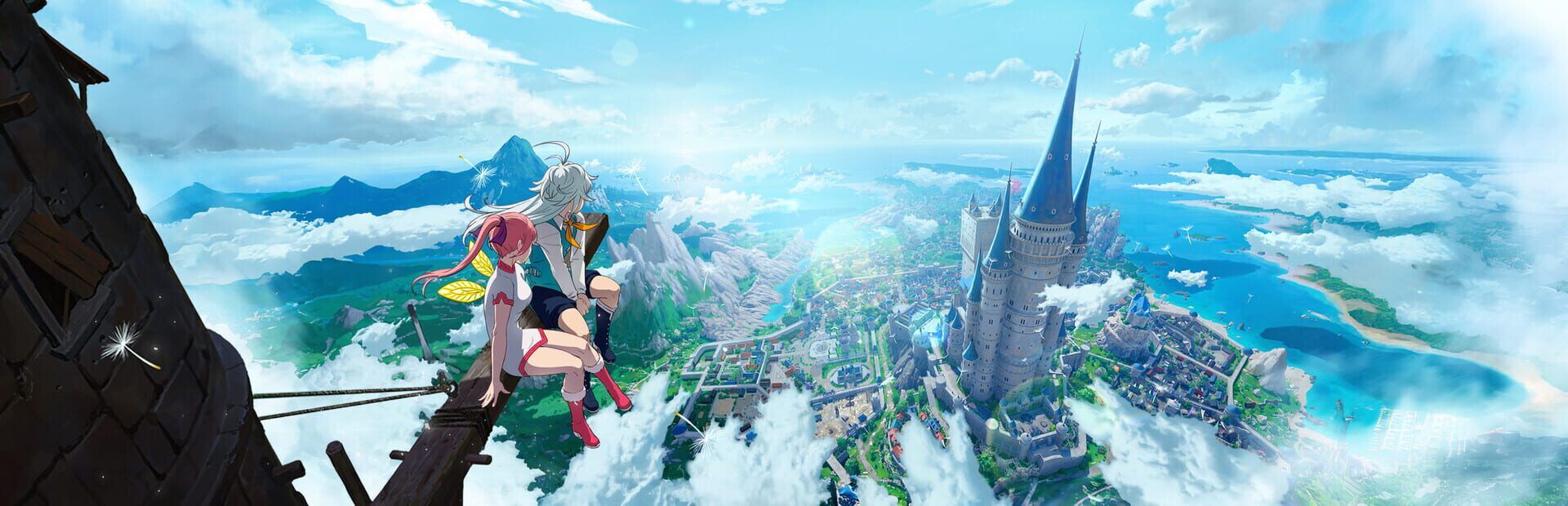
The hook that separates Origin from most anime gachas at a glance is its vibe. Netmarble’s trailers lean heavily into broad, painterly skies, rolling green fields, warm lighting and mellow orchestration. Britannia is presented less as a combat arena and more as a place you are meant to exist in.
Combat looks punchy and full of particle spam when skills pop, but almost every slice of marketing keeps cutting back to slower moments: Tristan and company fishing on a lakeside pier, gliding through shafts of sunlight, pitching camp, cooking, and poking around old ruins. It is the same contrast Genshin Impact used early on, but Origin leans even harder into the cozy fantasy. You are meant to feel like you are inside a slightly rough‑edged Ghibli film that just happens to have gacha banners attached.
Where games like Wuthering Waves chase sharp angular futurism and Solo Leveling Arise goes all‑in on black‑and‑neon spectacle, Origin’s art direction is softer and closer to traditional cel anime. That helps it do two things at once. It evokes the original Seven Deadly Sins anime, which fans will recognize immediately, and it makes exploration footage shareable even to people who are exhausted by high‑contrast, postprocessing‑heavy gacha visuals.
If Netmarble can get the day‑to‑day loop to match the trailers, Origin will be the rare gacha where logging in to just wander, gather, and hang out with favorite characters feels like legitimate play rather than time lost not grinding.
Multiverse Crossover As A Live‑Service Spine
Seven Deadly Sins: Origin is not a straight retelling of the manga. You play as Tristan, son of Meliodas and Elizabeth, in an original storyline built around a distortion of time and space. The Book of Stars, an ancient relic, is stirring up chaos across Britannia and essentially ripping the IP’s timeline apart.
That narrative trick matters because it neatly solves the long‑term content problem. The multiverse premise gives Netmarble license to pull in:
- Classic Seven Deadly Sins cast members at any point in their journeys.
- Characters and variants from Four Knights of the Apocalypse.
- Seasonal and non‑canon versions of fan favorites without having to justify them through the original plot.
Gacha games live or die by how long they can keep selling new units without the world feeling nonsensical. Origin’s story framework makes every banner and new region a valid “what if” timeline branch. It is effectively codifying the crossover impulse that Genshin and Wuthering Waves can only do through collaborations or special events.
In practice, that means a future where holiday Meliodas variants, AU Elizabeths, and timeline‑shifted Knights can all stand shoulder to shoulder in your party and still make sense in the lore. It is smart business design disguised as high‑concept fantasy.
Netmarble’s Track Record: A Blessing And A Warning
Netmarble brings both credibility and baggage to Origin. The studio already proved it can make a sticky anime gacha with The Seven Deadly Sins: Grand Cross. That game built a reputation for flashy ult animation, dense PVE content, and a surprisingly robust co‑op and PVP scene wrapped around an aggressive but survivable monetization layer.
From a pure operations standpoint, that is good news. Netmarble knows how to:
- Run synchronized global events.
- Push out festivals and crossover banners on a predictable cadence.
- Support both hardcore and casual players with layered progression tracks.
The flip side is community skepticism. Grand Cross became shorthand in some circles for creeping monetization, powercrept festival units, and the sense that you needed to keep up with every major banner if you cared about competitive content. On gacha forums, Origin’s trailers are regularly met with comments that boil down to “this looks great, but it is still a Netmarble game.”
Origin’s long‑term prospects are going to be shaped less by its launch quality and more by how quickly Netmarble telegraphs that it learned from Grand Cross. Transparent pity, sane banner pricing, and some generosity in pull income during the early months will all dictate whether wary players commit.
Systems Snapshot: How Origin Lines Up Against Its Rivals
Netmarble has not disclosed every detail of Origin’s systems, but between official info, press materials and beta impressions, a few pillars are clear enough to compare with the current big three.
Exploration And World Design
Genshin Impact set the template for modern anime open worlds: climb anything, glide everywhere, chain movement tools in clever ways, and tie exploration to stamina and puzzle‑gated chests. Wuthering Waves emphasizes verticality, mobility tech, and a more kinetic traversal kit. Solo Leveling Arise sidesteps most of that with a focus on mission hubs and instanced combat.
Origin looks deliberately closer to Genshin on paper. You roam a contiguous Britannia with distinct biomes, villages, and dungeons. Trailers show climbing, swimming, gliding and environmental interactions, but the pacing is slightly slower and more grounded. You are encouraged to stop and gather materials, cook, fish and uncover little side stories rather than sprint between waypoints.
The big differentiator is how Origin bakes its IP into the landscape. Britannia is a known quantity for fans, and early zones lean into iconic landmarks instead of generic elemental regions. Where Genshin pulled players into a new world cold, Origin is betting on the comfort of revisiting a familiar one with fresh eyes.
Party, Combat And Character Identity
Combat footage shows a three or four character team where you directly control one hero at a time and swap between them on cooldown. Each character has a basic chain, a kit of skills and an ultimate, and elements or archetypes that interact with enemy weaknesses.
Compared to Genshin’s elemental reaction sandbox, Origin appears slightly more straightforward. You still juggle cooldowns and synergies, but it is closer to an action RPG with burst swapping than a pure reaction engine. Wuthering Waves, meanwhile, emphasizes parries, perfect dodges and aggressive cancel windows, appealing to players who want a more technical combat loop. Solo Leveling Arise is heavily animation driven with big cinematic skills and less fine‑grained control.
Origin’s ace is its roster. It is pulling from years of manga and anime history along with Four Knights of the Apocalypse. Every character already comes with baked‑in fan identity. As long as Netmarble preserves that in gameplay design, the roster will sell itself even before we talk about meta relevance.
The risk is that Netmarble leans too hard on that popularity. If fan favorites are consistently locked behind low rates and aggressive banner structures, the goodwill generated by seeing them in high resolution 3D could evaporate fast.
Gacha Structure, Progression And Monetization
While specifics will solidify at launch, the broad strokes are familiar. Origin uses premium currency, tickets and multiple banner types, including separate character and weapon draws, mirroring both Netmarble’s past games and broader genre norms.
Genshin Impact built trust on a fully documented pity system and the sense that you could plan around future five stars. Wuthering Waves stumbled early with unclear rates and resource income, then recovered somewhat with compensation and adjustments. Solo Leveling Arise comes from a publisher experienced in strong monetization, and its grind versus spend balance is still contested among players.
Netmarble has a chance to come out ahead if Origin launches with:
- A clear hard pity that does not feel punitive.
- Regular free pulls or tickets through events and story completion.
- A sparing approach to limited, must‑have units.
If instead it mirrors the later life of Grand Cross, with stacked limiteds and steep powercreep, Origin will likely cap out as a successful IP gacha rather than a genre‑defining phenomenon.
Cross‑Platform Strategy And Live Ops
One of Origin’s quiet strengths is its simultaneous global reach. Launching on PS5 and PC first, then rolling into iOS and Android one week later, positions it as a genuine cross‑platform service from day one.
Genshin already proved the power of letting players bounce between phone, console and PC with persistent progress. Wuthering Waves is still building out its console presence. Solo Leveling Arise is more tightly focused on mobile and PC, with no big‑screen comfort out of the gate.
Netmarble is promising 12 language support and synchronized updates. If cross‑save is frictionless, Origin will be able to capture both the couch crowd and the commute crowd early, which is crucial in a year stacked with gacha releases.
Marketing: Selling Vibes First, Systems Second
Look at Origin’s trailers and key art and you can see a conscious strategy. The first thing they sell is not combat depth or currency counts. It is a mood.
The initial launch and animation trailers are framed like anime movie previews: sweeping shots of countryside, intimate character interactions, and a strong focus on Tristan as a relatable lead rather than a pure power fantasy avatar. Big fights and flashy skills arrive later in the edit as punctuation rather than the main subject.
Compare that with Wuthering Waves, which leaned into combat tech and mobility from the first beat, or Solo Leveling Arise, whose marketing is aggressively about spectacle and dominance. Netmarble is trying to catch a slightly different audience segment: players who like the idea of living in an anime world for years, not just chasing the next meta clear.
On top of that, the multiverse pitch gives every banner a clean marketing hook. “What if these characters met” or “visit this branch of Britannia where X went differently” is immediately understandable advertising, far easier to sell to anime fans than the more abstract worldbuilding of something like Genshin’s later regions.
Can It Actually Become The Next Big Thing?
So where does that leave The Seven Deadly Sins: Origin in the anime gacha food chain as it approaches launch?
On the plus side, it has:
- A beloved, already global IP with years of character equity.
- A Ghibli‑tinted visual direction that stands apart from its sharp, futuristic rivals.
- A multiverse premise tailor‑made for long‑term unit and story expansion.
- A publisher that has already run a successful Seven Deadly Sins gacha for years.
- A cross‑platform global launch with console, PC and mobile in the mix.
On the risk side, it faces:
- Community distrust of Netmarble’s monetization habits.
- Increasing fatigue with “Genshin‑like” open world gachas.
- Fierce competition for time from established live services.
Origin does not need to dethrone Genshin to be considered a success, but if we define “the next big anime gacha phenomenon” as a game that becomes a daily login fixture for millions across platforms and spawns its own peripheral ecosystem of creators, meta analysts and merch, then it has a realistic shot.
The deciding factors will be timing, generosity and pace. If Netmarble can nail a stable launch, commit to player‑friendly gacha systems early, and keep the multiverse story ticking with regular, substantial updates, The Seven Deadly Sins: Origin could sit comfortably alongside Genshin, Wuthering Waves and Solo Leveling Arise as one of the pillars of the genre rather than a footnote in the long list of Genshin chasers.
For now, the pre‑launch pitch is compelling. Britannia looks worth getting lost in again, and the idea of pulling a party that crosses generations of Seven Deadly Sins history is exactly the kind of fantasy that gacha games are built to monetize. Whether it becomes a phenomenon will depend less on how good it feels on day one and more on how it treats players on day one hundred and one.