
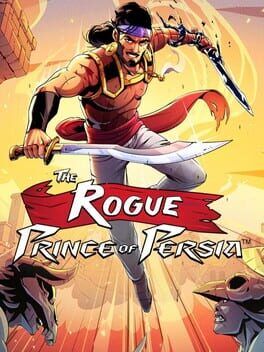

With the Breaking News and Walls of Fire updates, The Rogue Prince of Persia’s post‑1.0 roadmap leans into speed, difficulty and parkour, signaling Evil Empire’s long‑term plans after Dead Cells.
The Rogue Prince of Persia’s first major roadmap since hitting 1.0 makes one thing clear: Evil Empire is treating this game as a long‑haul project, not a one‑and‑done experiment after Dead Cells.
In its Spring 2026 plan the studio outlines two chunky free updates, Breaking News and Walls of Fire. Read together, they are less about adding random content and more about reshaping how the game feels in motion, how fast runs move, and how high the skill ceiling can go for players who already mastered the basics.
From a gentle 1.0 to a sharper post‑launch focus
At 1.0, The Rogue Prince of Persia sold itself on accessible parkour and readable combat. Reviews and community feedback consistently praised the flow of wall‑runs, pole‑vaults and slides, but there were two recurring criticisms: early runs felt too slow to ramp up, and veteran roguelite players wanted more bite in the later biomes.
Evil Empire’s new roadmap reads almost like an itemized response. Tougher and quicker biomes, new difficulty layers and fresh traversal tools are all designed to speed up that first hour, compress downtime between high points and make repeat runs more demanding instead of merely longer.
Rather than pivoting away from the game’s identity, the studio is doubling down on what makes Prince of Persia unique in the roguelite space. Every major addition in the roadmap is either about parkour expression or higher encounter intensity.
Breaking News: speeding up the loop and turning up the heat
Breaking News is framed as the immediate clean‑up and escalation pass now that the team has months of post‑launch data. It reworks the rhythm of early progression while also layering in more nuanced buildcraft for players chasing perfect runs.
The headline change is the introduction of quicker and tougher variants of existing biomes. Enemy compositions become more aggressive, traps are placed to punish sloppy movement and the overall tempo of encounters goes up. The intent is that returning players no longer need several stages to feel like they are in a proper run; the challenge curve spikes earlier and stays higher.
This shift answers a lot of early criticism about the game being too forgiving for anyone already fluent in Dead Cells or Hades. Instead of just buffing enemy health or damage, Evil Empire is using layout and pacing tweaks to force faster decision‑making, exploiting The Rogue Prince of Persia’s lateral movement and rebound jumps to make you think two ledges ahead.
Breaking News also expands the game’s systems depth. New difficulty layers give experienced players a reason to keep pushing completed seeds. Weapon and tool affixes introduce more granularity to build variance, so two copies of the same weapon can behave very differently over a run. For a roguelite, this kind of affix system is a key way to keep the meta from flattening into a few optimal choices.
In parallel, the update continues the studio’s work on front‑loading the fun. Evil Empire has already spent earlier patches shaving down the slower parts of the opening stretch, and Breaking News reinforces that focus with more aggressive enemy pacing and immediate access to stronger combinations. The message is simple: the game no longer assumes you are learning roguelites for the first time.
Walls of Fire: parkour as endgame, not just traversal
If Breaking News is about reinforcing the core loop, Walls of Fire points at where The Rogue Prince of Persia wants to live long‑term.
Where Dead Cells leaned on new biomes and weapon mutations to sustain veterans, The Rogue Prince of Persia is positioning its movement system as the star of its late‑game. The marquee feature here is a dedicated parkour‑driven mode that treats navigation as the primary challenge rather than a means to get to the next fight.
This makes a lot of sense for a series famous for precision platforming. By lifting parkour into its own challenge layer, Evil Empire is making a statement that mastering the Prince’s toolkit should be as satisfying an endgame goal as optimizing a damage build. Expect courses that chain wall‑runs, double‑back jumps, slides, pole swings and rebound kicks into time‑sensitive gauntlets where any lost momentum is a run‑killer.
Walls of Fire also continues the roadmap’s focus on re‑energizing existing content. Biomes that already felt familiar at 1.0 are being tightened up, with layouts adjusted to support risk‑reward routes and higher‑pressure encounters. Instead of only adding new zones, Evil Empire is iterating on the levels players already know, a pattern the studio honed during its years of revisiting Dead Cells’ early areas.
The update name is not accidental either. One of the game’s most eye‑catching new tools, Flaming Horses, already paints the arenas with burning ground as a consequence of the Prince’s decisions. Walls of Fire builds on that tone of controlled chaos: parkour tools and combat powers are increasingly about reshaping the environment moment to moment.
Tougher, quicker biomes as a direct answer to feedback
The choice to make biomes tougher and quicker rather than simply longer touches on a core tension that surfaced right after 1.0. A portion of the audience loved the game’s more relaxed opening hour, but the players most likely to stick with a roguelite in the long term were bouncing off its gentler difficulty curve.
Evil Empire’s answer is to compress the early‑game learning period and push players into meaningful choices sooner. Shorter stretches between elite encounters, more lethal trap configurations and more demanding platforming chains all push the game closer to the pace Dead Cells players are accustomed to, while still feeling distinct thanks to its freer, more horizontal movement.
At the same time, quicker biomes respect the time of players who already finished a run or two. Instead of grinding through the same safe corridors again, they get a denser sequence of high‑risk rooms, rare pickups and branching paths. This is the kind of adjustment that can only come after watching how people actually engage with the game over months rather than guessing in early access.
New parkour tools and traversal‑centric design
A large part of the roadmap’s appeal lies in how it reframes movement from something you simply execute correctly to something you actively build around.
New parkour‑oriented tools arriving during this roadmap give the Prince more ways to convert mobility into offense or defense. Flaming Horses is the clearest expression: what begins as a movement assist ends up doubling as an area‑denial tool that rewards awareness of enemy positions and level topology.
The upcoming parkour mode extends that logic by abstracting away some of the combat noise, letting players chase mastery over timings, cancels and route planning. That mode effectively becomes the lab where high‑level players can grind down their inputs and then bring that precision back into standard runs.
It is an approach that separates The Rogue Prince of Persia from many of its roguelite peers. Where others mostly add new weapons and numbers, Evil Empire is betting that giving players more expressive control over their avatar’s physicality will generate its own emergent stories.
What this says about Evil Empire after Dead Cells
The most interesting part of the Spring 2026 roadmap is what it reveals about Evil Empire’s broader philosophy post‑Dead Cells.
First, the studio is clearly comfortable committing to free, systemic updates long after 1.0. That mirrors its years of support on Dead Cells, but here the team is applying those lessons much earlier in the game’s life. The roadmap is not just a content drip; it is a structural reshaping of pacing, difficulty and build variety based on live feedback.
Second, Evil Empire continues to favor updates that deepen the sandbox over one‑off novelty. Affixes, new difficulty layers, traversal‑centric modes and biome reworks all interact, so that each piece improves the others. This kind of combinatory design is what allowed Dead Cells to thrive across multiple DLC waves, and The Rogue Prince of Persia appears to be following the same ethos.
Third, there is an implicit promise that the studio is not finished once these two updates land. Laying out a clear plan so soon after 1.0 sends a reassuring signal to players who were unsure whether this would be a brief side project between Dead Cells and whatever comes next. Instead, it feels like Evil Empire intends The Rogue Prince of Persia to become its next long‑running platform.
Finally, centering parkour in the endgame shows confidence in the game’s unique strengths. Rather than trying to out‑Dead Cells their own previous hit with more weapons and mutations, the team is pushing into a space only Prince of Persia can occupy. Long‑term support is not just about how long you patch a game, but whether those patches move it toward a sharper identity.
Taken together, Breaking News and Walls of Fire look less like routine housekeeping and more like the first step in a second phase for The Rogue Prince of Persia. Faster runs, nastier biomes and a higher ceiling for movement mastery suggest a game that could, like Dead Cells before it, quietly grow into one of the most replayable action roguelites on the market over the years to come.