
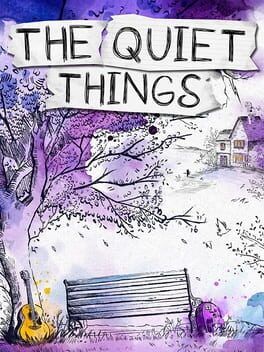
BAFTA pulled The Quiet Things’ trailer at the last minute, but the controversy has only drawn more attention to this raw, autobiographical narrative adventure. Here’s what the game actually is, why it was on BAFTA’s radar, and what the incident means for small indies tackling difficult themes.
Content warning: This article discusses self-harm, suicide, childhood abuse and sexual assault, reflecting the themes of The Quiet Things.
What is The Quiet Things?
The Quiet Things is a small, intensely personal narrative adventure from solo developer Alyx Jones and Silver Script Games. Set in the early 2000s in southern England, it follows a girl named Alice as she navigates a childhood marked by trauma, mental health struggles and the kind of experiences that rarely make it into mainstream games.
Jones has described the game as autobiographical, rooted in diary entries she wrote as a teenager. That origin shapes everything about The Quiet Things. This is not a thriller built around plot twists or supernatural horror. It is a grounded story that invites players into memories that are often uncomfortable and sometimes harrowing, told from the perspective of someone who lived them.
Mechanically, The Quiet Things sits somewhere between point and click adventure and visual novel. You explore scenes, interact with objects, and listen to voiceover and audio diaries that slowly lay out what Alice went through. The design leans heavily on sound, using music and narration to do much of the emotional heavy lifting rather than complex systems or branching combat.
The result is a focused, single player narrative that aims to make players sit with difficult topics like self-harm, suicidal thoughts, sexual assault and ongoing childhood abuse instead of cutting away from them. It is the kind of game that fits neatly into the modern indie tradition of intensely personal stories, but its subject matter still feels unusually raw.
Why The Quiet Things had BAFTA visibility in the first place
For a small narrative indie, simply showing up in a BAFTA Games Awards showcase is a big deal. The organization has spent years positioning itself as a champion of artistic, experimental and emotionally complex games. Titles like Celeste, Hellblade: Senua’s Sacrifice and Before Your Eyes have all been held up by BAFTA as examples of what games can do when they step outside power fantasies and lean into vulnerability.
The Quiet Things fits naturally into that space. It is a game about mental health, trauma and survival, made by a developer who has lived the story she is telling. From BAFTA’s perspective, that is exactly the sort of work that underlines games’ potential as an art form. That is why the game was selected for inclusion in a showcase reel alongside other notable titles.
According to PCGamesN’s reporting, BAFTA and Jones had already been in conversation about the content of the trailer. BAFTA initially raised concerns about imagery they felt could be interpreted as violence. Jones re-cut the trailer to address those notes, toning down visuals while keeping the core message intact, and the video was cleared to be shown.
The plan was straightforward: the trailer would be part of the awards broadcast, giving The Quiet Things valuable exposure to a global audience of players, critics and industry professionals. For a single developer working on a small budget, that kind of slot is not just flattering, it is marketing gold.
The last minute pull, and BAFTA’s reasoning
On the day of the BAFTA Games Awards, that plan changed. As reported by PCGamesN, BAFTA informed Jones at the last minute that The Quiet Things’ trailer had been pulled from the broadcast. The reason cited was concern for “the wellbeing of all guests,” with BAFTA later describing it to press as a compliance decision.
The organization said it was not confident it could properly warn attendees and viewers about the trailer’s content in the context of the event. The Quiet Things’ themes of self-harm, suicide and sexual assault were considered potentially triggering, and BAFTA decided it was safer not to run the trailer than to risk causing distress without robust content warnings in place.
From BAFTA’s side, this was framed as a narrow call about that specific show rather than a judgment on the game itself. The organization also stressed that it supports games that tackle challenging subject matter and expressed openness to future collaboration.
For Jones, the impact was very different. She has described the decision as “devastating,” saying she was left in tears after hearing the news. The BAFTA slot represented a rare moment where a small, deeply personal game could be spotlighted on a big stage. Losing that visibility at the final hour is a heavy blow for any tiny studio, and even more so when your work already fights for a place in conversations dominated by safer, bigger budget releases.
What this means for discovery and marketing for small narrative indies
The Quiet Things illustrates the delicate balance small narrative indies have to strike when they deal with difficult themes. These games are often praised in theory as evidence that the medium has matured, but the practical realities of marketing them can be messy.
Platform visibility and event showcases are lifelines for projects without big ad budgets. A single trailer placement during a widely watched awards show can translate into wishlists, coverage and a sense of legitimacy. When that opportunity is removed, particularly at the last minute, there is no safety net to catch the loss.
There is also a subtler message that moments like this can send. On one hand, BAFTA’s caution reinforces that player wellbeing and appropriate content warnings matter, especially in mixed-audience events that may include younger viewers or people with lived experience of trauma. That is a valid concern and one that narrative indies, many of which already use detailed content notes, typically take seriously.
On the other hand, the decision highlights a tension many devs face. Games about trauma are often invited into festival lineups and award conversations as long as their most uncomfortable moments remain in the text of the game rather than the marketing. Trailers need to hint at difficult topics without showing them too plainly. That can easily become a form of soft censorship, nudging creators toward safer imagery that undercuts the honesty that makes these stories powerful in the first place.
For a solo developer relying on a trailer to quickly communicate what their game is about, that is a complicated brief. You are expected to be clear and truthful about the themes so players can make an informed choice, but not so clear that the material becomes too confronting for general events. The Quiet Things ended up caught in that gap.
At the same time, the BAFTA incident has ironically created a different kind of visibility. Coverage of the pulled trailer has brought attention to the game across PC gaming sites and social media, sparking discussion about how the industry handles survivors’ stories and heavy subject matter. For some small indies, controversy can function as accidental marketing, although it is an emotionally expensive way to be seen.
Does the controversy change player interest ahead of release?
With The Quiet Things set to launch on PC and a free demo already available on Steam, the timing of this incident matters. The question is whether BAFTA’s decision will dampen interest or simply frame expectations more clearly.
Early community response suggests the latter. For players already drawn to narrative-driven experiences like If Found…, Before I Forget or Night in the Woods, the discussion around The Quiet Things has mostly reinforced that this is a game that treats serious topics with care, rather than using them as shock value. Many are learning about the project precisely because the trailer was pulled and are seeking it out as a result.
In practical terms, the incident may sharpen the game’s identity in the public eye. Instead of being just another small indie in a crowded award showcase, The Quiet Things is now understood as a forthright, survivor-led story that some institutions still find hard to accommodate. For a portion of the audience, that is not a deterrent, it is a reason to pay attention.
That does not erase the hurt for the developer. Nor does it mean all players will be comfortable engaging with a work so closely tied to real experiences of abuse, self-harm and suicidal ideation. It does, however, clarify the stakes. The Quiet Things is not aiming for mass appeal. It is speaking to players who want games that sit with pain rather than editing it out.
The game, beyond the headlines
Strip away the controversy and The Quiet Things is a small, focused narrative about surviving a childhood that never should have happened, told by someone still processing those memories years later. Its BAFTA story says a lot about how the industry treats uncomfortable art, but the game itself is not defined by a pulled trailer.
What will ultimately matter is whether players find resonance in Alice’s story, whether the audio-driven approach lands emotionally, and whether the game can carve out a place alongside other indies that have tackled mental health and trauma with honesty.
In that sense, the BAFTA incident is less an ending and more a framing device. It reminds us that games are still figuring out how to host stories that do not look away from abuse and self-harm, and that the infrastructure around them often lags behind the courage of the creators. The Quiet Things arrives into that conversation as a work that was briefly kept off a prestigious stage, but now has more eyes on it than before.
For players interested in narrative games that take mental health seriously and treat trauma as something to be navigated rather than sensationalized, The Quiet Things is worth watching as it approaches release.