
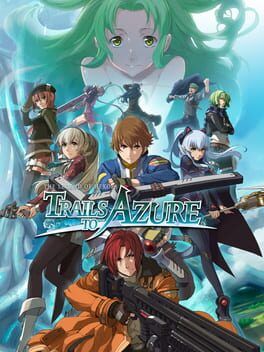

How Trails to Azure delivers the emotional and political payoff to the Crossbell saga, what the upgraded PS5 and Switch 2 release adds, and why NIS America’s reissues are turning Trails into an evergreen JRPG library.
The Legend of Heroes: Trails to Azure has always carried a different kind of weight inside Falcom’s long running Trails saga. Trails from Zero is the discovery phase, the slow burn that introduces Crossbell, the Special Support Section, and the web of mafias, cults, and crooked politicians that define the city state. Trails to Azure is the bill coming due. It is the payoff to everything Crossbell has been hinting at for years, not only within the duology but across the wider Trails continuity.
With NIS America bringing Trails to Azure to PlayStation 5 and Nintendo’s next Switch hardware in Fall 2026 alongside Trails from Zero, the Crossbell story is getting another chance to be experienced as it was always meant to be: as a complete arc, technically modernized, and finally easy to recommend to anyone curious about why long time fans will not stop talking about this pair of games.
The true climax of Crossbell
Trails to Azure picks up only months after the events of Trails from Zero, but the tone shift is unmistakable. The Special Support Section that once took on odd jobs and side cases is now entangled with cross border politics, military brinkmanship, and a full blown independence crisis. Crossbell is no longer just a corrupt city wedged between Erebonia and Calvard. It becomes a flashpoint whose fate will ripple through later entries like Trails of Cold Steel and Trails into Reverie.
What makes Azure such a strong payoff is the way it cashes in on years of patient groundwork. Characters introduced as quirky side NPCs in Zero reveal hidden loyalties and histories. Factions that once felt like background flavor move to the foreground, colliding in ways that make sense because the series has spent dozens of hours establishing their motives. The game steadily escalates from street level cases to continent shaping decisions without ever discarding the human scale relationships that made the Special Support Section charming in the first place.
Lloyd, Elie, Tio, and Randy all see their personal arcs pushed to the limit. Traumas that were only implied in Zero are confronted directly in Azure, and new party members complicate both the interpersonal chemistry and the tactical possibilities in battle. Even within Falcom’s famously dense storytelling, Trails to Azure stands out for how decisively it resolves character threads while still leaving room for those events to matter in later arcs.
Battle systems refined, not reinvented
From a mechanical standpoint, Trails to Azure is evolution rather than revolution, but it is the kind of refinement that makes playing Zero first feel rewarded. The turn based, grid influenced combat that defines early Trails returns, yet battles move more briskly thanks to smarter enemy patterns, more aggressive boss scripting, and new tools for the player.
Azure expands Crafts and S Crafts, layers in new combo opportunities, and leans harder on support skills that encourage creative positioning instead of turtling. The Orbment system gets another round of tuning that opens up stronger late game builds, especially for hybrid attackers and support mages. It all leads to some of the most demanding set piece encounters in the series before Cold Steel shifts the formula in a different direction.
The result is a finale that feels mechanically earned. When Lloyd’s team is facing off against political conspirators wielding overwhelming force, the battle system is ready to sell the stakes, not just narrate them.
What the upgraded PS5 and Switch 2 release brings
Trails to Azure already received a substantial upgrade when it finally came west on PS4, Switch, and PC, with NIS America working with fan localization expertise to deliver a script that could stand next to the best in the genre. The upcoming PS5 and Switch 2 versions are about making this definitive cut of the game comfortable on modern hardware rather than reinventing it.
The biggest upgrade is visual clarity. The PS5 release targets crisp 4K resolution with support for very high frame rates, while Switch 2 offers its own boost in image quality and performance compared with the original Switch version. Azure’s art direction leans on detailed 2D portraits and stylized 3D environments, and higher resolution output cleans up character edges, interface elements, and distant environmental details.
Load times, already modest, are further reduced, which matters more than it sounds like in a Trails game where you are constantly shuttling between districts, revisiting NPCs, and diving into side quests between major story beats. Quality of life improvements and the now standard fast forward options from prior ports also carry over, letting returning players replay favorite story arcs or grind out late game setups without friction.
Crucially, this new wave of releases keeps Trails from Zero and Trails to Azure aligned on the same platforms. That makes it easier to tackle the Crossbell saga as a single journey whether you are on PlayStation or Nintendo hardware. For a story this interconnected, parity matters more than raw tech specs.
Crossbell’s relevance in the wider Trails saga
For years, the Crossbell arc existed in an awkward limbo for English speaking fans. Its events were referenced heavily in the Cold Steel games, and characters from Lloyd’s squad appeared as guest stars, yet the core duology remained inaccessible without importing or fan patches. The 2020s reissues solved that gap on PS4, Switch, and PC. The 2026 PS5 and Switch 2 versions are about making sure Crossbell stays in circulation as the series moves forward.
That matters because Trails to Azure is not a side story or optional prequel. It fills in critical political and emotional context for the continent of Zemuria. Crossbell’s bid for autonomy, the experimental weapons and occult projects at the heart of its conspiracies, and the alliances formed in Azure all cast long shadows over the later games.
Playing Cold Steel or Trails into Reverie without Crossbell is possible, but key revelations land flatter when the player has only heard about incidents in passing instead of living through them across dozens of hours. With the Crossbell arc now on every current PlayStation and Nintendo platform, it is far easier to recommend that newcomers start with or at least circle back to Trails from Zero and Trails to Azure before diving deep into the later arcs.
NIS America’s reissue strategy and the making of an evergreen library
NIS America’s approach to Trails has shifted from piecemeal catch up work to long term library building. Earlier in the decade, localizations and ports often felt like one off rescue missions, hauling long missing entries to the West just in time to support another new release. With Trails to Azure and its partner title getting yet another round of platform support on PS5 and Switch 2, the message is different. These are not disposable back catalog items, they are foundational pieces of a living series.
Bringing the Crossbell games forward again does more than pad out a release calendar. It keeps the entire saga approachable for players who are discovering Trails through newer entries. Each successful reissue strengthens the case for continuing to maintain these games as evergreen products that can be bought, played, and recommended years after launch.
For Trails to Azure specifically, this strategy is a chance at the visibility it never really had when it was trapped behind language and platform barriers. Positioned alongside its predecessor as a modern release, framed with 4K assets, higher frame rates, and marketing that highlights the Crossbell arc as a self contained story, Azure can finally be pitched as a must play JRPG instead of an obscure missing chapter.
Why Trails to Azure still deserves your time
In 2026, JRPG fans are not hurting for choice, whether it is lavish big budget reimaginings or clever indie takes on turn based combat. Trails to Azure remains distinctive because of how thoroughly it commits to long form, consequence heavy storytelling. Its pacing is deliberate, yet the way it transforms Crossbell from a colorful RPG city into the focal point of international drama is something few contemporaries attempt, let alone pull off.
The upcoming PS5 and Switch 2 versions do not radically alter the game, and they do not need to. By polishing performance, keeping the Crossbell duology together on the latest hardware, and reaffirming NIS America’s commitment to maintaining the Trails back catalog, these releases make it easier than ever to recommend Trails to Azure as the essential conclusion to one of the series most beloved arcs.
If you bounced off Cold Steel or started elsewhere in the timeline, the Crossbell saga provides a sharper, more intimate lens on the same world. And if you have only ever heard veterans mention Azure in hushed, spoiler dodging tones, the 2026 upgrades mean there is no better time to see why this finale has stayed with them for so long.