
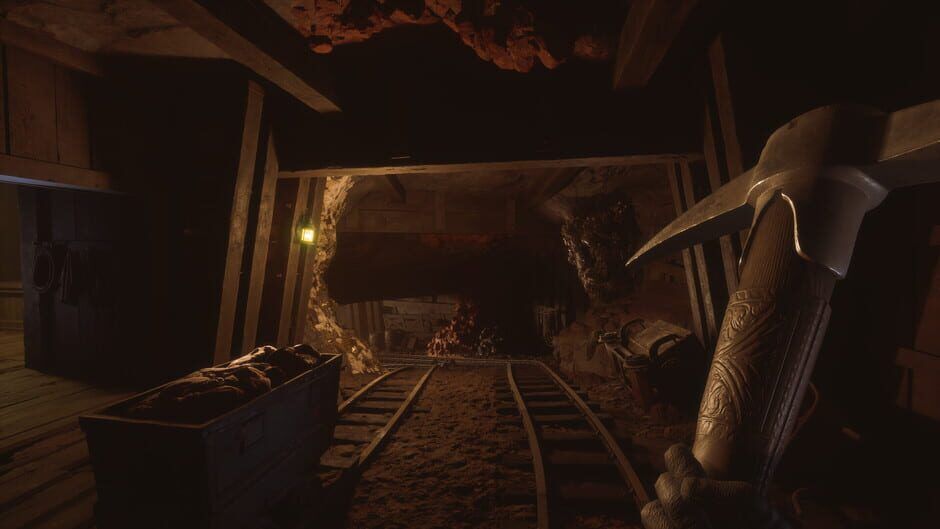

Jeff Kaplan’s new studio Kintsugiyama has revealed The Legend of California, an open world Wild West survival FPS. Here’s what sets it apart from Rust-style competitors, what to expect from its 2026 Early Access launch, and the key questions players should be asking now.
Jeff Kaplan is finally back with a new game and it is nothing like Overwatch. The former Blizzard director has resurfaced with Kintsugiyama, a new studio under Mike Morhaime’s Dreamhaven label, and its debut project is The Legend of California. Instead of team-based hero shooter chaos, Kaplan is chasing the survival genre with an online Wild West FPS that is equal parts frontier sim and precision shooter.
The pitch is immediately striking. The Legend of California unfolds in an alternate-history Gold Rush where California is not a coastal slice of the United States but a distant, mysterious island. Ships make the dangerous journey to reach it, chasing veins of gold and whispers of opportunity. That fantasy twist lets Kintsugiyama mix recognizable California landmarks with strange biomes and elevated myths about the frontier, rather than being locked into strict historical realism. It is Wild West as legend, not documentary, and that gives the studio room to dial up exploration as much as survival.
On paper it sits alongside Rust, Ark and other open world survival sandboxes. You land in a harsh environment, gather resources, craft tools, and slowly carve out a home. The Legend of California follows that loop but filters it through a much more focused co-op lens and a clear sense of place. Kaplan’s team is talking about California as a persistent online world where you can go it alone or form a small company of up to four players, then share progression and resources while you build a ranch together. That ranch is not just a boxy fort in the woods. It is your personal stake in the island, a growing homestead that can eventually include mines, stables and other frontier infrastructure.
Where survival competitors often feel like free-for-all warzones driven by full-loot PvP, Kintsugiyama is emphasizing PvE first with PvP as an option rather than the default. The island is meant to feel hostile because of its wildlife, hostile factions and unforgiving terrain more than because a random player sniped you five minutes after spawning. That design choice could make The Legend of California appeal to people who love the tension and progression of survival games but hate the constant griefing that defines servers in titles like Rust. Optional PvP still matters for players who want rivalries, ambushes and emergent stories, but it sounds like it will be something you seek out instead of something you are forced into.
Combat is where Kaplan’s Blizzard background shows. The game is a first person shooter and the team keeps calling out precision and skill as core pillars. That suggests weapons with clear roles and satisfying feedback rather than the floatier, improvised gunplay that some survival sandboxes lean on. Fights could be smaller in scale but more deliberate, from lining up shots with a battered rifle to coordinating a posse around a ranch defense. The fantasy of the lone or small-group gunslinger fits that approach neatly and helps The Legend of California carve out a space separate from chaotic zerg swarms and base raids.
Instead of chasing ever-growing server population numbers, the design appears to favor intimacy. Groups are capped at four players and the progression systems are built around that size, with shared resources and a collective sense of ownership over your ranch. That shift away from massive clans and faction warfare may limit some of the large scale siege drama that other survival games trade on, but it opens the door for tighter co-op arcs more akin to a long running tabletop campaign. If Kintsugiyama can make the island’s biomes, NPC threats and dynamic events feed into that, the game could feel less like a social experiment and more like an evolving frontier story you tell with a small circle of friends.
For all of that promise, The Legend of California is still early. The studio says the game has been in development for around four years already, but it is targeting a PC Early Access launch in 2026 on both Steam and the Epic Games Store. That timeline alone raises expectations. Survival games live or die on iteration and community feedback, and Early Access is where progression pacing, weapon balance and base building systems are stress tested. This will be Kintsugiyama’s chance to prove that its vision of a PvE-first Wild West can keep people logging in for hundreds of hours.
Players eyeing the Early Access build should temper their hopes with some pointed questions. How complete will the island actually be at launch in terms of biomes, enemy variety and story hooks, and how fast does the team plan to layer new content on top? Survival sandboxes are notorious for grind, so where does The Legend of California sit between punishing scarcity and accessible frontier fantasy? If you are building a ranch with friends, what happens when someone stops playing? Shared progression is exciting, but the systems around ownership, offline protection and catch-up mechanics will determine whether co-op feels like a commitment or a burden.
There are also questions around PvP and server culture, especially for players burned by other games in the genre. Optional PvP sounds inviting, yet the details matter. Will there be separate PvE and PvP server types, or toggles within a shared environment? How will the game handle griefing, offline raids and exploits without gutting the tension that makes survival compelling? And in a world where survival titles often sprawl endlessly, what counts as a satisfying endgame here? Is your ranch meant to become a multi-layered fortress that you defend for months, or is the expectation that you will spin up fresh runs and new companies regularly?
Then there is the Jeff Kaplan factor. His tenure on Overwatch came with a reputation for clear communication, frequent community updates and strong support for live games. That is exactly the kind of leadership a long term Early Access project demands. Still, The Legend of California is a new IP from a new studio, in a genre where technical stability, netcode, anti cheat, and server performance are make or break. Fans should be asking how transparent Kintsugiyama plans to be about roadmaps, balance philosophy and monetization, especially as the game approaches 1.0.
What makes The Legend of California compelling right now is the feeling that Kaplan and his team are not just reskinning the survival formula in sepia tones but trying to tune it for cooperative storytelling. An alternate history island, a tight focus on groups of four, PvE as the backbone and a ranch that grows alongside your company all point to a game less about dominating strangers and more about carving out a shared legend. If Kintsugiyama can back that pitch with strong shooting, smart progression and a clear Early Access plan, the Island of California might be more than another stop on the long trail of survival games. It might be the first one that feels like a frontier story worth retelling.