
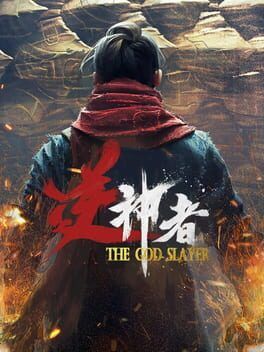

How the My Time studio is reinventing itself with a grim steampunk action RPG built on elemental combat, systemic missions, and a god‑toppling industrial dystopia.
From cozy life sims to killing gods
For the last decade, Pathea Games has meant one thing to most players: cozy, low‑pressure life sims like My Time at Portia and My Time at Sandrock. Open worlds, sure, but the kind full of gift schedules, soil quality, and commission boards rather than boss arenas and moral compromises.
The God Slayer is Pathea walking away from the workshop and straight into the firing line of core action RPGs. It is a third‑person, open‑world steampunk fantasy set in the Eastern‑inspired metropolis of Zhou, where industrial smokestacks pierce the clouds and literal gods harvest human life force to stay immortal. You play Cheng, one of the last Elemancers after a genocidal purge called the God Fall, and the 40‑hour campaign is explicitly about toppling those Celestials.
It is Pathea’s first project that is clearly not for the cozy‑sim crowd. Instead, the team is chasing the kind of players who live on a diet of games like Dishonored, Bioshock, and Lies of P: people who expect systemic worlds, expressive combat systems, and strong art direction to tie it all together.
A grim industrial city built for systems, not schedules
Zhou is the clearest signal that Pathea is targeting that audience. Rather than the warm, sun‑bleached streets of Portia, this is a stratified industrial city where brass monorails cut through smog, airships loom over rusted rooftops, and factory districts glow with furnace light. Celestials rule from towering palaces while workers scrape by beneath them, and the resource uniting everything is Qi, a literal life‑force that powers technology and extends divine lifespans.
The city is built as a true open world, but early previews make it sound less like a checklist sandbox and more like a dense tangle of interlocking systems. Guards patrol, dogs can be distracted with tossed meat, and side characters can permanently disappear from the story if you kill them in a mission. Pathea talks openly about “systemic missions,” which recalls Arkane’s work on Dishonored more than anything in My Time.
That shift is important. Pathea is used to simulating daily routines, weather, and town economies for their life sims. The God Slayer repurposes that experience to support stealth routes, faction reputation, and emergent solutions. It is still a living simulation of a place, just one where the main verbs have changed from “harvest and befriend” to “stalk, sabotage, and ignite.”
Visually and thematically, Zhou lands closer to the industrial rot of Bioshock’s Rapture or Lies of P’s Krat than to Pathea’s own back catalog. Metal scaffolding, smog‑choked alleys and propaganda for the Celestials’ theocracy sell a world in the middle of a violent industrial revolution. Instead of whimsical steampunk, it aims for something closer to clerical fascism with boilers.
Elemental combat as the core identity
If the setting sells the fantasy, the elemental system is what Pathea hopes will sell the combat. The God Slayer casts Cheng as an Elemancer, wielding five elements rooted in Chinese philosophy: fire, water, earth, metal and wood. On paper, that sounds like a familiar “magic school” breakdown, but every preview stresses that these elements are not just damage types. They are meant to be physical forces that shape the battlefield.
In footage and early impressions you can see how that plays out. Water floods alleys, turning stone stairways into slick surfaces that can be frozen into ice ramps or used to slow enemies. Fire crawls along wooden structures and oil slicks, turning cover into hazards and forcing enemies to reposition. Earth can erupt into jagged stone pillars that block gunfire or pin foes against walls. Metal works less like a traditional spell school and more like a kinetic toolkit: summoning metallic shards to orbit Cheng, hurling spears, or armoring up for close‑quarters brawls. Wood, the least conventional element in typical fantasy, is tied to growth and control, sending roots to snare targets or sprouting platforms for traversal.
Pathea repeatedly describes the approach as “create your own style.” Instead of choosing a fixed class, you tune Cheng’s martial arts forms and elemental techniques, then chain them together. A player leaning into a brawler archetype might use earth and metal to create cover, dash in with heavy strikes, then cast wood roots to keep enemies from escaping. A more cautious player might rely on water and ice to bottleneck foes in narrow streets, then use fire to detonate environmental hazards from a distance.
It is here that comparisons to Lies of P and Bioshock become interesting. Like Lies of P’s weapon assembly or Bioshock’s plasmid‑plus‑weapon combos, The God Slayer wants your "build" to be less about stats and more about recombining tools. But unlike Souls‑likes, early hands‑on reports note that Pathea is not building a punishing game. They explicitly said this is not a Soulslike, leaning toward cinematic spectacle and power fantasy. Think crowd control and flashy finishers over exacting stamina duels.
The risk is obvious. Elemental sandboxes live or die on clarity and responsiveness. When you drench a street, you need to instantly see and feel how that changes enemy behavior. If wood roots or metal shields do not synergize cleanly, the whole “create your own style” pitch collapses into a handful of meta builds. The promise is there, but the systemic friction still has to be proven over dozens of hours.
Semi‑immersive sim missions
If elemental combat is the headline, the mission design is the subhead pointing straight at immersive sim fans. Pathea lays out a clear structure: major missions can be tackled through direct combat, stealth, social manipulation or environmental trickery. But unlike fully open immersive sims, The God Slayer seems to operate in a “semi‑immersive sim” space, where encounters are highly systemic and reactive without committing to total simulation.
During a preview, the developers gave examples that could have been lifted from a Dishonored design doc. Need to get past a gated checkpoint? You can bribe the guards if you have the money and reputation, sneak over rooftop walkways using parkour, cause a distraction by overloading a nearby Qi generator, or just steamroll through with aggressive elemental combos. Patrols can be diverted by noise, dogs can be fed to lower alertness, and different factions respond differently depending on how you have treated them so far.
This is where Pathea’s “My Time” experience quietly becomes an asset. They already know how to handle schedules, branching dialogue and persistent variables. The God Slayer repurposes those systems for a darker fantasy. If you eliminate a secondary character during one mission, they simply will not be there for a later questline. If you favor one faction, another might cut off its quest chain or send hunters after you.
Compared to something like Dishonored, what is missing is that franchise’s strict mission instancing and simulation density. Zhou is a proper open world, which usually demands broader strokes. The God Slayer’s challenge will be making its semi‑immersive missions feel authored enough to be memorable but systemic enough to justify the marketing. Games like Watch Dogs or mid‑tier open worlds often gesture at systemic infiltration without providing the depth to support more than a couple of optimal tactics. Pathea is trying to land closer to Arkane’s systemic richness while still running a big contiguous city.
A darker Pathea story about power and revolt
Narratively, The God Slayer is a clean break from Portia’s hopeful tone. The core loop is still about meeting people, building relationships and slowly transforming a city, but now it is through revolution instead of reconstruction. The Celestials are not abstract background deities; they are hands‑on tyrants who harvest Qi from humans to sustain themselves, and Cheng’s struggle is a personal vendetta wrapped in political upheaval.
Pathea is leaning into martial‑arts cinema here. The director cites wuxia films and modern action movies as influences. You can see it in the trailers: long, lateral tracking shots of Cheng dueling on moving trains, airships exploding in the distance, and elemental techniques framed like choreographed forms rather than simple spell casts. Where Bioshock used its city to question objectivism and free will, and Dishonored used its whalepunk plague state to explore empire and class, The God Slayer seems most interested in cycles of oppression and whether killing gods actually frees anybody.
It is a story space that fits the mechanics. Elemental powers tied to Qi exploitation let Pathea literalize the idea of turning the gods’ tools against them. Each new technique is not just a stat bump but another way the oppressed are weaponizing the very resource that keeps their rulers immortal. If The God Slayer can pay off that metaphor with strong character arcs and faction outcomes, it could end up more thematically cohesive than a lot of open‑world RPGs that treat their magic systems as disconnected toys.
Standing next to Dishonored, Bioshock and Lies of P
Stack The God Slayer against the obvious touchstones and you get a clearer picture of its ambitions.
Like Dishonored, it wants missions that support multiple approaches and a city that doubles as a character. But where Arkane’s work leans on tightly scoped levels, Pathea is trying to do it across a streaming open world. If they can maintain clarity and consequence in that structure, they might carve out a niche for “immersive sim in an open world,” something only a few games, like Prey’s Mooncrash or certain RPG sandboxes, have flirted with.
Like Bioshock, it pairs a visually striking industrial dystopia with powers that interact heavily with the environment. Instead of oil and electricity in art‑deco corridors, it is wood, metal and fire in smokestack canyons. The key question is whether Zhou will deliver those memorable vistas and setpiece spaces that stick in your memory years later.
Lies of P is the most direct comparison in terms of Pathea’s audience target. Both are darker, single‑player, narrative‑driven action RPGs from studios that were not global prestige names before their breakout. Lies of P earned its place by nailing combat feel and a cohesive art direction. The God Slayer is chasing a similar “unexpected core hit,” but with a very different combat fantasy. The lack of Soulslike difficulty might help it stand apart if the spectacle and systems land.
The flip side is that all three comparisons raise expectations. When you invoke Dishonored, players expect emergent solutions that feel clever rather than accidental. When you present elemental chains that look like Bioshock or Avatar, players expect physiques and environments to react convincingly every time. That is a tall order even for veteran immersive sim studios.
Pathea’s biggest risk and biggest opportunity
From the outside, The God Slayer looks like the moment Pathea decides what kind of studio it wants to be to core gamers. They could have iterated on “cozy open worlds” indefinitely, but instead they are leveraging that experience to build something meaner, denser and more systemic.
The risk is obvious. Building a reactive city, elaborate elemental toolkits and branching missions is expensive both in development time and in player expectation. If any one pillar underdelivers, the game could read as a stylish but shallow action RPG. The combat needs weight and readability, the systems need to talk to each other, and the story has to justify its grim new tone rather than feeling edgy for its own sake.
The opportunity is just as clear. There is a gap in the market for AA or mid‑budget immersive‑sim‑flavored RPGs that are not tied to Soulslike difficulty. With its Eastern steampunk identity, martial‑arts elemental combat and focus on cinematic action, The God Slayer has a shot at slipping into the space between Arkane’s cerebral sandboxes and FromSoftware’s punishing epics.
If Pathea can deliver on the promise of drenching a street, freezing it, shattering it under a volley of metal shards, then walking past stunned guards as faction allies move into the chaos, The God Slayer might be remembered not just as “the My Time devs go dark,” but as the game that finally mixed cozy‑sim systemic thinking with big, bombastic action.
For now, it is one of the most intriguing pivots in the RPG space, and a clear statement that Pathea is ready to fight for a place on core gamers’ shelves instead of just their Sunday chill sessions.