
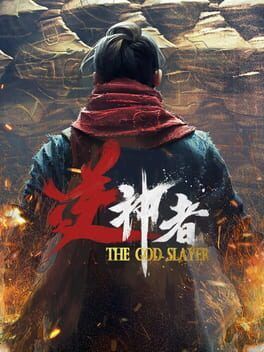

Pathea Games follows up My Time at Portia and My Time at Sandrock with The God Slayer, a dark steampunk action RPG for PS5, Xbox Series and PC that mixes element-bending combat with immersive-sim style systemic choices.
Pathea Games is stepping away from cozy-life sim comfort and into something far stranger with The God Slayer, a dark steampunk action RPG announced for PlayStation 5, Xbox Series X|S and PC. Best known for My Time at Portia and My Time at Sandrock, the studio is trading sun-baked workshop towns for a fantasy China city where oppressive gods rule from the clouds and the streets hum with gears, steam and revolution.
At its core, The God Slayer is built around element bending. You play Cheng, one of the last Elemancers, warriors who once controlled the five Wuxing elements of fire, water, earth, metal and wood. The Celestials wiped the order out to keep that power for themselves, which sets up a straightforward but potent premise: climb from the gutters of a Ming-inspired metropolis and kill some gods.
Combat is where that premise comes alive. Rather than picking a single element at a time, four of the five are mapped directly to their own buttons, with wood leaning more toward passive bonuses like health. That layout lets Cheng snap between fire blasts, slabs of erupting rock, surging waves and razor metal pulls in a single flowing combo. Preview footage shows him flipping through the air, surfacing a boulder as a makeshift skateboard, or yanking metal from rooftops to slam entire squads to the ground.
The element system is less about stiff elemental counters and more about expressive play. Pathea talks up interactions where water can become a whirlpool that traps fire troops, ice can freeze that vortex solid, and earth turns into a crashing boulder that shatters the frozen sculpture into glittering chunks. Fire and water can mix into hissing steam, not just for style but as a smokescreen to break line of sight. The pitch sits closer to Avatar style power fantasy than to a punishing Soulslike, and the studio has been clear that it is not chasing Black Myth: Wukong difficulty.
Traversal runs on the same elemental logic. Cheng roof-hops across an open city with flame boosted double jumps, rides atop steam powered traffic, and uses the environment as a playground more than a checklist of icons. There is a hint of Assassin’s Creed in the rooftop chases and dramatic plunges, but the tools come from your hands and the world itself rather than from a belt full of gadgets.
Where things get particularly interesting is in Pathea’s systemic promises. The studio is pitching The God Slayer as an action RPG with an immersive-sim streak, evoking games like Dishonored in how missions can branch and react. Faced with a Celestial boss, the obvious option is to stride in and trade blows. The alternative is to burn down a nearby building first so the city guard rushes to contain the blaze, leaving the god isolated. Another route trades coin instead of blood: pay an NPC to poison the target so they begin the fight already at half strength.
That same philosophy extends to infiltration. One example sees Cheng trying to enter a fortified stronghold. You can sneak in using classic stealth, slipping along ledges and abusing elemental smokescreens. You can bribe the doorman and turn your purse into a key. Or, if you have invested in earlier side quests and built a relationship with that gatekeeper, they might simply wave you through. None of this would be remarkable on its own in 2025, but if Pathea applies these options across the full game instead of reserving them for a handful of set pieces, The God Slayer could feel closer to a systemic playground than a standard scripted romp.
There is some healthy skepticism around that pitch. Preview reports note that the most inventive scenarios were described rather than shown, with hands off demos leaning more heavily on straightforward combat and flashy elemental finishers. It is one thing to burn a water tower to wash thugs and half a market into the street in a curated demo, another to support that level of reactivity in side quests, optional errands and moment to moment exploration. Still, the intent to push beyond a linear brawler is clear, and that ambition alone sets Pathea’s latest apart from many peers.
Sony’s involvement suggests the publisher sees the same potential. The God Slayer has been featured in PlayStation marketing beats as a fresh Eastern fantasy counterpoint to the usual Western RPG fare, with trailers leaning into its lavish cityscapes and wild elemental choreography. While the game is also confirmed for Xbox Series X|S and PC, seeing it highlighted in Sony showcases puts it in front of a huge console audience and helps frame it less as a niche experiment and more as a tentpole hopeful from a growing mid tier developer.
For fans coming from Pathea’s My Time series, all of this might sound like a drastic pivot. In My Time at Portia and My Time at Sandrock, the studio built its reputation on relaxed pacing, life-sim loops and a gentle sense of community. You maintained workshops, upgraded machines, chased romance, and chipped away at dungeons in a world that felt more cozy than cruel. The action was serviceable but never the main event. Systems revolved around daily routines and town relationships rather than combat mastery.
The God Slayer keeps some of that systemic mindset but points it in a far more aggressive direction. Instead of tuning assembly lines and crop plots, you are tuning elemental loadouts. Instead of choosing how to spend your day between commissions and dates, you are choosing whether to sneak, bribe, burn or brazenly fight your way through missions. The throughline is a focus on player driven solutions. Pathea’s comfort with overlapping systems and cause and effect is now being used to power combat scenarios, faction reactions and quest outcomes rather than festival schedules and crafting orders.
Expect a shift in tone as well as tempo. Where Portia and Sandrock offset their post apocalyptic backstory with pastel visuals and breezy humor, The God Slayer leans into darker streets, political oppression and apocalyptic stakes. The steampunk trappings are harsher, all rivets and choking smoke rather than whimsical clockwork. Yet even here the studio’s interest in worldbuilding through work and routine comes through in how the city’s markets, steam cars and guard patrols all slot into your options for traversal and problem solving.
If you come into The God Slayer looking for another slow burn town life sim, you will not find it. What you might find instead is Pathea using the design instincts that made My Time at Portia and Sandrock quietly absorbing and stretching them into a bombastic action RPG that still cares about choice and consequence. The combat already looks flashy and tactile. The real question for existing fans is whether those immersive sim style promises of multiple paths and systemic reactivity show up as often as Pathea hopes. If they do, The God Slayer could be the game where a cozy sim specialist proves it can also build a world that is worth tearing down.