

How Frame Interactive’s atmospheric sheepdog adventure blends herding, Icelandic vistas, and quiet melancholy to stand out in the animal‑hero boom.
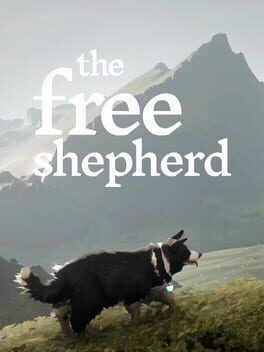
"The Free Shepherd" is not a game about owning a dog; it is a game about being one. Frame Interactive’s newly announced adventure casts you as a lone border collie racing across vast Iceland‑inspired landscapes, herding scattered sheep toward a secret refuge while an unnamed catastrophe slowly closes in. Targeted for a 2027 release on PlayStation 5 and PC, it is shaping up as one of the most striking entries in the growing wave of animal‑led games.
A sheepdog at the end of the world
Revealed during The Game Awards 2025 pre‑show, The Free Shepherd’s debut trailer wastes no time establishing its hook. There are no humans in sight, no HUD clutter, no barks translated into dialog. Instead the camera hangs low to the grass as a border collie tears across windswept hills, cutting arcs through flocks of sheep and steering them toward safety.
The premise is disarmingly simple. The world is beautiful yet clearly wrong, and the sheep are lost. As the shepherd, you roam freely, finding and gathering increasingly massive flocks, pushing them across plains, ridges, and narrow passes to reach a hidden sanctuary. The mystery lies in what happened to this land, and why only this dog seems able to fix it.
That focus on motion and instinct gives The Free Shepherd a different texture from typical third‑person adventures. Instead of combo meters or heavily scripted set‑pieces, the fantasy here is about control of space, reading a flock’s movement, and using your own speed and positioning to nudge chaos into order.
Herding as core gameplay, not a side activity
Sheep herding has occasionally appeared in games as a side joke or one‑off mission, but rarely as the entire spine of the experience. The Free Shepherd builds its identity around that role. Every hill, valley, and funnel in its Icelandic countryside is designed to be read like a puzzle: where will the sheep naturally drift, where can they get stuck, and how can you corral them without losing stragglers?
As a border collie you are fast and low to the ground, able to sprint, pivot, and circle your flock in wide loops. The tension is not about surviving combat encounters so much as maintaining cohesion, keeping hundreds of individual animals together as you thread them through increasingly dangerous terrain. Failures are not framed as traditional deaths so much as breakdowns of order, flocks scattering back into a world that cannot protect them.
This approach positions The Free Shepherd midway between a meditative exploration game and a light herding sim. The moment‑to‑moment play seems to revolve around the rhythm of search, gather, and guide. You scour the landscape for isolated clusters of sheep, slowly build your following, then face the quiet pressure of getting them home before the looming calamity catches up.
A melancholic world carved out of Iceland
Visually, The Free Shepherd leans hard into the drama of Icelandic topography. The trailer showcases rolling emerald fields broken by black rock, misty cliffs, steaming vents, and distant mountains that still carry traces of snow. It is a world that feels spectacular but sparsely inhabited, as if something has simply removed its people and left nature to reclaim the rest.
That emptiness gives the game an immediate, melancholic tone. There is beauty in every wide shot of your dog and flock silhouetted against the horizon, yet the absence of barns, villages, or shepherds makes each scene feel haunted. The sheep become more than livestock; they are the last fragile pieces of a life that used to exist here.
Frame Interactive highlights that this world is not just a backdrop but a mystery. As you guide your flock, you slowly uncover signs of a larger calamity, clues scattered through weathered structures, environmental changes, and perhaps the behavior of the land itself. The game appears to prefer quiet implication over explicit exposition, letting you piece together what happened through exploration rather than cutscenes.
Soundtrack as emotional compass
To match that mood, The Free Shepherd brings in Vermont‑based cellist Zoë Keating to compose its score. Her layered, looping cello work is known for building tension and sadness without resorting to orchestral bombast, which is a natural fit for a game about a lone animal moving through abandoned beauty.
A strong musical identity is crucial for an atmospheric adventure that strips away most of the usual narrative tools. There is no spoken protagonist and, at least from what has been shown so far, no human cast to exchange dialog. The soundtrack instead becomes the emotional interpreter of your actions, swelling when your flock swells, thinning out when you wander alone ahead of the sheep, and darkening as the threat looming over this world starts to show itself.
Combined with the rhythmic sounds of panting, paws on earth, and the unsteady murmur of a mass of sheep, The Free Shepherd looks poised to be as much about listening as seeing.
Why this border collie stands out in the animal‑protagonist boom
Animal‑led games have gained real momentum in recent years. Titles like Stray, Spirit of the North, and Okami explored the appeal of seeing the world through non‑human eyes, while smaller projects have experimented with everything from urban foxes to tiny insects. The Free Shepherd joins that niche but carves out its own space through three key traits.
First, it treats the dog not as a novelty skin for a human hero but as a role with distinct responsibilities. You are not solving human puzzles in a dog costume; you are performing dog work. Herding is fundamentally about shaping motion and reading crowd behavior, which fits naturally with the border collie fantasy and gives the game a clear mechanical identity.
Second, its worldbuilding aims for a specific emotional flavor. Rather than the cozy warmth of a farm sim or the frenetic energy of a mascot platformer, The Free Shepherd leans into solitude and quiet dread. The dog is loyal to a duty that no one may even remember anymore. That lonely sense of purpose gives the story an undercurrent closer to a post‑apocalyptic road movie than a simple pastoral vignette.
Third, the game’s design appears to minimize anthropomorphism. You are not expected to speak human language or wield tools; your verbs are running, circling, barking, and guiding. This keeps the experience grounded in believable animal behavior while still allowing for stylized, almost mythic stakes. Few animal‑protagonist games commit so fully to that perspective.
Looking ahead to 2027 on PS5 and PC
The Free Shepherd is currently targeting a 2027 launch for PlayStation 5 and PC, and it is already available to wishlist on Steam and the PlayStation Store. That long runway gives Frame Interactive time to refine the delicate balance between meditative traversal and satisfying herding challenges, and to fully realize the Icelandic landscapes that anchor the game’s feel.
If Frame can deliver on the promise of its reveal, The Free Shepherd could end up being one of the defining entries in the animal‑protagonist space. A loyal border collie racing through an empty world, gathering the last scattered pieces of a lost life, is the sort of image that lingers well after a trailer ends. It is also the kind of premise that only this medium can fully explore, turning simple acts of running and guiding into something quietly heroic.