
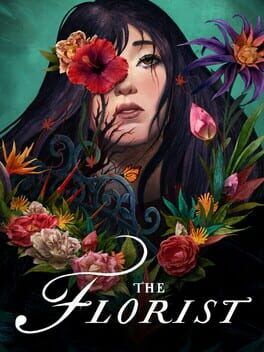

How indie survival horror The Florist revives classic Resident Evil design with fixed cameras and strict resources, and why players keep coming back to PS1-style terror.
A New Bloom Of Old-School Horror
The Florist is not shy about what it wants to be. Developer Unclear Games is pitching it as a classic survival horror experience, and everything from its camera work to its crunchy visuals is designed to trigger that very specific memory of navigating the Spencer Mansion on the original PlayStation.
You play as Jessica Park, arriving in the quiet town of Joycliffe just as it succumbs to a floral apocalypse. Vines choke the streets, greenhouses drip with body horror, and the cozy, small-town Americana vibe rots into something much stranger. The hook is simple but sharp: plants are the monsters, and nature itself wants you dead.
Beneath that premise, though, The Florist is really a throwback to the structure and pacing of classic Resident Evil. Fixed camera angles, tight corridors, creaking doors, puzzles nested inside puzzles, and the constant question of whether you should fight, flee, or hoard your last healing item all drive the design.
Fixed Cameras As A Weapon, Not A Limitation
For years, fixed cameras were treated as something survival horror had outgrown. Modern Resident Evil remakes lean on over-the-shoulder perspectives, while most big-budget horror prefers first-person immersion. The Florist goes in the opposite direction, embracing cameras that watch you rather than follow you.
Every shot is framed by hand. One moment you are a small figure at the far end of a greenhouse, dwarfed by hanging plants that sway a little too much when you pass. Turn a corner and the angle snaps to a low, voyeuristic view from behind an arrangement of roses, your character half-obscured by petals. It is visual direction more than simulation, and it is crucial for how The Florist builds dread.
Classic Resident Evil used these angles to hide threats just outside the frame so that every camera cut carried the risk of a jump scare or an ambush. The Florist appears to follow that playbook. Trailers dwell on blind corners and long, echoing hallways where you can hear movement but cannot see the source. In a modern free-camera game you would instinctively swing the camera around to check every angle. Here you are stuck with what the director gives you, and that loss of agency is exactly where the tension lives.
This visual style also leans into The Florist's retro presentation. Character models are stylized rather than photo-real, edges are a little rough, and the lighting is more theatrical than naturalistic. Combined with premeditated camera placement, it all feels closer to a curated diorama than a sandbox. That sort of art direction simply fits fixed cameras, and it is a big reason indie teams are returning to them.
Survival Horror By Way Of The Inventory Screen
The other pillar The Florist borrows from early Resident Evil is resource management, though with a twist. Ammo is limited, enemies hit hard, and healing items look scarce in the footage we have seen. Every encounter is framed as something you survive, not dominate. You are supposed to look at a room full of twisted plant creatures and wonder if you can afford to clear it.
Where it diverges is the inventory. Classic Resident Evil lives and dies by forced item triage. You count slots, leave behind herbs, or make agonizing trips back to storage chests just to haul a quest item across the building. Nintendo Life's preview points out that The Florist abandons that restriction with effectively unlimited inventory space. You can, in the developer’s words, pick up anything and everything.
On paper that sounds like a betrayal of the genre, yet it reflects a broader shift in how horror games balance friction and flow. Silent Hill famously let you hoard items but still felt oppressive thanks to its combat, atmosphere, and map design. The Florist seems to be aiming for that side of the spectrum. Scarcity still exists in the number of bullets, not the number of slots. The stress moves from logistics to moment-to-moment decisions: which fights to take, which rooms to avoid, when to cash in your last shotgun shell on a towering floral abomination.
If that trade-off works, The Florist could satisfy players who love the tension of classic Resident Evil but no longer have patience for inventory jigsaw puzzles. It is a conscious modernisation that tries to keep the spirit of survival horror without some of the tedium that put new players off the older games.
Why Indie Devs Keep Going Back To The PS1 Playbook
The Florist is part of a clear trend. Over the last few years we have seen an influx of indie horror that looks and feels like lost PS1 projects, from titles like Tormented Souls and Alisa to smaller experiments built around tank controls and chunky meshes. The question is why so many teams, including Unclear Games, are reaching back to an era that big publishers largely left behind.
Part of it is practical. Fixed cameras are cheaper and more predictable than fully dynamic ones. When you know exactly where the player will stand and where they will look, you can pour detail into that frame and worry less about what the scene looks like from every possible angle. That gives small studios a way to deliver striking, cinematic spaces without AAA budgets.
There is also a design appeal. Early Resident Evil and its peers were brutally disciplined games. They carved their levels into interlocking loops packed with locked doors, shortcuts, and puzzle chains. The camera and controls forced you to engage with that design on the developers’ terms. You could not bunny-hop through encounters or swing the camera to cheese enemy AI. Every shot, every corridor, every dog bursting through a window was stage-managed.
Modern horror often prioritizes player freedom and fluid movement, which is powerful in its own right, but the old structure offers something different: a slow, suffocating inevitability. Indie devs can reproduce that feeling far more easily than they can compete with big studios on realism, and players who grew up on those games are now old enough to both miss and recreate them.
The wider industry is paying attention too. Recent coverage of the upcoming Resident Evil film notes that its director is borrowing structural ideas from newer, smaller horror games that re-embrace tight, authored spaces and fixed perspectives, rather than just aping the shooting focus of the more modern RE entries. That speaks to how influential this indie return to form has become.
The Florist's Botanical Twist On Classic Structure
What keeps The Florist from reading like pure nostalgia bait is how it weaves its plant theme into that classic framework. Joycliffe is not just decorated with flowers; it is being actively reshaped by them. Trailers and previews tease a world that grows as you play, with new growths blocking paths, opening others, or spawning fresh horrors.
Fixed cameras are particularly well suited to showing the town changing. A familiar angle on a street might later reveal roots tearing up the pavement or blossoms pulsing with something inside. Because those shots are so carefully repeated, even a small change pops, and you feel the town’s decay in a way that would be harder to achieve with a constantly roaming camera.
Puzzles lean into this as well. Expect valves overrun with vines, greenhouses whose irrigation systems have been hijacked, and keys hidden inside tangles of petals and thorns. The imagery lets The Florist stand apart from its inspirations. Resident Evil famously weaponised corporate bio-weapons and gothic mansions; The Florist goes for creeping organic invasion, closer to Silent Hill f’s floral body horror but grounded in a setting that feels more everyday.
That contrast between bright, almost cozy locations and the grotesque growths ruining them gives the game its own identity. You are not just creeping through another brown mansion or grey lab complex. You are pushing through colour, through life that has turned hostile.
Old Scares, New Petals
The Florist is shaping up to be a smart fusion of PS1-era survival horror and modern sensibilities. Fixed cameras, handcrafted environments, and tight resource balancing root it firmly in the tradition of early Resident Evil, while quality-of-life touches like a more generous inventory aim to keep it approachable for players raised on contemporary horror.
As more indie teams chase that same retro structure, The Florist’s success or failure will say a lot about how far you can bend classic survival horror without breaking it. If Unclear Games pulls it off, Joycliffe could sit comfortably alongside the very games that inspired it, proof that the fixed camera has plenty of life left, especially when the plants behind it are trying to kill you.