
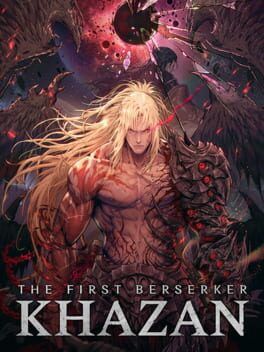
The First Berserker: Khazan celebrates its first anniversary with absurd death stats, strong engagement from a niche audience, and a clearer sense of what kind of brutal action RPG it wants to be. Here’s what the data and community sentiment tell us about its trajectory in year two.
March’s anniversary stats drop for The First Berserker: Khazan did exactly what Nexon and Neople hoped: it got people talking about the game again. Headlines latched onto the big number, over 273 million player deaths, but the full infographic and director message sketch something more important than a meme. They show a mid‑budget Soulslike that has spent a year figuring out who it is, who it’s for, and how far it can lean into cruelty without losing the people who love it.
From launch curiosity to carved‑out niche
Khazan landed in March 2025 right as “mid‑budget character action” became a crowded lane. It had a recognizable Dungeon & Fighter universe hook, a clear pitch as a hardcore action RPG, and a look that split opinion but stood out. Early weeks were noisy, helped by Nexon pushing an initial player‑data infographic and a generous demo with save‑transfer, but it was obvious even then this was never going to be a mass‑market Elden Ring.
A year on, it has instead settled into a smaller, committed audience. External trackers show a typical post‑launch slide on Steam, yet the game continues to sustain a core of daily players with long playtimes and impressive clear‑rate numbers for something marketed as “hardcore.” According to the anniversary stats, 35 percent of players actually finished the game on Normal. That is a quiet but crucial data point. For a punishing action RPG, getting more than a third of your audience to credits suggests people are not just dabbling. They are learning its combat language and sticking around long enough to see Khazan’s story through.
More telling: 40 percent of players pushed on to “discover the truth,” and 25 percent went “deeper into darkness,” Nexon’s phrases for the game’s deeper narrative layers and harder post‑game. Those numbers say that within the modest player base there is real depth of engagement. Khazan is not the game everyone is playing. It is the game a specific kind of player is obsessing over.
A difficulty identity written in blood
The headline stat, 273,804,045 total deaths, reads like marketing bravado, but the breakdown shows how Khazan’s difficulty identity has evolved over the year.
On Expert difficulty, the boss death ladder looks like a heat map of where players truly struggle. Viper sits at the top with 17.7 million kills, followed closely by Volbano with over 16 million and Maluca with over 12 million. These are not early‑game roadblocks players bounce off once and never return to. They are skill checks that millions of attempts have been poured into and eventually overcome.
Hardcore difficulty tells a different story. Here, Maluca jumps to 206,169 player deaths, followed by Ozma at 154,202 and Elamein at 151,835. Players who move into Hardcore are self‑selecting into the sharpest end of the audience, and the bosses that break them are not necessarily the same ones that terrorize Expert runs. That suggests Neople succeeded at creating a layered difficulty profile rather than simply scaling numbers across the board.
The non‑boss stats quietly reinforce that point. Over 20 million deaths from falling, more than 5.5 million from status effects, and 2.2 million from traps show how much of Khazan’s cruelty lives outside traditional health‑bar duels. Level design, environmental hazards, and attrition all matter. The game’s bad reputation among some players as “cheap” grew out of these experiences, but the breadth of those deaths suggests this is central to its identity, not a tuning error.
Neople clearly listened when a chunk of players bounced off that identity hard. In the months after launch, the studio introduced clearer difficulty options, including a Beginner mode at the bottom and a more explicitly signposted Hardcore option at the top. That was a sensitive move for a game selling itself on brutality. Yet the anniversary data shows it did not hollow out the challenge. Instead, it gave players a way to find their level without abandoning the game entirely.
The result is a difficulty curve with scars on it. Players who found even Normal too oppressive had somewhere else to go. Those who wanted to be punished could push into Hardcore and chase the numbers that now dominate the infographic. Khazan has grown into a game that does not compromise on being hard, but that understands “hard” can mean different things for different players.
How players actually play Khazan
If the death counts define what the game does to players, the rest of the stats reveal what players do back to it. The weapon usage breakdown is one of the clearest windows into the game’s combat culture. Spear builds lead the pack at 38 percent, followed closely by dual wield at 37 percent, with greatswords trailing at 25 percent.
On paper, Khazan is a heavy, grounded brawler. In practice, the community has gravitated toward reach and speed. Spears let you manage space in a game full of lethal collision boxes and surprise grab attacks. Dual wield favors aggressive, animation‑cancelling play from people who have internalized enemy timings. The fact that Bloodthirsty Fiend’s Dual Wield is the most used specific weapon is a neat confirmation that players are optimising around high‑risk, high‑reward options rather than hiding behind the tankiest blade on the list.
Then there are the show‑off numbers. Forty‑three bosses have been defeated bare‑handed, with no weapon equipped at all. The fastest full‑game clear on record is 2 hours and 10 minutes. Individual bosses like Aratra, Shactuka, and Reese have been evaporated in 13, 16, and 17 seconds respectively. Put together, those stats sketch out a top layer of players who have pulled Khazan apart, understood every cancellable frame and invincibility window, and are now using that mastery to create their own challenges.
It is also telling what stat players choose to build. Endurance is the most upgraded attribute, raised more than 37 million times. In a game so defined by burst damage and multi‑hit combos that can delete a health bar instantly, players lean on raw survivability as their first line of adaptation. The Phantom system follows the same logic. Kenta the Unyielding is the most summoned Phantom, called into battle over 23.3 million times. The community is gravitating toward tools that keep them standing long enough to learn.
All of this counters the idea that Khazan is simply a brick wall. The game hands you a brutally tuned system, and the player base has spent a year pushing and bending it until a meta emerged that is more about control and resource management than pure reaction time.
Community perception: from “cheap” to “earned”
The community conversation around Khazan has shifted a lot since launch. Early on, forums and social feeds were full of clips of off‑screen hits, impossible‑to‑read grabs, and multi‑phase bosses that looked more like bullet hell puzzles than melee duels. “Cheap difficulty” was a common complaint, and the initial absence of granular difficulty options made it worse.
A year later, you can still find people who bounce off in the first ten hours. But in the parts of the community that stuck around, the tone has changed. Longform breakdowns on wikis and build guides have reframed many of those same encounters as learnable patterns. Fights that once felt unfair are being categorized by safe bursts, punish windows, and spacing rules instead of raw rage.
Neople helped that shift by communicating more directly. The first‑anniversary message from creative director Junho Lee is candid about the game being a personal, career‑defining project. That may not undo anyone’s frustration with a specific boss, but it gives context to design choices that refused to sand down every sharp edge.
Importantly, support has gone beyond words. Balance patches have smoothed some of the truly egregious spikes, early zones are less likely to one‑shot you for a small misstep, and the clearer mode labels make expectations honest. The community that remains sees Khazan less as “that unfair Soulslike” and more as “the brutal one that expects you to meet it halfway.” In a crowded genre, that is a viable and even valuable identity.
Nexon and Neople’s support so far
From a live‑service perspective, Khazan is not a content treadmill. Its first year has been defined more by tuning and communication than by constant injections of new areas or weapons. That could have been a death sentence in the current market, but Nexon and Neople have chosen to treat it like a long‑tail premium title with targeted updates.
The anniversary is their clearest statement of intent so far. Alongside the stats, they announced the Immortal Fury Set, a free commemorative gear package for all owners. This is not a massive expansion, but it is a smart gesture that rewards early adopters and nudges lapsed players to reinstall. Earlier in the year, they also used in‑game infographics and dev notes to make the community part of the tuning process, detailing how player behavior was shaping future balance.
There is also a subtle business story here. As a mid‑budget spin‑off in the Dungeon & Fighter universe, Khazan carries expectations but not the weight of a live MMO. Nexon has allowed Neople to iterate on a relatively closed ecosystem instead of chasing seasonal battle passes. That slower, more deliberate support cadence aligns with the type of player who is still here a year later: people happy to live in a system they like and revisit it when a meaningful update lands.
The trade‑off is visibility. Without new story chapters or headline DLC yet, Khazan risks slipping out of the broader conversation between anniversaries. The studio’s own stats drops and letters have become the primary marketing beats. For now, that works because the data is strong enough to catch attention. Over 273 million deaths is hard to ignore. In year two, the support strategy will likely have to evolve into something with more tangible new content alongside the infographics.
Where the trajectory points next
So what trajectory do these stats and community trends describe for The First Berserker: Khazan?
First, it is clear that the game has successfully defined its lane. It is not trying to out‑scale FromSoftware, and it is not chasing mainstream accessibility. It is doubling down on a particular flavor of tactical, punishing combat where spacing, endurance, and the right weapon choice matter as much as reflexes.
Second, the depth of engagement within its audience gives Neople room to build. When a quarter of players are venturing into the darkest post‑game layers and the Hardcore leaderboards are populated enough to generate six‑figure death counts against specific bosses, you have the foundation for more late‑game content, challenge variants, and build toys. The announced tease of new content alongside the Immortal Fury Set suggests the studio understands this and is preparing to feed the top end of its player base, not just widen the funnel.
Third, the way players have solved Khazan over twelve months means any new content must respect that mastery. When you have people bare‑handing bosses and speedrunning full clears in little more than two hours, the usual bag of health bloat and extra phases will not cut it. The future of Khazan’s trajectory depends on whether Neople can create new encounters that feel fair on a technical level yet still demand fresh learning from players who have already torn the existing roster apart.
Finally, the biggest question is psychological rather than mechanical. Can a game that publicly celebrates 273 million deaths convince the curious that those deaths are worth it? The first year’s arc suggests the answer is yes, for a certain kind of player. Khazan has become the game where pain is not a punchline but a shared language. The anniversary stats do not just mark how many times players died. They mark how thoroughly the game has imprinted itself on the people who stayed.
If Neople can turn that hard‑won identity into smartly scoped expansions and continued, honest communication in year two, The First Berserker: Khazan is positioned to move from cult curiosity to cult classic. And if it does, the next anniversary infographic might measure success not only in blood spilled, but in how many players are still willing to pick the spear back up and go deeper into the dark.