

Inside Ubisoft Massive’s dramatic pivot from hotbars and pet companions to a tactical, loot-driven shooter, and what it reveals about MMO shooter design in the 2010s.
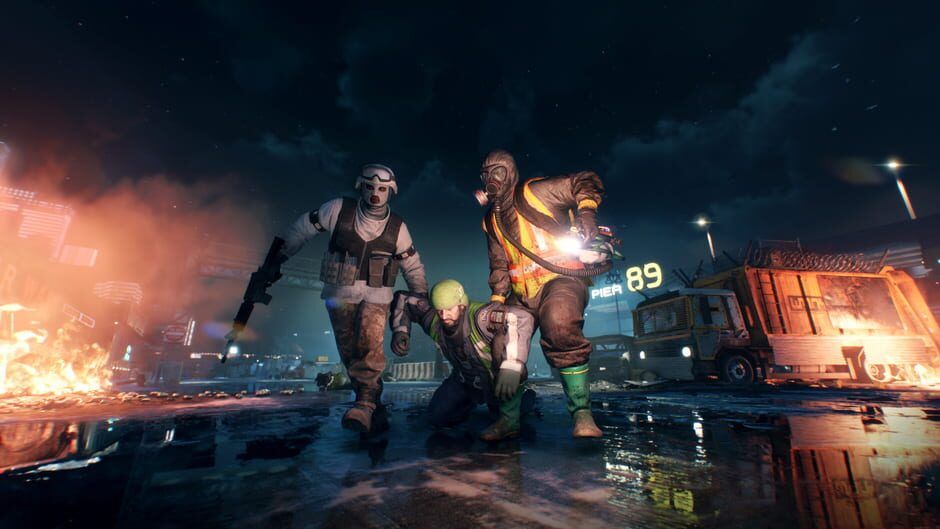
When Tom Clancy’s The Division finally arrived in 2016, it felt like a confident statement of intent from Ubisoft Massive. A grounded, plague-stricken New York, cover-based gunplay, friction-heavy PvP in the Dark Zone and the rhythms of a looter-shooter all combined into something that sat comfortably next to Destiny rather than World of Warcraft. Which is why the studio’s recent anniversary reveal lands like a time capsule from a different timeline: The Division almost launched as a straight-up, World of Warcraft style MMORPG.
According to creative director Drew Rechner and game director Fredrik Thyland, the project’s earliest form looked far closer to Blizzard’s fantasy juggernaut than to the tactical shooter that hit shelves. There was a hotbar at the bottom of the screen stuffed with abilities. There was a more rigid MMO ability rotation. There was even a dog companion following alongside the player. If you glanced at the UI without seeing the modern-day Manhattan backdrop, you could easily mistake it for a classic PC MMO.
The version Massive shows in its 10th anniversary developer video is telling. The camera sits pulled back, character animations feel slower and more methodical, and combat is built around triggering skills from a bar rather than threading shots through iron sights. It is an RPG first and a shooter second. Rechner has described that period as the team trying to graft a beloved MMO template directly onto a realistic Tom Clancy setting. The problem was that it never quite felt like firing a gun.
That tension between RPG abstraction and shooter immediacy became the central design crisis for The Division. Traditional MMOs rely on cooldowns, rotations and statistical checks behind the scenes. Shooters thrive on instant feedback and a sense that every bullet you place is the outcome of your own reflexes and positioning. In those early Division builds, the hotbar-heavy combat veered too far toward the former. Players would fire off abilities that did impressive things numerically, but the on-screen action lacked the punch and precision of a dedicated shooter.
Rechner and Thyland talk about spending a long stretch of development searching for the right balance. Ubisoft wanted a persistent online world that could hold players over months or years, which meant deep progression and long term gear chase. Massive, a studio cut from PC tactical roots, wanted gunfights that felt tight and authored. The breakthrough came when they reframed The Division not as an MMO that had guns, but as a shooter that borrowed MMO structure. That shift of center gravity is what defined the shipped game.
The mantra that eventually emerged, “observe, plan, execute,” crystallized that new direction. Encounters were designed as tactical spaces rather than MMO pulls. Instead of cycling through hotbar abilities while watching health bars drain, players were encouraged to read the battlefield, use cover, flank and then layer in skills that enhanced positioning and team roles. Abilities became extensions of the weapons on your back rather than the main event. Turrets, seeker mines and healing stations supported gunplay instead of replacing it.
Stripping out the dense MMO-style UI forced other changes too. Without a bar full of clickable icons, every remaining input had to earn its place. Skills were trimmed, simplified and tuned not just for balance but for readability in the middle of a firefight. Cooldowns were still there, but they were framed in the context of a shooter rhythm rather than the longer, rotation-based loops of a raid healer or DPS build. That in turn pushed Massive to make enemy AI and encounter pacing more deliberate, so that every skill activation felt like a meaningful tactical beat.
The Division’s eventual embrace of cover-based shooting also highlights how far it traveled from those World of Warcraft roots. In a hotbar MMO, your character’s physical position is important, but latency-absorbing design and ability queuing make it more forgiving. In Massive’s final design, where lethality is high and enemies punish you for staying in the open, location and timing are king. The result is a game that feels closer to a tactical co-op shooter stitched onto a Diablo-like loot treadmill rather than a direct inheritor of WoW’s raid combat.
It is worth placing this pivot in its broader industry context. The early 2010s were a period of experimentation around MMO shooters. Trion’s Defiance tried to weld a third person shooter to a persistent world tied to a TV show. Destiny launched in 2014 with its own uneasy blend of FPS gunfeel and MMO gear systems. PC MMOs like WildStar leaned hard into old school raid complexity at the very moment Western audiences seemed to be tiring of it. Massive’s first pass at The Division slotted neatly into that outgoing era, where the safest way to explain an online RPG to executives and players alike was still “it is kind of like World of Warcraft.”
What Massive ultimately shipped felt more forward-looking. By walking back from a pure MMORPG, The Division aligned itself with an emerging looter-shooter trend instead of chasing a declining subscription fantasy model. Its structure still looks a lot like an MMO on paper. There are instanced dungeons in the form of missions, raid-like activities, item tiers, talents, builds and constant post-launch updates. But by hiding much of that machinery under the hood of a grounded, Tom Clancy flavored shooter, it broadened the game’s appeal beyond traditional MMO players.
The abandoned ideas are a snapshot of a genre crossroads. The dog companion, the busy hotbar, the fantasy-style numerical spectacle all point to a moment when “MMO” still conjured a very specific, WoW-shaped image. As shooters crept toward the center of the live service market, developers had to decide how much of that legacy to carry forward. Massive’s choice to shed so many visible MMO trappings foreshadowed where the genre would go. After The Division and Destiny, almost every big online shooter would adopt RPG systems, but few would dare to present them like a classic hotbar MMO.
At the same time, pieces of that original vision did survive in subtler ways. The Division’s buildcraft, with its emphasis on synergistic talents, set bonuses and group roles, feels closer to an MMO than to a traditional Tom Clancy title. Its world structure, especially the Dark Zone, borrows from the idea of contested outdoor zones where PvE and PvP blur together, even if you are not clicking abilities from a bar. The game’s seasonal and expansion cadence owes more to the long haul planning of MMOs than to one-and-done shooters of the past.
For Ubisoft Massive, the journey from World of Warcraft homage to shooter-first hybrid was not just a course correction, it was foundational. It taught the team how far they could push RPG depth without sacrificing immediacy, and how presentation alone can change players’ willingness to engage with complex systems. The success of The Division validated that approach, turning what could have been another earnest but niche PC-style MMO into a mainstream console and PC hit that would spawn sequels and spin offs.
Looking back with the benefit of hindsight, it is hard to imagine The Division as a traditional hotbar MMO, even if the footage proves that version was very real. The genre had already begun to pivot toward more tactile, action-forward designs, and Massive’s eventual choice placed the series on the leading edge of that movement. The abandoned World of Warcraft style prototype now reads less like a missed opportunity and more like a necessary stepping stone, one that helped Ubisoft Massive figure out which parts of MMO design to carry into the age of the looter shooter, and which to leave behind in an earlier era of online worlds.