
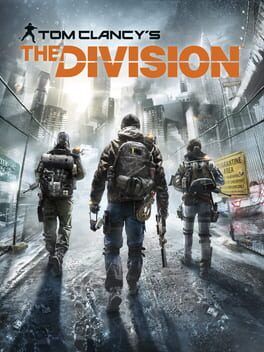

A leaked Definitive Edition points to Ubisoft bringing the original The Division back for its 10th anniversary. Here’s what the posters really tell us, what platforms look likely, how the 2016 looter shooter could be modernized, and where a relaunch fits next to The Division 2’s roadmap and Division 3.
Rumors around The Division: Definitive Edition have gone from forum wish‑listing to near‑certain reality in a matter of days. A huge billboard for the game has appeared at FPS Day X, a Ubisoft‑backed esports event in Tokyo focused on Rainbow Six Siege, XDefiant and The Division 2, with multiple attendees posting photos across social media.
Ubisoft has yet to acknowledge the poster publicly, but the timing is hard to ignore. The original The Division launched in March 2016, and the Tokyo event is billed as a 10th‑anniversary celebration for the series. With The Division 3 already announced and The Division 2 confirmed to be supported into 2026, a Definitive Edition of the original looks less like a random reissue and more like a deliberate attempt to re‑anchor the entire franchise.
What the leaks actually show
Across reports from Rock Paper Shotgun, Video Games Chronicle, Eurogamer and others, the details are remarkably consistent. The Tokyo venue features a tall, vertical poster with the familiar orange SHD iconography and the title “Tom Clancy’s The Division: Definitive Edition.” There are no visible platform logos and no obvious “only on” branding, which matters when you start thinking about where this re‑release could land.
The context is just as important as the artwork. The billboard is sat in a Ubisoft‑curated esports space, not a retailer, and sits alongside signage for The Division 2 and Rainbow Six Siege. VGC and others also point out a dedicated 10th‑anniversary Division panel tied to the same event. That strongly suggests this is not a random piece of legacy art but a teaser for something Ubisoft intends to talk about very soon.
Until Ubisoft says the words out loud, The Division: Definitive Edition is technically still unannounced. But when a publisher installs a billboard for a specific SKU at its own event, the safe assumption is that a reveal is imminent rather than hypothetical.
Platforms: current‑gen first, but what about Switch 2?
The lack of platform markings on the poster is doing a lot of work in community speculation. Based on Ubisoft’s recent strategy, it is reasonable to expect The Division: Definitive Edition to focus on current‑gen consoles and PC, with a question mark hanging over Nintendo’s often‑rumored Switch successor.
On PlayStation and Xbox the play is straightforward. Ubisoft only just pushed out a PlayStation 5 performance update for the original The Division, and Series X and S already run the game with higher frame rates through backwards compatibility. A Definitive Edition could formalize that work into a native package: PS5 and Series X versions with 60 fps as a standard baseline in the open world, faster loading, DualSense support on PlayStation and the usual suite of resolution and visual upgrades.
PC is a given. The original PC release is still active and looks solid today, but a Definitive Edition could ship with a modern launcher integration, better anti‑cheat, current upscalers and a unified settings baseline rather than the piecemeal options accumulated over patches.
The more interesting question is whether Ubisoft uses The Division’s 10th anniversary to plant a flag on Nintendo’s rumored next‑generation hardware. A definitive re‑release of a 2016 game is exactly the sort of test case big publishers have historically used to feel out a new Nintendo platform’s audience. The original Division never came to Switch, but a Switch 2 with more modern hardware could realistically target a stable 30 fps in a slightly pared‑back port.
Nothing in the Tokyo poster confirms a Nintendo version. At the same time, the absence of any console logos makes it easier for Ubisoft to announce multiple SKUs at a global reveal. If Ubisoft wants The Division as a multi‑pillar franchise heading into Division 3, getting the original story onto as many current platforms as possible would make sense.
Modernizing a 2016 looter shooter
The Division holds up visually and structurally, but a bare‑bones repackage would be a missed opportunity for a 10‑year milestone. The leaked name strongly suggests a complete, modernized package rather than a simple reissue. There are a few areas where Ubisoft could meaningfully update the game without undermining what made Manhattan work in the first place.
First, performance and visual upgrades. On console, the original is locked to 30 fps and feels increasingly sluggish next to The Division 2 and other modern shooters. A Definitive Edition that targets 60 fps across current‑gen machines would dramatically change how it feels to snap between cover, flank and snap‑aim weak points. Bringing it up to date with contemporary post‑processing, higher‑resolution textures and cleaned‑up UI scaling for 4K displays would go a long way to making the snow‑choked streets of Midtown feel impressive again rather than just “still pretty good for 2016.”
Second, quality‑of‑life. The original Division’s menus, inventory management and modding flows are very clearly products of their time. The Division 2 repeatedly refined this side of the experience with better filtering, smarter sorting, build templates and clearer roll visibility. A Definitive Edition has the perfect excuse to port those lessons backwards. Faster deconstruction, more generous stash space, clearer gear score communication and better onboarding for World Tiers would all pay immediate dividends for new and returning players.
The endgame is another candidate for careful surgery. Late‑cycle patches such as 1.8 already did a lot to stabilize The Division’s loot treadmill, but it still leans heavily on bullet‑sponge enemies and repetitive gear score climbs. Without completely redesigning the sandbox, Ubisoft could rebalance health pools and armor values in line with The Division 2’s more responsive combat. Even modest tuning that shortens time‑to‑kill against elites or rethinks some of the most egregious boss phases would help the game feel less like a relic of early live‑service design.
How DLC bundling could reshape the package
Every outlet covering the leak lands on the same assumption: a Definitive Edition almost certainly means all post‑launch content under one roof. For The Division that is not just a handful of cosmetic packs. It is the Incursions, underground operations, Survival and Last Stand, plus years of systems work that turned the game from a shaky launch into a genuinely respected live service.
Bundling everything from the start gives Ubisoft a chance to reframe the 2016 game for a modern audience. Instead of the original structure where you hit level cap, feel the grind and then slowly discover later systems, a Definitive Edition could reshape its onboarding to treat Underground, Survival and the Dark Zone as parallel endgame lanes rather than drip‑fed extras.
There is also the question of monetization. The Division launched in a very different landscape to today’s battle passes and cosmetic stores. A Definitive Edition could quietly retire some of the most confusing legacy purchase options and fold cosmetics into a single, clear structure. If Ubisoft wants this relaunch to lure lapsed agents rather than nickel‑and‑dime them, a clean, complete edition with simple DLC messaging will be essential.
Cross‑progression and its link to The Division 2
The thorniest, but arguably most impactful, modernization fans are hoping for is some form of cross‑progression or account linking between the original Division and The Division 2. Technically the games run on related technology and share Ubisoft Connect infrastructure, but their build systems and gear economies are different enough that a straightforward shared character is unrealistic.
That does not mean there is no room for smarter account‑level rewards. A Definitive Edition that plugs directly into The Division 2 could offer cosmetics, emblems, weapon skins or even unique commendations in the sequel based on milestones you hit in the 2016 game. Conversely, players who have already invested hundreds of hours in The Division 2 could receive early‑game boosts, vanity items or currency in the Definitive Edition once they link their accounts.
Even simple cross‑save between platforms for the Definitive Edition itself would matter. The Division launched in an era when playing across PC, PlayStation and Xbox meant making hard choices. A relaunch in 2026 that supports cross‑progression, even without cross‑play, would dramatically lower the friction for lapsed agents to drop into Manhattan again where their friends are.
Fitting around The Division 2’s roadmap and Division 3
On paper, a relaunch of The Division in 2026 sits in a delicate spot. Ubisoft has already committed to more seasonal support for The Division 2 into 2026, and Division 3 is in active development at Massive Entertainment. That creates a risk of cannibalization if players feel like they are choosing between three different live experiences.
The most logical way around that is to treat The Division: Definitive Edition less as a competing live game and more as a prestige archive project that feeds the ecosystem. A complete, polished Manhattan campaign can act as the on‑ramp for newcomers who have only touched The Division 2 through Xbox Game Pass or PlayStation Plus. If Ubisoft is smart, it will design marketing and in‑game messaging so that finishing the Definitive Edition naturally funnels players toward The Division 2’s still‑running seasons, with Division 3 teased as the long‑term destination.
That approach would also help stave off repetition with Ubisoft’s existing Division 3 messaging. Where the publisher has talked about Division 3 as a next‑generation evolution, bigger and bolder in scope, the Definitive Edition can occupy a different emotional space. It is the tight, snowbound origin story that showcases what people liked about the first game in the first place: a grounded New York, a simple outbreak mystery and a focus on small‑scale firefights across recognizable streets.
Handled carefully, you end up with a three‑step funnel rather than a muddled slate. The Definitive Edition celebrates and preserves the original. The Division 2 continues as the live‑service backbone, leveraging its 2026 roadmap. Division 3 becomes the long‑term payoff that benefits from a larger, better‑onboarded audience.
What a successful relaunch would look like
The Division has already done the hard work of proving its concept. A 10th‑anniversary Definitive Edition does not need to reinvent it. To matter in 2026, it needs to respect players’ time and platforms in ways the 2016 release could not.
That means frame rates and load times that feel at home on PS5, Series X and modern PCs. It means peeling back some of the cruft that built up around early live‑service design and surfacing The Division’s best content early, not burying it behind grinds. It means clearer, more flexible progression and at least some thoughtful hooks into The Division 2, even if that is mostly cosmetic and account‑level.
Above all, it means resisting the temptation to treat Definitive Edition as a simple stopgap before Division 3. The leak out of Tokyo makes it clear Ubisoft understands this anniversary is worth marking. What comes next will determine whether the original Division gets the preservation‑minded reissue it deserves, or just a commemorative logo on a billboard in Shinjuku.