
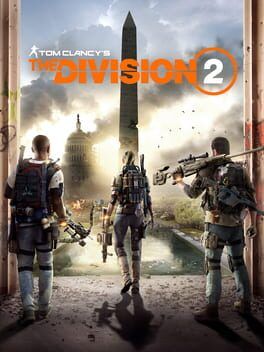

Ubisoft’s limited-time Realism Mode for The Division 2 dials up bullet lethality, strips away health regen and looter systems, and reshapes builds and pacing as part of the series’ 10th anniversary push toward a more hardcore audience.
Ubisoft is getting ready to celebrate The Division’s 10th anniversary by pushing The Division 2 in a starkly different direction. The newly revealed, limited-time Realism Mode temporarily tears out much of the game’s familiar looter scaffolding and replaces it with high-lethality firefights, strict resource management, and a stripped-back HUD.
For a game built on color-coded gear and forgiving time-to-kill, Realism Mode is a deliberate shock to the system. It is also clearly aimed at the players who have stuck with The Division 2’s endgame for years and want something sharper, meaner, and more tactical to chew on.
What Realism Mode Actually Changes
Realism Mode is not just a damage modifier bolted on top of the existing campaign. It is a separate ruleset exclusive to Warlords of New York owners, and it demands a fresh start with a new character created specifically for the mode.
At the core of the experience is much more lethal bullet damage. Weapons now lean toward caliber-based, “realistic” behavior, which means that mistakes are punished quickly and enemies no longer feel like armor-plated bullet sponges. Time-to-kill is dramatically reduced in both directions. You drop enemies faster, but they can return the favor just as quickly.
That lethality is backed up by a suite of survival-focused tweaks. Health no longer regenerates passively, so you cannot simply duck behind cover and wait to bounce back. Healing items and armor kits become precious, tactical resources rather than safety nets you can burn through on cooldown.
Ammo is noticeably tighter as well. Fights that would normally end with you spraying into the last enemy just to speed things up now demand controlled bursts, deliberate weapon swaps, and constant awareness of how much you have left for the next room. Longer skill cooldowns limit how often you can lean on drones, turrets, or CC tools to bail you out.
Even the UI gets pared back. With a limited HUD, information that you usually take for granted, from enemy health bars to on-screen markers, is reduced or removed. The shift forces you to read the battlefield directly instead of letting UI overlays do the work.
Crucially, Realism Mode also removes leveling and strips out many of the looter elements that define The Division 2’s day-to-day grind. You are not climbing a gear score ladder or min-maxing brand sets here. The emphasis is on pure tactical play, where positioning, accuracy, and resource management matter more than exotic talents.
How Harsher Rules Reshape Buildcrafting
With leveling gone and loot progression heavily diminished, Realism Mode inverts the usual buildcrafting priorities. In the live game, creating a build is about chasing incremental percentage gains and stacking synergies until you can melt enemies or facetank damage. In Realism Mode, those tiny optimizations matter less than big-picture survivability and responsiveness.
Damage is high enough that over-investing in glass-cannon setups becomes a genuine liability. Historically popular red-core builds thrive on deleting enemies before they can react, but when even a stray rifle round can ruin a run, the value of armor and hazard protection spikes. You still want strong burst potential, but you need room in the stat budget for mitigation and healing tools.
Skill builds change character too. Long cooldowns mean that classic “set and forget” turret or drone playstyles offer less constant coverage. Instead of building around perpetual uptime, it makes more sense to treat skills as panic buttons or force multipliers during key moments. A seeker mine or shock trap used to prevent a flank or lock down a boss push becomes more impactful than squeezing a little more sustained DPS out of an extra skill tier.
Weapon choice is also more meaningful when bullet behavior tracks closer to caliber. High-powered rifles and marksman rifles become more attractive if you can reliably land shots, since a well-placed round may end a threat immediately. But if you are not confident at long range, leaning on controllable assault rifles or SMGs starts to feel like a safer option than chasing single-shot heroics. Suppressors, magazine sizes, and reload speeds all take on greater weight because every exposed reload can be lethal.
With loot and levels deprioritized, the “build” becomes as much about your personal tactics as your loadout stats. The division between tank, DPS, and skill roles blurs into one guiding principle: can this setup survive long enough to execute the plan without a single slip-up ending the mission?
Mission Pacing Under Realism Rules
One of The Division 2’s defining traits is its pacing. You move briskly from cover to cover, test the limits of your build, and usually have some margin for error. Realism Mode almost certainly slows this rhythm and heightens tension across even familiar missions.
Every engagement becomes a risk calculation. Pushing aggressively to clear a control point might save time, but with lower ammo reserves and no passive health regen, a single sloppy encounter can leave you limping into the next fight with no way to recover. That encourages more methodical clearing of rooms, deliberate angles, and actual withdrawal when things look bad.
Mission difficulty will feel less like a health and armor treadmill and more like a series of binary checks on your decision-making. Did you peek a corner you did not need to? Did you blow your last armor kit to stay in a doomed firefight instead of repositioning? Those mistakes will cost you far more than they do in the base game.
Even traversal between fights gains tension. With reduced HUD elements and leaner resources, simply navigating to an objective while watching for ambushes may feel closer to a tactical recon run than a casual jog across the map. You are always thinking ahead to the next engagement instead of defaulting to autopilot.
In co-op, the pacing shifts again. Coordinated teams will slow down, establish fields of fire, and treat every push like a miniature raid encounter. Revives become crucial but risky; sprinting out into the open to pick up a downed teammate when everyone is one or two bullets from dying becomes a dramatic choice instead of a routine one.
A Testbed For The Hardcore Audience
Realism Mode might be billed as a limited-time event, but it clearly reads as a probe into how far The Division 2 can lean toward a more unforgiving, Ghost Recon-adjacent experience without alienating its base. Massive has experimented with higher-stakes play before through Hardcore characters and tougher seasonal modifiers, yet this is the most comprehensive reimagining of the core rules the game has seen.
For long-time agents who have spent years perfecting builds, the appeal is obvious. Realism Mode offers a fresh challenge that stresses game knowledge and mechanical skill more than inventory depth. It is a chance to revisit familiar missions with a sharper, more tactical lens and to prove that your mastery extends beyond watching enemies evaporate under stacked bonuses.
If the mode finds an audience, it would not be surprising to see variants return in future seasons, potentially as rotating modifiers or a recurring playlist for those who prefer a harsher sandbox. Realism’s requirement for a new character even hints at how a more permanent hardcore track could be introduced without disrupting existing progression.
At the same time, tying Realism Mode to Warlords of New York and to the broader anniversary event lets Ubisoft keep the experiment contained. Players uninterested in losing their comfort systems can ignore it entirely and still engage with the anniversary cosmetics and regular seasonal loop.
How It Fits Into The Anniversary Season
Realism Mode arrives as part of a wider celebration of The Division’s 10-year run. Alongside it, Ubisoft is preparing an Anniversary Pass with cosmetics themed around Rainbow Six Siege, Splinter Cell, and Ghost Recon. Where the pass leans into cross-franchise fan service and fashion, Realism Mode speaks directly to the core of what made The Division’s gunfights compelling in the first place.
Framing the mode as a temporary anniversary attraction gives Massive room to go harder on difficulty than they might for a permanent feature. If it hits the right notes, it becomes a headline achievement of the anniversary year and a talking point among the dedicated community. If it needs tuning, the team can make adjustments or bring it back in a revised form.
It also helps bridge old and new parts of the franchise. With the first The Division recently receiving a 60 FPS patch on PS5 and rumors swirling about a new edition of that original game, the anniversary season starts to look like a franchise-wide refresh. Realism Mode shows that The Division 2 can still evolve in meaningful ways, even as Ubisoft revisits the series’ roots.
Realism Mode vs The Division 1’s Rumored Definitive Edition
It is important to separate Realism Mode from the talk surrounding the first game. While The Division 2 experiments with new rules through this limited-time mode, the original The Division is reportedly headed for a Definitive-style re-release, following its performance update on current-gen consoles.
These are two very different initiatives. Realism Mode is a temporary, high-stakes variant inside The Division 2, focused on moment-to-moment combat feel and systemic difficulty. It strips away progression systems but does not introduce new story content or fundamentally change the campaign structure.
By contrast, any Definitive Edition of the first game would likely be about packaging content, visual or technical updates, and possibly quality-of-life changes into a single, modernized bundle. That would be a product play rather than a radical ruleset experiment.
So while both efforts share the 10th anniversary spotlight, they occupy separate lanes. One is a sandbox shake-up tailored for existing Division 2 agents hungry for a more punishing experience. The other is aimed at preserving and re-presenting the original outbreak of the Dollar Flu to a new or returning audience.
What Realism Mode Means For The Division 2’s Future
Realism Mode will not rewrite The Division 2 overnight, and its limited-time nature keeps it from becoming the new default. Yet it represents a strong signal that Massive and Ubisoft are still willing to experiment with the formula, even this deep into the game’s life.
If the community embraces the higher lethality, the slower, more deliberate pacing, and the stripped-back progression, we could see a future where The Division’s identity comfortably spans both looter-friendly buildcraft and hardcore-leaning, tactical variants. For now, Realism Mode is a rare chance to see what happens when the comfort blanket of regen, overpowered skills, and endless ammo is yanked away, leaving only you, your squad, and a handful of bullets between success and a swift, punishing failure.