
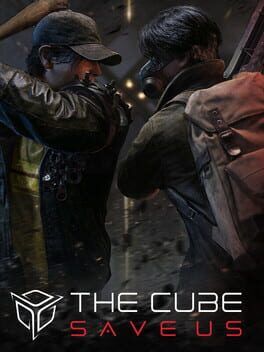
The rapid shutdown of The Cube, Save Us after only three weeks shows how brutal the live‑service market has become in 2026, especially for extraction and battle royale hybrids. Here is what went wrong and what smaller studios should learn about audience acquisition, differentiation, and long‑term support.
In 2026, a three‑week lifespan is all it took for The Cube, Save Us to become a symbol of just how unforgiving the live‑service market has become. XLGAMES pitched it as a multiplayer extraction hybrid, blending brutal close‑quarters combat, shifting worlds beyond the Cube Gate, and PvPvE encounters with mutants and raiders. On paper, it chased the same dream as so many live‑service projects recurring revenue, long‑term engagement, and a sticky player base that would grow over time.
In reality, almost no one noticed it was alive before headlines declared it dead.
According to reporting from HappyGamer, The Cube, Save Us is shutting down just three weeks after launch. Servers come down before the typical player would even finish a battle pass in a more established live‑service title. Most players only learned the game existed when news broke that it was ending.
This is more than just one title failing to catch on. It is a clear snapshot of how hard it has become to launch a live‑service extraction or battle royale adjacent game in 2026, and it highlights mistakes that smaller studios cannot afford to repeat.
A live‑service launch in the hardest possible year
The Cube, Save Us did not arrive in a vacuum. By 2026, the market is crammed with entrenched giants that own player time and attention. Any new extraction or battle royale hybrid is immediately compared to Escape from Tarkov, Call of Duty Warzone, Apex Legends, Fortnite, or whatever the current genre standout is.
The HappyGamer coverage stresses how invisible The Cube, Save Us was. It launched into a marketplace where simply existing is not enough. Players only have room for one or two long‑tail live‑service grinds at a time. If they are already committed to a big name, pulling them away for yet another inventory grind, another XP track, and another battle pass is nearly impossible without a bold hook and clear identity.
Instead, The Cube, Save Us entered as "another" extraction‑style title. Its premise of stepping through the Cube Gate into shifting worlds sounded mysterious, but its marketing never nailed a sharp, memorable pitch that separated it from every other post‑apocalyptic PvPvE offering. The result was a game that was functionally live, but practically invisible.
The three‑week collapse and what it signals
A shutdown three weeks after release is brutal. Most failed live‑service games at least limp along for a year, sometimes more, while studios try emergency content drops, aggressive discounts, or rebrands.
The Cube, Save Us did not even get to that phase. That speed suggests a few things about the current climate.
First, baseline audience expectations for a live‑service launch are extremely high. Players expect a polished core loop, generous onboarding, stable servers, and a roadmap that looks credible. Anything short of that and they move on within hours.
Second, publishers and investors are losing patience. A title that does not show strong early retention or growth can be cut off quickly rather than subsidized for a long build‑up period. With server costs, live‑ops staffing, and content pipelines to pay for, a game with almost no traction becomes a liability fast.
Third, trust in new live‑service games is eroding. HappyGamer calls out this trust problem directly. If games can vanish in three weeks, why would players invest money or time in cosmetics, progression, or social structures tied to them? Every ultra‑short‑lived project makes it harder for the next one to convince anyone that their time is safe.
The Cube, Save Us now sits alongside a growing graveyard of live‑service experiments. The difference is the tempo. Three weeks from launch to closure is not just a stumble. It is a warning shot for the entire model.
The extraction and battle royale hybrid problem
The Cube, Save Us also highlights how difficult it has become to land an extraction/battle royale hybrid. On paper, these games have all the ingredients publishers like to see. High replayability, strong cosmetic monetization potential, and a clear structure for seasonal content and power curves. In practice, they are some of the hardest kinds of games to launch.
They need a large, consistently healthy player base to function. Matchmaking falls apart without population density across skill brackets and regions. Time‑to‑match creeps up, high‑level lobbies cannibalize lower tiers, and the experience deteriorates for everyone. A small or shrinking population can kill these games long before balance or content becomes the main issue.
The genre is also heavily defined by a few leaders. Tarkov shaped expectations for intensity and extraction risk. Fortnite shaped the battle pass and event cadence. Call of Duty defined gunfeel and production values. A new hybrid that comes in with weaker shooting, less dramatic extraction tension, or thinner progression immediately feels second‑tier.
The Cube, Save Us tried to lean into brutal, close‑quarters action and bizarre, shifting environments beyond the Cube Gate, but none of that was framed as a must‑play twist. Screens and trailers looked competent, yet not markedly different. In a world saturated with high‑tempo PvPvE experiences, competence without distinction is a quick path to abandonment.
Lessons for smaller studios: audience acquisition
Smaller studios looking at this space need to internalize one central lesson from The Cube, Save Us. It is not enough to build a functional live‑service game and push it out the door. You need an audience acquisition plan that is as robust as your gameplay design.
That means developing a strong, sharp identity well before launch. Potential players should understand in a sentence why your game deserves a slot alongside their existing main live‑service title. Maybe it is a unique take on risk and extraction, maybe it is a social structure that prioritizes small squads, or maybe it is a focus on highly creative encounters that other games cannot replicate.
Marketing cannot be an afterthought. For The Cube, Save Us, awareness was the first and arguably fatal problem. Without a beta cycle that builds word‑of‑mouth, without consistent creator outreach, and without a clear narrative hook, the game entered the market in a whisper. Players cannot stick with a game they never hear about.
Studios should also be honest about what audience size they actually need for viability. Extraction and battle royale modes are unforgiving to small populations. If you cannot commit to acquiring and retaining tens or hundreds of thousands of concurrent players globally, a mode that collapses under low concurrency may not be sustainable.
Lessons for smaller studios: differentiation in a saturated genre
The second lesson is about differentiation. Trying to be a slightly different version of an existing hit almost guarantees failure in this segment.
The Cube, Save Us offered some mechanical and thematic variations, but they were not communicated in a way that made them feel essential. A unique setting helps, but only if it translates into gameplay stories people want to share. If the most you can say is that it is another dark, post‑apocalyptic PvPvE game with extraction, the market will shrug and stay with what they already know.
Smaller teams cannot outspend the giants on production value, so they need to take sharper creative risks. That might mean unusual win conditions in extraction runs, asymmetrical roles within squads, or wild environmental systems that create unpredictable runs. It might also mean narrowing the focus instead of trying to compete directly as a general‑purpose battle royale.
Different is not automatically better, but indistinct is almost always doomed.
Lessons for smaller studios: long‑term support promises
The third lesson is about promises. Live‑service games live and die on the idea of a future. Roadmaps, seasons, big moments, and gradual evolution are the core of the pitch. When a game like The Cube, Save Us collapses in under a month, it undermines the credibility of those promises across the entire market.
For smaller studios, this cuts both ways. Overpromising can be lethal if you do not have the resources to back it up. You cannot guarantee multi‑year support if the budget and staffing exist only for a speculative first season.
On the other hand, failing to communicate any concrete long‑term plan leaves players unconvinced that the game is worth their investment. The solution is transparency paired with realistic scope. Set expectations you can meet. Explain upfront how seasons will work, what cadence is feasible for new maps, weapons, or features, and what your thresholds are for continued support.
If a game cannot survive three weeks, something was misaligned between internal expectations and external reality. Either the developer and publisher did not have a true runway set aside for slow growth, or the early indicators were so dire that immediate shutdown felt like the only option. Both scenarios point back to a planning failure.
The bigger picture for live‑service in 2026
The story of The Cube, Save Us is not just about a single game going offline. It reflects a broader industry correction. For years, the live‑service gold rush encouraged studios and publishers to chase recurring revenue with the assumption that if they built a competent online game, the audience would eventually come.
In 2026, the opposite seems true. A live‑service launch is now one of the riskiest moves a smaller studio can make, especially in saturated genres like extraction and battle royale. The bar for success is extraordinarily high. The margin for error is tiny. Player trust is fragile.
That does not mean live‑service is dead. It means the era of "just launch another one" is over. Every new live‑service project must show a sharp identity, a convincing plan for audience acquisition, and a believable long‑term support strategy. Without all three, even an interesting concept can end the way The Cube, Save Us did quickly, quietly, and remembered mostly as a cautionary tale.