

XLGAMES’ extraction shooter The Cube, Save Us is closing only weeks after launch, with refunds for all players. Its rapid shutdown highlights how crowded the extraction space has become, what a full refund signals about publisher confidence, and why short-lived live-service launches keep repeating across the industry.
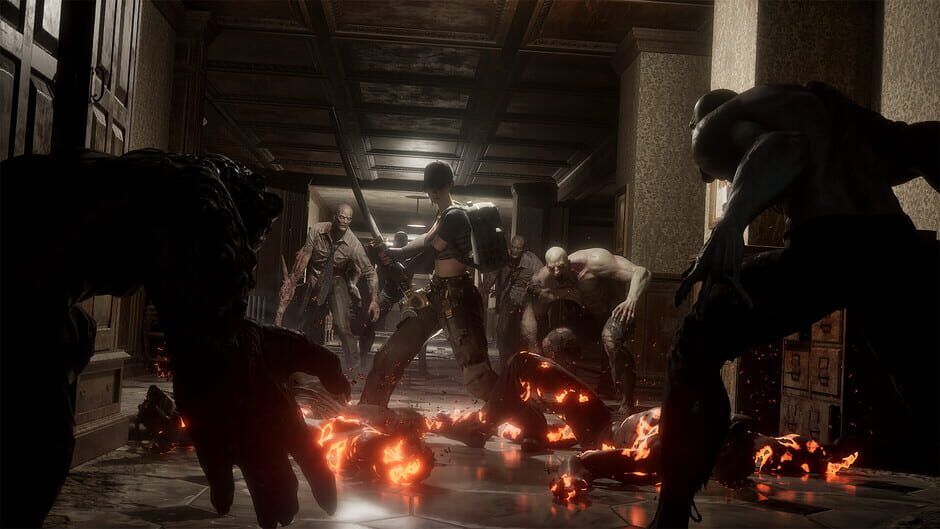
In late March, XLGAMES launched The Cube, Save Us, a PvE-focused MMO extraction shooter built around brutal close-quarters combat and repeat runs through a shifting, hostile world. Less than a month later, the studio announced the game will shut down on May 8, with all purchases on Steam being refunded.
The abrupt closure is not just another unfortunate live-service casualty. It is a concentrated snapshot of the structural pressures facing new extraction shooters, and of how the business logic around underperforming launches has shifted toward cutting losses early instead of riding out a long tail.
A crowded extraction field with little room for error
The Cube, Save Us entered a market where players already have deep, system-heavy extraction staples and a steady stream of new competitors. Escape from Tarkov, Call of Duty’s DMZ and the extraction-style Warzone modes, Hunt: Showdown, and smaller niche offerings have carved out ecosystems of players who are both highly engaged and highly demanding.
For a newcomer, that means two hard realities. First, there is little appetite for a shallow or rough early experience. The genre is built on risk, mastery, and progression, so any friction in core combat, controls, or netcode immediately undercuts the loop. Second, live-service players have more than enough alternatives. If the first weekend does not convince them the game can earn a long-term place in their rotation, they move on, often permanently.
Reports around The Cube, Save Us point to that exact pattern. Launch concurrency briefly cleared the low thousands, but within weeks, concurrent players had collapsed to the low hundreds. Steam reviews shifted strongly negative, calling out awkward combat, poor feel, and a weak overall polish level. In an extraction game, that is not just a cosmetic problem. The entire loop depends on trust in the moment-to-moment gameplay. Once that trust erodes, players are unlikely to keep investing time or money.
Refunds as a signal of confidence and containment
The shutdown announcement came with a notable decision: XLGAMES will refund all legitimate Steam purchases. From a player-relations standpoint, that is the right move. From a market perspective, it sends two clear signals.
First, the studio is not planning to reposition or relaunch this product in the near term. Partial refunds or limited compensation can imply a pivot in progress, but a blanket refund is closer to a hard stop. It suggests internal projections showed no viable path to profitability or sustainable population even with additional updates.
Second, it reflects a growing industry trend toward treating small, underperforming live-service releases like failed pilots rather than long-term projects. Early metrics are now so central to forecasting that rapid triage becomes rational. If player retention, monetization, and sentiment all trend sharply negative, it can be cheaper to unwind the game quickly, protect the brand, and redeploy resources elsewhere than to attempt a year-long rescue.
For customers, this has a double edge. On the one hand, it de-risks trying new live-service games, since poor launches are more likely to be refunded than in the past. On the other, it underscores how little security players have when buying into a new, always-online experience. A game that looks like a long-term hobby can disappear within weeks if the KPIs are not where publishers expect them to be.
Why fast-failing live-service launches keep happening
The Cube, Save Us is part of a now-familiar pattern of live-service games launching, missing targets, and shutting down in under a year, sometimes in under a quarter. The repetition is not just about execution failures on individual projects. It is about systemic incentives and misaligned expectations.
Production pipelines for multiplayer games have been optimized around shipping something that can be iterated on post-launch. That mindset works when you have a captive audience, a strong IP, or a clear mechanical hook that buys you time. It breaks down when you launch into a saturated genre where every friction point is magnified.
Extraction shooters are particularly vulnerable because so much of their appeal is frontloaded into the first few sessions. Players judge the stakes of extraction, the satisfaction of surviving a run, the texture of loot progression, and the fairness of death very quickly. If any of those pillars feel weak or overly monetized, churn spikes. Once early adopters walk away and sentiment on platforms like Steam turns negative, organic discovery collapses. Marketing spends become less effective, and the live-service roadmap that looked sustainable on paper no longer pencils out.
On top of this, many newer projects treat extraction as a modular layer atop more generic shooter or action foundations. That can lead to games that technically fit the genre’s structure but lack the tension and identity that keep players invested across hundreds of hours. In The Cube, Save Us, the focus on melee-centric action and PvE could have given it a distinct niche, but without the mechanical sharpness and progression depth to back that up, the hook was not strong enough to keep the community engaged.
The result is a cycle where publishers and developers are incentivized to push more live-service experiments into the market, but the room for experimentation is shrinking. Only a few titles can command the sustained attention that the model demands, and players are increasingly wary of onboarding into new ecosystems that might disappear before the first major update.
Lessons for the next wave of extraction shooters
The Cube, Save Us will likely be remembered mostly as a footnote, but its trajectory offers several ambient lessons for teams eyeing extraction or broader live-service projects.
First, the baseline for launch quality is no longer negotiable. Rough edges that might have been acceptable in early access or niche indie projects are far less tolerable when you frame a game as a long-term service. If your first week does not feel like a confident, cohesive experience, many players will not give you the months needed to iterate.
Second, clarity about scope and audience is essential. Trying to appeal simultaneously to hardcore extraction fans and more casual action players often produces something that satisfies neither. A focused, well-communicated identity, backed by systems that reward long-term mastery, is more likely to carve out a sustainable niche.
Third, studios need to plan honestly for exit scenarios. If a project must hit specific milestones in concurrent players or revenue to justify continued support, that reality should shape both design and communication. Players increasingly expect transparency around support horizons, especially in a landscape where months of progress can evaporate in a shutdown notice.
The closure of The Cube, Save Us is not an outlier so much as a data point in an ongoing correction. The extraction shooter boom is revealing how few live-service games the market can truly sustain and how unforgiving the environment is for projects that ship without a sharp hook, strong fundamentals, and a clear long-term plan. Until those structural tensions change, more games are likely to follow the same brief arc from announcement to launch to sunset, with players left to weigh whether any new live-service experiment is worth investing in at all.