
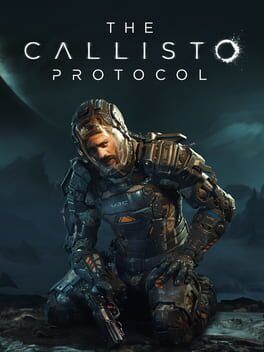

Grab The Callisto Protocol free on Epic Games Store, see how it runs on different PCs, tune your settings, and find the must-play chapters if you’re new to sci-fi horror or coming from Dead Space.
The Callisto Protocol is Epic’s latest 24‑hour mystery gift, and it is absolutely worth grabbing if you have any fondness for Dead Space, grungy sci‑fi, or cinematic horror campaigns.
Below is everything you need to know to claim it in time, get it running properly on a range of PCs, and jump straight to the game’s best scares.
How to claim The Callisto Protocol on Epic Games Store
The Callisto Protocol is the current 24‑hour free game in Epic’s holiday promo.
You can claim it by:
- Signing into the Epic Games Store on PC (launcher or browser).
- Visiting the Free Games section on the front page while the promotion is active.
- Selecting The Callisto Protocol from the “mystery gift” slot and checking out for $0.
Once it is in your Epic library, it is yours permanently, just like a normal purchase.
What kind of horror game is it?
The Callisto Protocol is a third‑person, single‑player survival horror game set in the bleak corridors of Black Iron Prison on Jupiter’s moon Callisto. You play Jacob Lee, a cargo pilot who crash‑lands and finds himself incarcerated as a biological outbreak turns inmates into twisted “biophage” creatures.
It is an unmistakable successor to Dead Space’s style, created by Glen Schofield, with heavy, deliberate movement, over‑the‑shoulder shooting and chunky melee, plus a diegetic UI built into your suit. The campaign is fairly linear and focuses more on atmosphere, jump scares, and cinematic set pieces than on exploration or puzzle solving.
If you like tight, guided horror rides rather than sprawling semi‑open worlds, this is very much that kind of game.
Performance on different PC setups
The PC version launched in rough shape, with shader stutter and inconsistent performance across hardware. Multiple patches have improved things a lot, but the game is still demanding, especially if you enable ray tracing.
Here is what to expect on a few broad tiers of hardware at 1080p, based on current benchmarks and post‑patch reports.
Lower‑end and older PCs
If you are running something like a GTX 1060 / RX 580 class GPU with a mid‑tier quad or hexa‑core CPU, The Callisto Protocol is playable, but you must be pragmatic.
On low‑medium settings with upscaling (FSR 2) enabled, you can usually target 30 to 45 FPS. Heavy scenes with dense fog, volumetrics, and multiple enemies will still cause dips. Ray tracing is off the table here, and you may need to cap your frame rate to 30 for a smoother feel.
The upside is that this is a claustrophobic horror game. Even 30 FPS feels acceptable if it is consistent, and image quality still looks respectable in dark, narrow corridors.
Mid‑range gaming PCs
On a rig around RTX 2060 / RX 5600 XT up to RTX 3060 / RX 6600 XT with a modern 6‑core CPU, 1080p and 1440p are realistic targets with careful settings.
With ray tracing disabled and FSR 2 on Quality or Balanced, many users report 60 FPS in most areas at a mix of medium and high settings. The worst hitching issues have largely been solved now that the game precompiles common shaders at the main menu, though you can still see occasional micro‑stutters during new effect-heavy encounters.
If you push everything to High with ray tracing turned on, performance will drop sharply, especially in later chapters, so think of RT as a luxury feature for higher‑end GPUs only.
High‑end and recent GPUs
If you have something like an RTX 3080 / RX 6800 XT or better and a strong CPU, you can lean into what makes The Callisto Protocol visually impressive.
At 1440p, you can often run mostly High settings with FSR 2 on Quality and maintain 60 FPS or better with ray tracing reflections disabled and ray traced shadows used sparingly or off. Native 4K at High with RT is still punishing on current‑gen cards, with frame rates sometimes sagging below 60 in effects‑heavy scenes unless you heavily rely on upscaling.
Even on monster rigs, the game can be CPU‑limited in busy scenes with RT enabled, leading to drops that do not fully match GPU utilization. This is one of the main technical complaints that has persisted since launch.
Best PC settings to fix stutter and boost FPS
Whether you are on a budget GPU or a high‑end card, a few key settings drive most of The Callisto Protocol’s performance cost.
If you are seeing stutters or low FPS, prioritize these tweaks:
- Turn off ray tracing reflections and, if needed, ray traced shadows.
- Drop Lighting Quality by one or two notches from the maximum.
- Lower Volumetrics Quality to medium or low.
- Reduce Shadow Quality to medium.
- Enable FSR 2 and use Quality mode at 1080p or Balanced at 1440p.
- Cap your frame rate to something your system can hold (30, 45, or 60 FPS) to smooth out spikes.
Texture Quality can usually stay higher if you have enough VRAM, since it does not hurt performance as much as lighting or volumetrics. If you notice hitching when you first start playing, let the game sit at the main menu for a minute or two to finish shader precompilation, which helps reduce stuttering in your first session.
How it compares to Dead Space
If you are claiming The Callisto Protocol because you loved Dead Space, you will feel at home, but there are important differences.
Tone and atmosphere
Both games share industrial sci‑fi horror, ruined metal corridors, and body horror enemies. The Callisto Protocol leans even harder into cinematic presentation, with longer cutscenes, more motion‑captured performances, and a slightly more grounded prison setting rather than the more outlandish alien‑infested ship of Dead Space.
Dead Space often balances dread with moments of quiet exploration or backtracking through previously visited areas. The Callisto Protocol is more of a straight line, piling on encounters and set pieces without as much downtime, which can feel relentless but also less varied.
Combat and pacing
Dead Space’s identity is built around strategic dismemberment and precise ranged combat. The Callisto Protocol shifts a lot of that focus into melee, dodging, and close‑quarters brutality.
You will spend much of the early game using a baton, timing left and right dodges to avoid incoming strikes before counter‑attacking. Firearms back this up rather than replace it, and ammunition is more consistently scarce.
This makes every encounter feel like a brawl, but it can also become repetitive and punishing if you are expecting Dead Space‑style limb‑shooting. On higher difficulty, certain enemy clusters can feel unfair if you have not fully adapted to the dodge rhythm.
Level design and variety
Dead Space’s USG Ishimura is structured like a hub, with diverse decks that help each chapter feel distinct. The Callisto Protocol is more segmented, advancing you through different wings of the prison and outside sections in a more linear fashion.
The upside is that it looks incredible, from frost‑bitten exterior walkways to slick, blood‑smeared cell blocks. The downside is limited enemy variety and fewer memorable puzzles compared to Dead Space. It is a strong visual showcase but a little thinner mechanically.
Verdict for Dead Space fans
If you are chasing the exact Dead Space loop, this will not replace the remake. But as a free, 10 to 14 hour horror campaign that captures much of that atmosphere while pushing more brutal melee, The Callisto Protocol is an easy recommendation during Epic’s giveaway.
Suggested difficulties and settings for new horror fans
New horror players often bounce off difficulty spikes more than jump scares. The Callisto Protocol can be unforgiving on higher settings, especially before you have upgraded your baton and weapons.
If you are new to games like this, consider starting on the normal or even easy difficulty. This still provides plenty of tension, but enemies feel less spongey and checkpoints are less punishing. You can always bump it up later.
Use subtitles and, if available in the options, enable any camera or motion‑sickness tweaks. The camera sits close behind Jacob’s shoulder, which adds tension but can be claustrophobic in hectic fights.
Must‑play chapters and standout moments
The Callisto Protocol is designed as a full, linear campaign, but certain stretches are worth calling out if you are only planning a few long sessions between other holiday games.
The opening chapters in Black Iron Prison are essential. They teach the melee and dodge rhythm and set the tone with some of the best lighting work in the game. Watching the prison go from sterile to chaos in a matter of minutes is a great horror ramp.
Mid‑game chapters that push you into the darker maintenance tunnels and exterior storm‑lashed walkways are where Callisto’s atmosphere really peaks. Limited visibility, howling wind, and tight sound design make even small encounters feel nerve‑wracking. If you are the type of player who loves Dead Space’s zero‑visibility sequences, these are the parts you want to savor.
Later sections where the game opens up just a bit and mixes in more aggressive enemy types showcase the full combat system, forcing you to juggle baton strikes, dodges, and smart use of your firearms and gravity device. These fights can be frustrating if you are under‑upgraded, but on a comfortable difficulty setting they are some of the most cinematic battles in the game.
If you only have time for a sample before deciding whether to commit, aim to at least reach the first major exterior sequence. It is one of the most visually striking parts of the game and a clear indicator of whether this brand of cinematic horror is for you.
Final thoughts: worth the download in 2025?
With the Epic Games Store making The Callisto Protocol free for a limited 24‑hour window, the value proposition is simple. Its launch issues have been significantly smoothed out on PC, the game remains a technical showpiece when tuned correctly, and it delivers a focused, brutal horror story that scratches much of the Dead Space itch without fully replacing it.
If you are on a lower‑end PC, be ready to compromise on lighting, shadows, and volumetrics, and lean on FSR 2. On mid‑range and high‑end rigs, turn off heavy ray tracing, stay at a sensible resolution, and enjoy some of the best grime‑soaked sci‑fi art direction on PC right now.
Claim it while it is free, spend a little time in the options menu, and at least ride the campaign through its best early and mid‑game chapters. For horror fans, it is one of the more interesting “free experiment” downloads Epic has offered in a while.