
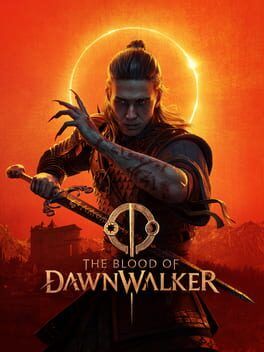

How Konrad Tomaszkiewicz is positioning The Blood of Dawnwalker against The Witcher 3, and why that comparison could both supercharge and sabotage expectations for this new vampire RPG.
Konrad Tomaszkiewicz knows there is no escaping The Witcher 3.
When the former CD Projekt RED veteran announced The Blood of Dawnwalker, an open world vampire RPG from his new studio Rebel Wolves, the comparison was inevitable. Same director, same dark European fantasy roots, a story-driven open world that hangs on player choice and consequence. It practically invites people to call it "the new Witcher" before a release date is even locked in.
What is interesting is how openly Tomaszkiewicz is leaning into that pressure while at the same time trying to establish a sharper, more personal artistic identity for Dawnwalker than most modern AAA RPGs even attempt.
A AAA RPG that starts from art, not from money
In recent interviews, Tomaszkiewicz has been unusually blunt about what he thinks is wrong with big budget game development. He describes too much of the AAA space as built on a "cold" foundation, where companies are founded first and foremost to chase profit. In that environment, he argues, you cannot create art. You can create products, you can create safe bets and reliable revenue, but not the kind of idiosyncratic, surprising games that defined the 1990s for him.
Rebel Wolves is pitched as a direct counter to that. Tomaszkiewicz talks about wanting a studio where people can "grow old together," where the culture is built around long term creative collaboration instead of short term burn and churn. In practical terms that means accepting risk. He stresses that Dawnwalker has systems and ideas that are less commercially safe but more interesting, that the team is deliberately trying to push the boundaries of what a narrative led AAA RPG can feel like.
This is where the Witcher comparison cuts two ways. The Witcher 3 was both an artistic milestone and a gigantic commercial success. The temptation for any new studio would be to try to repeat that formula as closely as possible. Tomaszkiewicz insists he does not want to do that. He is happy to inherit expectations around quality and narrative depth, but not to turn Dawnwalker into a cosmetic reskin of past work.
From monster hunter to cursed father: a sharper protagonist fantasy
One of the clearest points of divergence from The Witcher 3 is in the fantasy at the heart of the player character. Geralt was a professional monster hunter for hire, a somewhat detached operator whose moral choices were often about navigating politics he did not control. Dawnwalker instead casts you as Coen, a man split between human and vampire, father and monster, living across a 14th century Europe that treats his condition as abomination and opportunity at once.
By day, Coen moves through the world as a human who can still operate within social structures. By night, the vampire half takes over, changing how you interact with the same locations and people. This duality is more than flavor. Tomaszkiewicz and Rebel Wolves frame it as the core of the game’s identity, a mechanical and narrative hook that connects every system back to the question of what you are willing to sacrifice for your family and your survival.
Where The Witcher 3 often placed Geralt between states, professionally obligated but personally distant, The Blood of Dawnwalker tries to make your ties in the world much more direct and fragile. Coen’s family and close relationships are not abstract stakes hanging off exposition screens. They are meant to be the central emotional axis that your decisions spin around.
The open world as a moral pressure cooker
The Witcher 3’s world was sprawling, but it was also comparatively traditional in its quest design structure. You took contracts, wandered into side stories, and followed main beats along crafted chains of dialogue and combat. Rebel Wolves keeps talking about Dawnwalker’s quests as something stranger, more reactive, something that blurs the line between sandbox play and authored storytelling.
Details are still deliberately vague, but the broad picture is of a dark fantasy open world that is less interested in giving you a checklist and more interested in watching how you move through its systems. Interlocking factions, the rhythm of day and night, the way your vampiric nature manifests in front of witnesses, all of it informs which stories even emerge in a given playthrough.
That is where Tomaszkiewicz’s comments on wanting to recreate the feeling of the 1990s become concrete. Games from that era felt unknowable because systems were rough, unpredictable and less afraid to break. Dawnwalker is not trying to mimic that roughness, but it is trying to chase that feeling of not seeing the full decision tree just by glancing at a quest log.
If it works, this could be one of the sharpest points of difference with The Witcher 3. Where Witcher quests excelled at tightly written vignettes with clear entry and exit points, Dawnwalker aims for something messier, more entangled with how you express yourself moment to moment.
A world that bleeds history and myth
Rebel Wolves is framing The Blood of Dawnwalker’s setting as another pillar of its distinct identity. Instead of a more generalized pseudo medieval fantasy, the game leans into a specific 14th century European backdrop, where real history and invented myth bleed into each other.
The era is one of upheaval, war, plague, religious fear and paranoia. Into that mix comes a creature who lives on both sides of the human and inhuman divide. The team talks about wanting to avoid a settings soup that feels like a theme park and instead create a place that feels coherent and dangerous, a world where the politics of land, faith and survival are close to the surface in almost every encounter.
That philosophy echoes some of the strengths of The Witcher 3’s world building but with a tighter lens. Monster hunting in the Northern Kingdoms often intersected with politics, but it was framed through Geralt’s work. In Dawnwalker, the politics are tangled directly around what you are. A vampire in this time and place is not just a cool combat kit. It is a walking provocation against religious authorities, local warlords and communities barely holding themselves together.
The result, if Rebel Wolves sticks the landing, is a world with a stronger thematic throughline. The Witcher 3 excelled at variety. Dawnwalker seems more invested in repetition with variation, returning again and again to the clash between human need and monstrous power and seeing how many different stories that core tension can sustain.
Embracing The Witcher 3 as a measuring stick
Tomaszkiewicz is not bristling at the comparisons. On the contrary, he has said he is comfortable with people putting Dawnwalker next to The Witcher 3 and that he feels genuinely confident about the new game alongside that legacy. It is a bold stance. Many directors in his position might prefer to lower expectations, to remind fans that this is a new IP, a new team, a different scale.
Instead, he seems to be using The Witcher 3 as a kind of public measuring stick. It sends a message about internal ambition. If the director himself is willing to set the bar that high, it suggests Rebel Wolves believes Dawnwalker’s writing, quest design and overall feel can survive that comparison when people finally get hands on.
This could pay off in several ways. From a marketing perspective, being seen as the spiritual successor to The Witcher 3 immediately cuts through the noise of the modern RPG market. If you loved that game’s blend of grounded dark fantasy and character driven storytelling, you are being invited to look at Dawnwalker as the next step in that lineage.
At the same time, it is a double edged sword. The Witcher 3 has had nearly a decade to settle into the conversation as one of the best RPGs ever made. Every animation quirk, every side quest and every system in Dawnwalker will be scrutinized against a polished, expanded, mod supported version of that experience. Any rough edge risks being read not just as a flaw, but as a failure to live up to a personal classic.
How comparison could help or hurt expectations
There is a strategic clarity in how Rebel Wolves is handling this. By embracing The Witcher 3 comparisons early, the studio is effectively shaping expectations around two things: continuity of craft and divergence of purpose.
Continuity of craft is simple. Fans are being told to expect the same attention to narrative consequence, complex morally gray choices and rich side stories that defined The Witcher 3. That is the reassuring side of the comparison. It sets a floor for what people think Dawnwalker will deliver.
Divergence of purpose is where the risk and potential artistic payoff sit. Tomaszkiewicz keeps stressing that Dawnwalker is not a product efficiently iterating on a known hit. It is a deliberate attempt to do riskier things in world structure, quest design and thematic focus, funded and produced at a scale usually reserved for safer bets.
If everything aligns, the Witcher 3 comparison becomes a springboard. It draws in a ready made audience then surprises them with a game that feels stranger, more personal and more distinct than a straight successor ever could. If elements misfire, or if the experimental quest structure confuses players who wanted something more familiar, that same comparison amplifies disappointment. People will not weigh Dawnwalker as “a new AA studio finding its feet,” but as “the new Witcher game from the Witcher guy” that did or did not meet the myth.
That tension is baked into Dawnwalker’s identity now. The good news for Rebel Wolves is that Tomaszkiewicz seems acutely aware of it and unafraid. His repeated insistence that you cannot create art from a purely monetary mindset is not a throwaway quote. It is a quiet admission that to get something genuinely new at this scale, you have to risk being measured against your own past triumphs and possibly coming up short.
Looking ahead to a different kind of AAA RPG
The Blood of Dawnwalker is still a ways off, currently targeting PC and current generation consoles. Until players can actually walk those plague laden roads and feel how Coen’s dual nature reshapes familiar RPG rhythms, all of this remains potential.
What is already clear is that Rebel Wolves is trying to stand in a strange but promising place. It is absolutely trading on The Witcher 3’s legacy, but not just as a nostalgia play. It is using that legacy as proof that a large scale, story driven RPG can still reach a massive audience while making bold, sometimes uncomfortable creative choices.
If Dawnwalker can deliver on its talk of riskier quests, a more tightly focused world and a protagonist whose curse is inseparable from the structure of the game, it will not just be “another Witcher” with vampires. It could be a rare thing in modern AAA development: a big budget RPG that feels like it was built first as a piece of art, and only second as a product.