
The Tetris Company says it did not authorize Build the Wall and takes copyright infringement seriously after the White House parody game was removed.
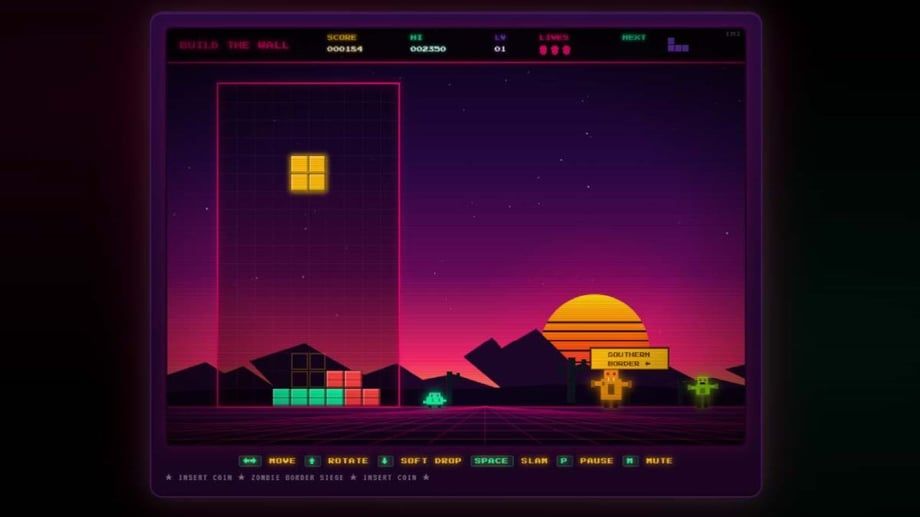
Image: gamefragger.com
Build the Wall disappears after Tetris draws a line
The White House’s Tetris-style game Build the Wall has been removed from its arcade page after The Tetris Company publicly distanced itself from the project and said it takes copyright infringement “very seriously.” That is the strongest confirmed development in a dispute that moved quickly from a political web-game stunt to an intellectual-property problem for an official government site.
Rock Paper Shotgun reported that the former Build the Wall page at whitehouse.gov/arcade/build-the-wall/ now returns a 404 error, and Video Games Chronicle updated its story on September 8 to say the White House had removed the game from its Arcade page following The Tetris Company’s comments. GamesIndustry.biz likewise described the game as a US government-made parody that “has since been removed,” citing VGC’s update.
The immediate tension is simple: the White House framed its arcade section around retro game riffs promoting Trump administration policies, while The Tetris Company said it was not involved in Build the Wall and had not authorized the use of its brand or intellectual property, according to a statement supplied to Variety. No lawsuit has been reported in the provided sources, and The Tetris Company’s public posts stopped short of announcing legal action. But the game’s removal changes the story from a one-day controversy over taste and politics into a live example of how quickly a recognizable game format can become risky when attached to government messaging.
For readers searching for the Tetris White House game, the practical answer is that Build the Wall is no longer available from the White House arcade page according to RPS and VGC. Other games in the same arcade section remained listed at the time of those reports, which makes the removal look targeted rather than a shutdown of the whole project.
What The Tetris Company actually said
The Tetris Company’s statement carried two separate messages: a values-based rejection of the game’s premise and a rights-based warning about authorization. On its official X and Instagram accounts, the company wrote, “At Tetris we believe in the power of connection and bringing people together, not dividing them. To our fans everywhere: we love you, we see you, and we’re grateful to have you in our community.”
The postscripts were the operational part of the message. The company added, “The Tetris Company was not involved in the creation of ‘Build the Wall’” and “We take copyright infringement very seriously.” Those lines were quoted by VGC, GamesIndustry.biz, Mashable, People, The Hill, Variety, and Rock Paper Shotgun.
Variety obtained a fuller comment from a company representative. Asked whether The Tetris Company was considering legal action over the White House game, the representative said the company was “currently reviewing the matter.” The same spokesperson told Variety that The Tetris Company “did not authorize or license the Tetris brand or intellectual property for the game.” That matters because it narrows the confirmed claim: the company has not merely objected to the message of Build the Wall, it has explicitly denied any involvement, authorization, or licensing.
That also keeps us from overstating the record. The sources provided do not show a filed copyright complaint, a DMCA notice, a cease-and-desist letter, or a court claim. The confirmed record is a public distancing statement, an infringement warning, a statement to Variety that the matter was under review, and the later removal of the game from the White House arcade page.
What Build the Wall was, based on the public reports
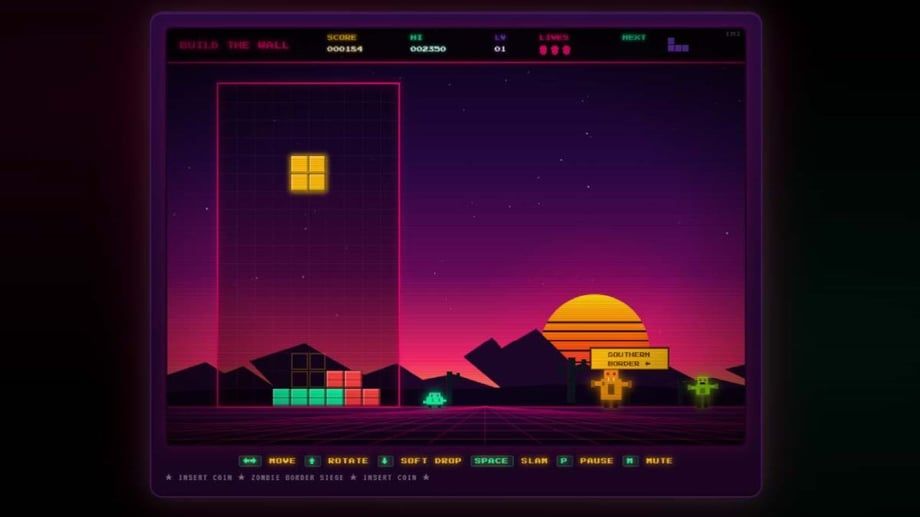
Build the Wall was described across the reports as a Tetris clone or Tetris-style game with border-wall theming. VGC said the game asked players to build the wall as high as possible rather than clear lines, with the goal of preventing “the coming horde” from getting past. Variety reported that the game told players to “Protect the border from the coming horde” and showed foreign invaders bouncing off the player-built wall and disintegrating until the blocks stacked too high and the game ended with the message “BORDER BREACHED.”
The subtitle also appears in the reporting. Variety identified it as “ZOMBIE BORDER SIEGE,” while GamesIndustry.biz referred to the title as Build the Wall: Zombie Border Siege. RPS described the play as stacking bricks along “the Southern border” to repel invading zombies. GamesIndustry.biz said the game involved stacking blocks to prevent “aliens” from crossing the “Southern Border.” The wording varies slightly by outlet, but the shared account is consistent on the central design: a block-dropping puzzle structure was repurposed into an immigration-themed defense game.
People reported that the White House promoted the arcade launch on X with the text “CAN’T STOP WINNING. Build the wall. Deport. Fill a Trump Account,” and said the accompanying video ended with “MAGA” rendered in text resembling Sega’s logo. That is a separate potential brand-association question from the Tetris issue, but the provided sources do not show Sega issuing any statement.
This is where the Build the Wall Tetris copyright problem becomes strategically predictable. If a political web project borrows the feel of a famous game, the first wave of attention may come from the politics. The second wave comes from the rights holder, especially when the project is official, public, and easy to inspect.
The arcade page remains, but the record is messy
The sources agree that Build the Wall was part of a new White House arcade initiative, but they do not describe that initiative in perfectly identical terms. Variety reported that the Trump White House launched whitehouse.gov/arcade on Thursday with six games. Mashable and People referred to ARCADE.GOV as the government web address or page where the games were playable. RPS later reported that the White House’s arcade section housed Flappy Bill, Rio Run, Supply Line, and Trump Savings Tycoon after Build the Wall disappeared, plus a placeholder for a mystery game coming soon.
VGC listed other games on the Arcade page, including Flappy Bill, a Flappy Bird clone featuring a bald eagle, and Supply Line, where players “sort the school lunch to Make America Healthy Again.” VGC also described Rio Run as a Snake-like game tied to the border, where players “patrol the line along the river” and pick up crossers, with a game-over screen reporting how many immigrants were “deported.” GamesIndustry.biz similarly said the site included parodies of Flappy Bird and Snake, with the Snake-like game placing players in the role of Border Patrol at the Southern border.
Those details matter because Build the Wall was removed while the broader arcade concept apparently continued. This is not a case, based on the cited reports, where public criticism forced the White House to abandon all retro-game messaging. It is a case where the Tetris-adjacent entry became the pressure point.
The available sources do not include a White House explanation for the removal. People said it had reached out to the White House for comment in its September 4 report, before the later removal. RPS inferred that The Tetris Company’s warning likely “set off alarm bells,” but that is RPS’s interpretation, not a confirmed White House rationale. The safest reading is narrower: The Tetris Company objected, said it was reviewing the matter, and the game subsequently vanished from the arcade page.
Political parody does not erase the rights question
The dispute sits in a difficult lane for political game riffs. The White House arcade games were political messages wrapped in familiar arcade forms, and several outlets called Build the Wall a parody, clone, or knockoff. But The Tetris Company’s response shows the key distinction for rights holders: a political message does not automatically make a project authorized, and a parody label does not stop a company from objecting when it believes its intellectual property has been used without permission.
The provided sources do not include a legal filing that lays out The Tetris Company’s theory, so we cannot say which exact claims it would bring if it escalated. Variety’s reporting gives the clearest rights-holder position: the company said it did not authorize or license the Tetris brand or intellectual property for Build the Wall and was reviewing the matter. The company’s public post used the phrase “copyright infringement,” while its fuller Variety comment referenced both brand and intellectual property. That leaves open whether any future dispute would focus on copyright, trademark, trade dress, or a combination, but no such case is confirmed in the source record.
For game developers, campaign teams, agencies, and anyone building a fast-turnaround political minigame, the strategic lesson is less about whether every falling-block game is forbidden and more about recognizability. Build the Wall was immediately legible to multiple outlets as Tetris-like. That recognizability was presumably the point of the riff, because familiar mechanics lower the learning curve and make the message travel faster. It also increases the chance that the original rights holder will be dragged into a political association it did not choose.
That is the conflict The Tetris Company tried to manage in one compact statement. It rejected division as a message, reassured its fan community, denied involvement, and signaled enforcement seriousness. In brand-defense terms, that is a clean opening move: separate the company from the political content before arguing over the legal perimeter.
This fits a broader government strategy of gaming references
The Build the Wall removal did not happen in isolation. GamesIndustry.biz reported that the White House arcade followed previous use of video game memes by US immigration authorities and quoted the Department of Homeland Security’s prior statement to journalist Alyssa Mercante that it would continue using game and pop-culture references to promote policy. DHS said, according to that report, “We will reach people where they are with content they can relate to and understand, whether that be Halo, Pokémon, Lord of the Rings, or any other medium.”
GamesIndustry.biz also noted that The Pokémon Company previously told BBC News it was aware of a DHS video containing imagery and language associated with its brand, adding that the company “was not involved in the creation or distribution of this content” and that permission was not granted for use of its intellectual property. VGC reported a separate objection from Steve Downes, the voice of Halo’s Master Chief, who demanded removal of his voice from a White House video about the Iran War and said he had not participated in, been consulted on, or endorsed the video or its message.
That pattern is important for assessing the long game. Political communicators want the instant literacy of games, memes, and legacy brands. Rights holders want control over where their characters, voices, marks, songs, and visual identities appear. The sharper the policy message, the more valuable that control becomes, because silence can be mistaken by some viewers for approval.
The White House parody game removed from the arcade page is therefore a tactical retreat inside a broader communications strategy that, according to DHS’s quoted statement, is not slowing down. The open question is whether future entries will move further away from recognizable commercial templates or continue testing how close a government message can stand to a famous game before the rights holder responds.
What readers can confirm now, and what is still unanswered
If you are trying to find or play the Tetris White House game, the current source-backed answer is that Build the Wall is gone from the White House arcade page and its former page returned a 404 when checked by Rock Paper Shotgun. VGC’s September 8 update also states the game was removed after The Tetris Company’s comments. The remaining arcade games, including Flappy Bill, Rio Run, Supply Line, and Trump Savings Tycoon, were still identified by RPS as present on the arcade section after Build the Wall disappeared.
If you are tracking the Tetris Company copyright infringement angle, the strongest confirmed statements are that The Tetris Company was not involved, did not authorize or license its brand or intellectual property according to Variety’s spokesperson comment, and takes copyright infringement seriously. The company was “currently reviewing the matter” when Variety asked about possible legal action. No provided source reports a filed lawsuit or formal takedown notice.
The unanswered questions are the ones that will determine whether this becomes a precedent-setting fight or a short-lived removal. The White House has not been quoted in the provided sources explaining why Build the Wall was pulled. The Tetris Company has not announced whether its review ended, whether it contacted the White House privately, or whether it will pursue any further remedy. The reports also leave some public-record inconsistencies around the arcade’s exact URL branding and the number of games at launch.
For now, the practical read is cautious. Build the Wall succeeded at borrowing the instant readability of Tetris, then ran into the cost of that same readability. In strategy terms, it converted a familiar design language into political messaging, but it also gave the rights holder an obvious board state to contest.