
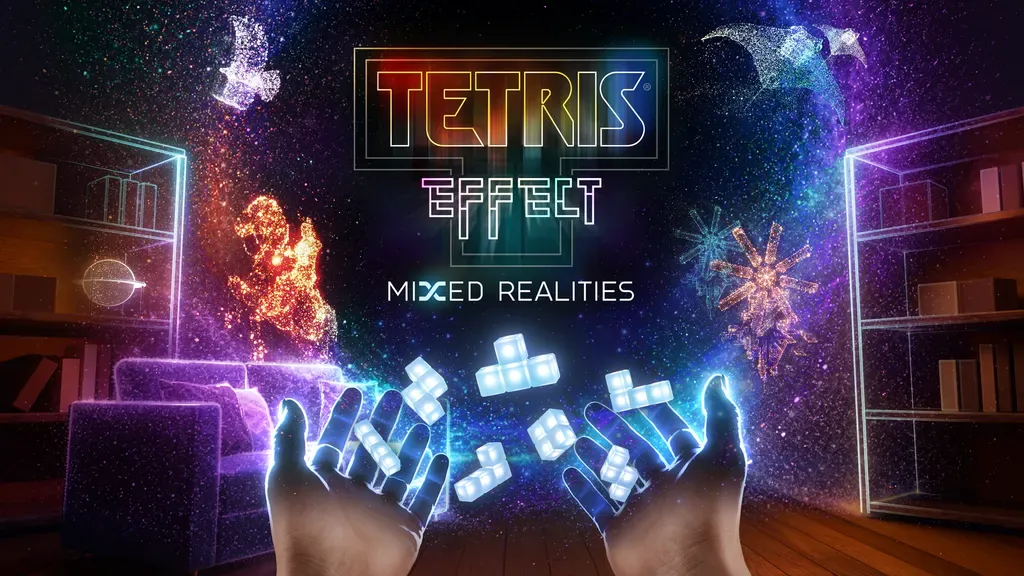

Enhance, Monstars, and Resonair are turning Tetris Effect into a room-aware mixed reality game for Meta Quest 3, Quest 3S, and Meta VR Glasses in 2027.
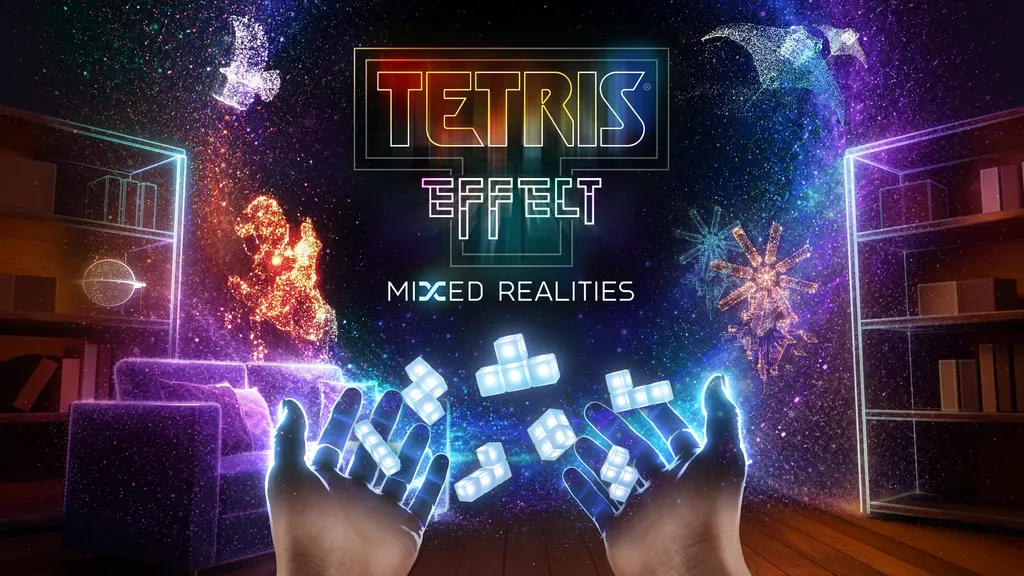
Image: uploadvr.com
A 2027 Tetris announcement with a hardware question attached
Tetris Effect: Mixed Realities is scheduled for release in 2027, with Enhance publishing and Monstars and Resonair developing, according to Video Games Chronicle, UploadVR, VGChartz, and Mogura VR. The strongest concrete hook is simple: one of the most sensory versions of Tetris is being rebuilt around mixed reality, hand tracking, and a player’s actual room.
That also makes this announcement a platform story. VGC reports that Tetris Effect: Mixed Realities is coming to Meta Quest 3, Meta Quest 3S, and the upcoming Meta VR Glasses. UploadVR likewise describes it as a hand-controlled, room-aware version of Tetris Effect for Meta’s new VR device, Quest 3, and Quest 3S. Mogura VR’s English report lists the same three supported platforms and says the game was revealed during the Meta Connect 2026 keynote.
The 2027 timing lines it up with Meta’s next hardware push. VGC and The Escapist both report that Meta VR Glasses are planned for spring 2027 at $1,299. That puts Tetris Effect Mixed Realities in an interesting position: it is a new Tetris game 2027 buyers can associate with Meta’s glasses, but it is also expected to reach existing Quest 3 and Quest 3S owners rather than being locked only to the new device.
The confirmed platform picture is Meta-first, with one source wrinkle
The expected platform focus is clear from most available reporting: this is a Meta Quest Tetris release built for mixed reality hardware. VGC names Meta Quest 3, Meta Quest 3S, and Meta VR Glasses. UploadVR says it is coming to Meta VR Glasses, Quest 3, and Quest 3S in 2027. VGChartz reports Quest 3 and Meta VR Glasses in its headline, then identifies publisher Enhance and developers Monstars and Resonair. Mogura VR lists Meta VR glasses, Meta Quest 3, and Meta Quest 3S in its work summary, along with a Meta store page reference.
There is one notable inconsistency. The Escapist’s broader Meta VR Glasses software roundup says Tetris Effect: Mixed Realities turns the classic into a room-aware, controller-free puzzle experience using the glasses’ passthrough camera and lighting effects, and its table lists the platform as Meta VR Glasses. That conflicts with VGC, UploadVR, and Mogura VR, which all include Quest 3 and Quest 3S. Given the weight of the platform-specific reports, Quest 3 and Quest 3S look like part of the announced plan, but the conflict is worth flagging until Enhance or Meta’s public store listings settle the wording everywhere.
What has not been announced in the provided sources is equally important. There is no confirmed price for Tetris Effect: Mixed Realities, no exact release date beyond 2027, no PC VR or PlayStation VR2 version listed, and no detailed gameplay footage described in the source text. VGC says the actual gameplay remains secret for now. For anyone reading this as a possible upgrade reason, the safe read is that the platform strategy is Meta-centered, but the full purchasing picture is still incomplete.
How mixed reality changes the shape of Tetris Effect
Enhance’s official description, quoted by VGC and VGChartz, calls Tetris Effect: Mixed Realities “a mind-blowing reinvention of Tetris Effect” that uses mixed reality and Tetris’ core play to send players into “magical, musical realms.” The pitch is that your room can transform into a deep-sea aquarium, a remote space station, and other spaces while you build gateways to other dimensions “Tetrimino by Tetrimino.”
That description matters because Tetris Effect has always been built around a clean mechanical base meeting a heavy audiovisual wrapper. UploadVR summarizes the original Tetris Effect as a modern reimagining designed by Tetsuya Mizuguchi and his team at Enhance, Resonair, and Monstars, combining traditional Tetris play with reactive music, particle effects, and environments that respond to player actions. Mixed reality gives that same design philosophy a new surface: instead of surrounding the board with a purely virtual stage, the game can treat the walls, floor, lighting, and geometry of the room as part of the presentation.
The sources do not confirm exactly where the Tetris matrix sits, how scoring modes work, whether Connected’s multiplayer features return, or how room scanning affects different play spaces. So the appeal here is best understood as a design promise rather than a feature checklist. If the original Tetris Effect VR was about making an old puzzle feel enveloping, Tetris Effect mixed reality is being positioned around making the player’s own space feel responsive to the puzzle.
Hand tracking is the showpiece, but controllers still matter
Control is one of the most practical details confirmed so far. VGC reports that Tetris Effect: Mixed Realities will let players control it with only their hands, while also supporting controllers. UploadVR describes the game as hand-controlled and room-aware, saying it takes advantage of Meta VR Glasses features by letting players control the whole game with their hands. Mogura VR also reports that hand tracking will allow play through hand movements without a controller, alongside passthrough technology that displays the surrounding real-world space through the camera.
That hand-tracking emphasis fits Meta’s wider 2027 pitch. The Escapist reports that the primary Meta VR Glasses SKU does not include controllers, although bundles will be available through select retail channels and the device supports Meta’s Touch Plus controllers if bought separately. In that context, a controller-free Tetris Effect is useful launch-window software for Meta because it can demonstrate the glasses without immediately asking players to add accessories.
For puzzle players, controller support may be the quieter but crucial confirmation. Tetris lives or dies on input confidence: rotations, holds, hard drops, and fast corrections need to feel deliberate. The sources do not yet say how Enhance and its developers will map every Tetris input to hands, or whether high-speed play will feel as precise as a physical controller. Until that is shown, the presence of controller support keeps Tetris Effect VR veterans and traditional puzzle players from having to gamble entirely on gesture input.
Meta VR Glasses give the project a showcase role
Meta VR Glasses are being presented as a lighter, glasses-shaped alternative to a conventional headset. VGC reports that the device is planned for spring 2027 at $1,299, with lenses placed in a sunglasses-style frame and processing handled by an attached puck. The Escapist adds that Meta described the device as “a cinema, workspace, and console in one,” with a 100-gram design, 2.4K micro-OLED displays, and a tethered puck running Qualcomm’s Snapdragon Reality Elite chipset.
Those hardware details frame Tetris Effect: Mixed Realities as a comfort and demonstration play. Tetris Effect’s appeal is often tied to flow: short sessions can work, but the game’s music-driven stages also invite longer play. A lighter device could make that style easier to sustain than a bulkier headset, although the provided sources do not include hands-on comfort tests for this specific game.
The Escapist also reports that Meta VR Glasses run the same operating system as Quest and that every existing Quest game will be playable at launch. That is broader hardware context rather than a Tetris-specific feature, but it helps explain why Meta would want familiar names in the launch conversation. Tetris Effect: Mixed Realities gives the new glasses a recognizable, low-friction puzzle brand while Quest 3 and Quest 3S compatibility, as reported elsewhere, keeps the audience from being limited to early adopters of a $1,299 device.
Why this spatial version could click with puzzle fans and VR players
The appeal for puzzle fans starts with continuity. UploadVR notes that Tetris Effect originally released on PlayStation 4 and PlayStation VR in 2018, came to Quest in 2020, received the multiplayer-focused Tetris Effect: Connected update on Steam in 2021, and later reached PlayStation 5 and PSVR2 in 2023. That history means Tetris Effect is already tied to VR audiences rather than arriving as an untested brand extension.
For VR players, the draw is the opposite side of the same design. Mixed reality can make a familiar rule set easier to understand at a glance while still offering a fresh spatial presentation. VGC explains that mixed reality on Quest 3 and Quest 3S uses external cameras so players can see their surroundings while augmented reality places virtual objects in the real world. A puzzle board that reshapes the room around it is a cleaner fit for that technology than many action concepts because Tetris has a fixed, readable core.
That readability is the key. Tetris does not need a tutorial in the way many VR systems do, and Tetris Effect already has a craft identity built on sound, particles, and mood. If the mixed reality layer supports those strengths without muddying visibility or input timing, it could serve both groups: puzzle fans looking for a new way to inhabit a classic, and VR players looking for software that uses passthrough for something prettier and more structured than a tech demo. That remains an expectation based on the series’ prior design and the announced MR pitch, not a confirmed quality judgment.
What to wait for before buying hardware or clearing a room
For now, the practical guidance is to wait for clearer product details unless you already own compatible Meta hardware. Tetris Effect: Mixed Realities is confirmed by multiple outlets for 2027, and the strongest reported platform list includes Meta Quest 3, Meta Quest 3S, and Meta VR Glasses. There is no announced game price in the provided sources, no exact date, and no confirmed requirement that players buy Meta VR Glasses to play if they already have Quest 3 or Quest 3S.
The big unanswered questions are mechanical. Enhance has not yet shown, in the provided source material, how hand tracking handles advanced inputs, whether controller play matches prior versions, which modes are included, or whether this is a separate purchase from earlier Tetris Effect releases. VGC calls it a new version and a mixed reality reinvention, while Mogura VR describes it as a completely new title in the Tetris Effect series. Those phrases point toward something distinct, but they do not confirm upgrade paths, discounts, or ownership benefits for existing players.
For now, Tetris Effect: Mixed Realities is best read as one of Meta’s clearest 2027 mixed reality bets: familiar rules, room-aware presentation, hand tracking, and the same creative chain of Enhance, Monstars, and Resonair behind the prior Tetris Effect lineage. The promise is strong because the game’s original strengths already fit sensory VR. The proof will come when Enhance shows how those falling blocks actually behave in a real living room.