
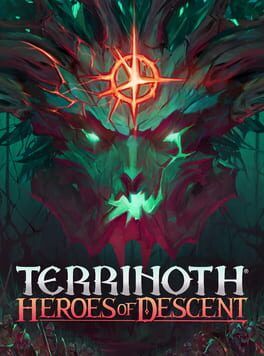

Announcement breakdown and hands-on impressions of Terrinoth: Heroes of Descent, the Descent board game universe’s jump to an action-tactical RPG, with details on co-op structure, campaign progression, and how it stacks up against other tabletop-to-digital conversions.
Terrinoth: Heroes of Descent is Fantasy Flight’s dungeon-crawling board game universe making a serious run at video games. Developed by Artefacts Studio and published by New Tales, it is a tactical RPG adaptation of Descent: Legends of the Dark that aims to feel like a full board game night condensed into a brisk, story-driven co-op campaign.
Set for release on Xbox Series X|S, PlayStation 5, PC and Mac in Q2 2026, with a playable demo already out on Steam, Terrinoth: Heroes of Descent positions itself between faithful tabletop translation and accessible modern tactics game. After spending time with the early demo, it is clear this is not just a direct rules port with dice visuals, but a reimagining of Descent’s structure, pacing and co-op feel for a digital audience.
A new story in Terrinoth, not just a ruleset port
Rather than replaying famous campaigns from the tabletop, Terrinoth: Heroes of Descent tells an original prequel story set one year before Descent: Legends of the Dark. The campaign drops you into Terrinoth as a fresh cast of eight fully voiced heroes, designed so that newcomers do not need to know the board game while still rewarding fans with familiar factions, locations and enemies.
This choice immediately sets it apart from many tabletop-to-digital conversions that simply mirror existing campaigns scenario by scenario. Games like the digital Gloomhaven or Talisman adapt the rulebook first and foremost. Terrinoth: Heroes of Descent instead starts from the fiction and uses the video game format to expand on the lore, character interactions and presentation, with dynamic banter that changes depending on which heroes are in the party.
The goal is clear: make Terrinoth feel like a video game universe that can stand on its own, rather than a companion app you open when you cannot get a group together.
From dungeon tiles to isometric crawler
On the tabletop, Descent thrives on modular tiles, line-of-sight checks and a careful language of icons. Translating that directly would risk overwhelming a new audience. Terrinoth: Heroes of Descent reinterprets those tiles as an isometric dungeon crawler where exploration plays out in real time between fights.
You guide your party across handcrafted dungeons, poke at treasure chests and flip simple environmental “puzzles” like pressure plates and locked doors. The developers are explicit that these puzzles are intentionally light. They exist to break up pacing and echo the physical feeling of laying out new tiles and discovering rooms, not to stop the game dead while you decipher obtuse logic challenges.
The pace is snappy. Rooms are compact, interaction points are clearly marked, and there is little downtime before you are pulled into another encounter. Where many tactical RPGs front-load you with dialogue and systems, the Terrinoth demo pushes you into combat quickly, then uses exploration as a breather instead of the main attraction.
Tactical combat that borrows the tension of the board game
When enemies appear, the perspective shifts into a discrete grid-based battle map. This is where the board game roots come through most strongly. Height differences, choke points and environmental hazards create the same kind of spatial puzzles that Descent fans expect, but with the maths handled for you.
Each hero has three actions per turn, a small tweak that dramatically affects the feel of combat. Where traditional tactics games often spend the first few rounds on pure movement, here characters can close gaps and begin using abilities much faster. Moving twice and attacking, attacking and then repositioning, or firing off a big spell and still having room to maneuver makes battles feel energetic without losing the turn-based clarity.
Abilities skew toward impactful and limited-use rather than spammable trickle damage. In the demo, mage Myria can cast a lightning spell that strikes five times in a targeted area, with hits distributed randomly among enemies inside the zone. Land three bolts on a weaker foe and they evaporate. Another ice spell marks a patch of ground where icicles rain down over several turns, punishing anything that remains inside. Friendly fire is always active, so careless use can shred your own frontliner.
This design echoes the drama of clutch dice rolls in the board game. You are not chipping away one point at a time. You are committing big effects and hoping the odds and positioning work in your favor, with the grid and height rules shaping every risk.
Between encounters, health and resources reset, keeping the tempo brisk. There is no attrition-based dungeon slog where an early mistake ruins an hour of progress. Instead, each fight becomes more like a self-contained tactical puzzle, closer to a string of linked scenarios from a campaign book.
Co-op structure built around “digital game night” sessions
Terrinoth: Heroes of Descent is designed from the ground up for up to four-player co-op online, with full solo support if you want to control the entire party yourself. Structurally, the campaign is built as roughly twenty missions, each intended to last no more than a couple of hours.
The idea is to mimic how a physical group might approach a Descent campaign. You can gather friends for an evening, knock out a mission in one sitting, and leave with a clean narrative endpoint. Missions can be played sequentially to follow the story or revisited later as one-shot episodes once they are unlocked.
This structure fits naturally into the co-op space. Where some tactical RPGs either go full live-service or bury their campaigns under grindy progression, Terrinoth presents itself more like a season of television. Episodes are chunky but self-contained, your heroes grow over time, and it is easy to plan a session without fearing a four-hour commitment that might implode if someone has to leave early.
For solo players, controlling the full squad feels more like a traditional tactics game in the vein of XCOM or Divinity. The game’s clean interface does a lot of work here, with clear turn order, readable health and status info, and expanded tooltips a button press away if you want deeper numbers. It is approachable enough that you can swap roles between sessions without needing to run a full rules seminar.
Campaign progression and character building
Progression in the demo focuses on expanding each character’s suite of skills rather than overwhelming you with gear spreadsheets. As heroes level, they unlock new ability slots and powers that can be equipped between missions. Each skill has a detailed tooltip describing damage, area, status effects and any positional quirks.
The philosophy is that you should be able to understand a build at a glance, then discover nuance as you play. It avoids the worst excesses of some digital conversions that bury you in per-hex modifiers, card decks and edge cases copied wholesale from tabletop rules. Instead, Terrinoth tries to distill the feel of clever combos and synergies into a loadout system that takes minutes rather than hours to tweak.
Crucially, you do not need to min-max to enjoy the campaign. The demo shows that “reasonable” choices are enough to clear encounters, but the door is open to experiment with synergies and difficulty options if you want something closer to a hardcore Descent night.
How it compares to other tabletop-to-digital conversions
Tabletop adaptations often fall into two camps. One side treats the board game as sacred text, recreating rules almost verbatim and layering a UI over the top. The other uses the IP as loose inspiration for something structurally different. Terrinoth: Heroes of Descent tries to sit in the middle.
Compared to the Gloomhaven digital adaptation, Terrinoth is less concerned with fully mirroring card economies or enforcing campaign permanence. It is friendlier to drop-in co-op, with self-contained missions and forgiving between-fight resets. It leans more into the cinematic fantasy adventure tone that suits console play, with full voice acting and a bespoke story rather than a direct lift from a scenario book.
Compared with games that simply borrow a tabletop license and bolt it onto unrelated gameplay, Terrinoth aligns more closely with Descent’s core DNA. The emphasis on tight grid-based encounters, height advantages, environmental effects and bold, swingy abilities all feel like digital interpretations of dramatic board game turns. The three-action structure and clear line-of-sight rules keep every move legible, something that can be hard to maintain in busier tactics titles.
In that sense, Terrinoth: Heroes of Descent feels closest to the better digital dungeon crawlers that respect their board game roots but are willing to bend them in favor of pacing and clarity. Combat flows more quickly than the typical tabletop session, yet positioning still matters, and co-op supports relaxed game nights rather than rigid weekly campaigns.
Early verdict: promising co-op tactics with a strong tabletop spine
The early demo for Terrinoth: Heroes of Descent suggests a project that understands both where it comes from and what a digital tactics RPG needs in 2026. It trims the bookkeeping inherent to dungeon crawlers and replaces it with quick decisions, readable arenas and satisfying, high-impact abilities.
For Descent fans, this looks like a chance to see Terrinoth with full voice work, new storylines and a combat system that captures the spirit of the tabletop without the overhead of setup and teardown. For tactics players coming in cold, it offers a co-op friendly campaign built around short, focused missions and progression systems that respect your time.
With launch still targeted for Q2 2026, there is room for Artefacts Studio to refine balance, expand mission variety and add more surprises. If the full campaign can build on the demo’s foundation, Terrinoth: Heroes of Descent could end up as one of the more approachable yet faithful tabletop-to-digital conversions on the market.