
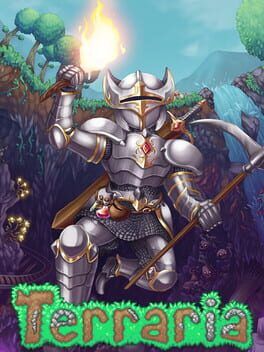
A concise primer on Terraria’s massive Bigger and Boulder 1.4.5 patch for lapsed players: the biggest new toys and biomes, wild boulder tricks and crossovers, and why this “final” update keeps getting bigger in one of gaming’s greatest long‑tail success stories.
Returning to Terraria for Bigger and Boulder 1.4.5 after a long break can feel like stepping into a familiar world that has quietly turned into a full sandbox universe. This patch began as a cleanup update and has grown into something that almost rivals Labor of Love in scope, packed with crossover content, strange new systems, and enough builder and combat toys to justify another full playthrough.
The Bigger and Boulder headliners
Re-Logic has framed 1.4.5 as a final major content drop, and you can feel the “last hurrah” energy in how playful and wide-ranging the patch is. For a returning player the easiest way to think about it is: more reasons to start a new world, more build tools, and a surprising emphasis on boulders.
The boulder gimmick is front and center. Beyond the classic rolling death traps, there are now bizarre variants such as boulders that fall upward, rainbow boulders that bounce chaotically, magma and even poo boulders, and a full-on boulder rain weather event. For PvE and PvP griefing alike, the game has turned a one-note hazard into a slapstick toolkit for traps, adventure maps, and base defenses.
Around that joke concept is a serious injection of new equipment. Combat builds get a wave of fresh weapons including a whole batch of new whips for summoners, a slime-themed spear, and tools like the Axearang that doubles as a thrown axe for fast tree chopping. Magic, melee, ranged, and summon loadouts all pick up new options that are deliberately slotted into the existing progression, so you do not have to rush to endgame to see 1.4.5’s toys.
Builders, meanwhile, are one of the biggest winners again. The update layers in many new furniture sets, decorative tiles such as Fallen Star bricks and craftable Dungeon bricks, and whimsical placeables like CRT televisions, arcade machines, and film projectors. Cloud platforms, more varied mannequins and poses, and a big set of new paintings keep the late-game housing meta evolving. It all makes it easier to theme entire towns instead of just decorating a few favorite rooms.
Underneath the flashy stuff is a round of quality of life changes that make the day-to-day play loop smoother. The standout for any crafter is the ability to pull ingredients straight from nearby chests instead of shuffling stacks into your inventory every time you want to make something. A tidier crafting guide, better character creation, clearer defense readouts, visible fish while you are fishing, and a minion counter for summoners quietly sand down a lot of the friction points that used to accumulate over long sessions.
New worlds, seeds and playstyles
One quiet but important angle of 1.4.5 is how it encourages trying new world setups instead of just rerolling the same classic large map again. The update expands on the idea of secret world seeds, letting you blend seeds together to create hybrid worlds with mixed rulesets and special behavior. If you have followed the community’s fascination with seeds like For the Worthy or Zenith, Bigger and Boulder leans into that appetite for custom challenge runs.
There is also a dedicated Skyblock-inspired seed that starts you on a tiny floating island with severely limited resources. For veterans who already know the basic progression by heart, this kind of constrained scenario forces you to relearn Terraria’s resource economy, improvise farms, and rely on clever crafting in a way that feels fresh despite using the same underlying systems.
World generation gets more variety in other, subtler ways. Dungeon entrances now have multiple variants, thunderstorms are more dangerous and visually dramatic with lightning that can strike enemies and trees, and new boulder types plus environmental objects like fallen logs and placeable life fruits give custom maps more personality. The result is that even if you are following your usual early-game route, the terrain and little details will not feel identical to the last time you played.
Crossovers, pets and the growing Terraria universe
Bigger and Boulder continues Terraria’s habit of looking outward and folding other games into its world. Two collaborations in particular stand out in 1.4.5.
The Dead Cells crossover outfits Terraria with new weapons covering every damage type, along with cosmetic gear like the Beheaded’s outfit and thematic touches such as hanging flasks and the Wings of the Crow. It is less about recreating Dead Cells wholesale and more about giving your character another distinct combat and fashion identity to grow into over a long playthrough.
On the more surprising side is a Palworld collaboration. Pals such as Digtoise, Cattiva and Foxparks show up in Terraria as mining helpers, minions and sentries, plus Pal-themed armor and cosmetics. Digtoise can automate part of the grindy mining loop, while Foxparks functions as both a stationary defense and a portable flamethrower. These additions continue Terraria’s tradition of turning utility and pets into playful mechanical quirks rather than just flavor.
The menagerie grows beyond crossovers as well. New pets, including a pufferfish and the Axe Fairy, join a returning orca from old console editions. Slimes now come in variants that can carry items and change behavior depending on what they are holding, so even early-game critters start to feel more like parts of a living system than disposable enemies.
All of this sits alongside an expanded arsenal of vanity gear and joke items. Audio-based vanity that lets you change your character’s hurt "voice" to things like chickens or arcade machines, film noir visual shaders, and strange accessories that modify how your character behaves keep the game’s tone firmly in that sweet spot between earnest adventure and absurdity.
Why this “final” update keeps getting bigger
If you have been out of the loop, you might remember Re-Logic already calling previous patches the "final" update. Journey’s End, then Labor of Love, both sounded like closing chapters, yet here we are again with another huge patch. Bigger and Boulder is less a contradiction of those promises and more a reflection of how Terraria’s development has evolved.
The team is small, independent, and unusually willing to let community passion steer priorities. Every time they try to draw a line under the game, new ideas emerge from feedback, mod scenes, and crossovers that feel too fitting to ignore. The result is a cycle where "one last" patch aimed at tying up loose ends slowly accretes content until it looks like a full expansion.
Crucially, support has always been free, with no cosmetic cash shop or season pass gating any of this. That keeps goodwill high and ensures that every returning player shares the same content baseline as the most dedicated fan who has been playing non-stop since 2011. In practice, calling something the final update has become more of a mission-statement about pacing and scope than a literal guarantee that development will stop forever.
Terraria as a long-tail legend
Fifteen-plus years after launch, Terraria has turned into one of the defining long-tail support stories in modern gaming. While many live games chase recurring revenue through battle passes and constant FOMO-driven events, Re-Logic’s approach has been to drop rare, enormous, self-contained updates that reshape the game and then step back.
Each major patch has done more than add a new boss or biome. They have layered in whole new progression paths, revised core mechanics, and given builders and combat-focused players alike reasons to reengage. Labor of Love cleaned up long-standing rough edges and modernized systems, and now Bigger and Boulder builds on that stable base with experimental toys, crossover flavor, and new types of worlds to inhabit.
For returning players, that means Terraria is not just "the same 2011 sandbox with more stuff" but a game that has grown alongside the wider industry while stubbornly refusing to adopt the monetization trends around it. You can dip back in after years away, roll a fresh world, and know that the journey from copper tools to Moon Lord and beyond is richer, stranger, and more flexible than ever.
Whether 1.4.5 really is the last big chapter or just the latest in a series of "final" acts, Bigger and Boulder cements Terraria’s reputation as a rare example of how long-term, player-first support can turn a modest indie hit into a generational staple.