
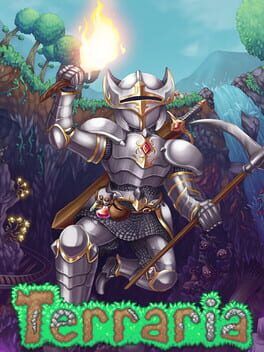
On its 15th anniversary, Terraria stands at 70 million copies sold and shows no signs of slowing down. We look at how constant updates, deep community support, and cross-platform longevity turned Re-Logic’s indie experiment into one of PC gaming’s longest-running success stories.
Fifteen Years, Seventy Million Copies
Terraria’s 15th anniversary is not just a nostalgia checkpoint. It is a stark reminder that a small 2D sandbox from 2011 has quietly become one of the best selling and most enduring games of all time. Re-Logic used the anniversary to confirm a staggering milestone of 70 million copies sold across platforms, and to deliver a message that has almost become tradition: Terraria is still not done.
Across PC, console, and mobile, the breakdown tells its own story of longevity. According to Re-Logic’s anniversary post, around 39.6 million copies have been sold on PC, 10.7 million on consoles, and 19.7 million on mobile. On Steam alone the game continues to average roughly half a million players per day, with historical peaks reaching up to 1.4 million concurrent users. Terraria has not been merely “alive” for 15 years, it has thrived.
The question is how a retro styled, 2D pixel sandbox has stayed this relevant in a market where live service giants regularly burn out in a fraction of that time. The answer lies in a development philosophy built on relentless updates, genuine community partnership, and a slow but deliberate march toward platform parity.
The Game That Would Not Have a Final Update
Terraria’s history is littered with “final” updates that never were. Over the years, Re-Logic has several times suggested that a particular patch would be the curtain call, only to later announce another round of content. What started as a modest, combat focused twist on the block building formula has grown through update after update into a sprawling action sandbox and progression heavy RPG hybrid.
The 1.3 update brought expert mode, new bosses, and an endgame tier that shifted the meta for veterans. The massive Journey’s End patch, marked as 1.4, was billed as the ultimate send off, layering in master mode, new biomes, rebalanced progression, and quality of life options that made the game more accessible without dulling its challenge. Many studios would have wrapped there. Re-Logic instead used the goodwill from Journey’s End to experiment further.
More recently, the 1.4.5 “Bigger and Boulder” update injected another wave of attention, delivering mechanical tweaks, new toys to play with, and crossover content that once again spiked player numbers to some of the highest levels Terraria had seen in a decade. That surge was not a one off event. It was the product of a player base that has learned that whenever Re-Logic says “this might be the last one,” it probably is not.
On the 15th anniversary, the studio embraced that running joke instead of shying away from it. Alongside confirming that update 1.4.6 is still on the way, Re-Logic stated plainly that Terraria updates will continue beyond 1.4.6 and the long awaited crossplay patch. No details yet, no roadmap slides, just a promise that they are not done building.
Constant Updates Without Live Service Bloat
Terraria’s post launch support is often mentioned in the same breath as live service games, but structurally it sits in a different category. There is no battle pass, no seasonal FOMO, no cash shop dictating the cadence of content. Re-Logic’s approach has been to repeatedly ship large, feature rich updates as free expansions, each one feeling like a reason to start a fresh world rather than a treadmill to maintain a streak.
That philosophy has material consequences. Players who drift away are not punished for skipping a season. Returning to Terraria after years feels like opening a gift box that has been quietly filling in your absence. Entire new boss tiers, biome revamps, AI improvements, building options, seeds that remix the rules of the world, and rebalances that make old weapons feel new all add up to a game that never feels stuck in the year it launched.
Critically, Re-Logic has balanced ambition with restraint. Each update has a clear identity instead of a scattershot list of features. Journey’s End was about polishing the whole game experience, 1.4.5 leaned into playful experimentation and collaboration, and 1.4.6 is framed as a pivot toward technical parity and platform cohesion through crossplay. Rather than chase trends, Terraria’s updates have focused on deepening what the game already is.
A Community Treated Like Co Creators
If constant free updates are the backbone of Terraria’s longevity, its community is the lifeblood. In their anniversary reflections, Re-Logic highlighted everyone from hardcore speedrunners and PvP arena designers to art focused builders, modders, and casual players who have kept the game installed for over a decade. That breadth is not accidental. Terraria’s systems are flexible enough to support wildly different play styles, and the team has been unusually willing to let the community’s behavior shape the path of development.
Over the years, popular fan challenges have turned into official seeds and modes. Builder friendly tools have matured in response to what the most creative players were already doing by hand. Community feedback about pain points in progression has been reflected in item reworks and smoother early game pacing. Even the tone of the anniversary messaging, which reads more like a player authored forum post than a corporate press release, highlights how small and personable the studio remains.
Outside the game client, Re-Logic has encouraged a wider ecosystem rather than trying to lock everything down. Terraria’s modding scene on PC has become a game within the game, with massive overhaul mods and content packs essentially offering alternate campaigns. Official updates rarely break this ecosystem without warning. When they do, communication tends to be clear about what is changing and why.
The 15th anniversary announcements extend that community facing mindset beyond patches. Re-Logic is partnering with Lost in Cult on “Terraria Design Works,” a retrospective book that digs into concept art and the game’s evolution. There is also a 15th anniversary collector’s edition in the works, again framed as a celebration shared with players rather than a cash grab. The tone throughout is that of collaborators looking back on something they made together.
Cross Platform Reach and the Long Road to Crossplay
Terraria’s sales breakdown reveals how crucial platform reach has been. Close to twenty million copies on mobile and more than ten million on consoles put it alongside some of the biggest multiplatform hits in the world. Yet unlike many franchises that lean on yearly releases to stay present, Terraria has turned a single SKU into a decade spanning platform of its own.
That journey has not been simple. Different publishers have handled various console and mobile versions over the years, and for a long time the update cadence between platforms lagged behind the PC release. As the game grew more complex, syncing those branches became tougher, but the goal of parity never quite went away. Every time a patch eventually landed on consoles or phones, it effectively re launched Terraria for a new audience.
The missing piece has been crossplay. In its anniversary messaging, Re-Logic confirmed that crossplay is “on deck soon” with the upcoming 1.4.6 update, and reiterated that support will continue beyond that point. For a game so rooted in co op chaos and shared discoveries, crossplay is more than a convenience feature. It is a way to make sure veteran PC players, console families, and mobile newcomers can occupy the same universes instead of parallel ones.
If Re-Logic pulls it off with stable performance and sensible account handling, Terraria’s cross platform community could effectively merge into one of the largest persistent co op sandboxes available. For a title that began its life primarily on PC, that would be a fitting payoff for years of slow but determined porting and parity work.
A Different Kind of Live Forever Strategy
Terraria’s sustained success stands in contrast to the typical playbook for long running games. There is no sequel on the horizon siphoning players away. No aggressive push into multimedia tie ins defining its identity. The game has surfaced in crossovers and collaborations, but those moments have felt like playful touches rather than franchise positioning exercises.
Instead, Re-Logic’s strategy looks deceptively simple: keep making the current game better, keep listening to the people playing it, and avoid over monetizing that relationship. The numbers suggest that approach works. Seventy million copies is a figure usually reserved for platform bundled juggernauts and cross generational console staples, not a 2D indie sandbox that first appeared as a curiosity in 2011.
There is also an element of timing and genre fit. Terraria occupies a sweet spot between survival crafting and action RPG, equally comfortable as a chill building sim or a brutally difficult boss rush. It plays well in short bursts on mobile, supports lengthy co op sessions on console couch setups, and remains a favorite for PC players chasing high difficulty runs or modded overhauls. Rather than splitting that audience, a decade of updates has pulled them closer together.
What Comes After 1.4.6
Re-Logic is not yet talking specifics about what lies beyond the crossplay update, only that additional patches will arrive and that they are finished promising anything is “final.” That restraint is part of the studio’s charm. Terraria is carved out in public view, but always with a sense that surprises are being held back until they are ready rather than teased years in advance.
Realistically, future support is likely to further smooth out cross platform play, refine systems made more complex by years of layering, and slip in new toys, encounters, and challenges that give seasoned players an excuse to start over. The important takeaway from the 15th anniversary is not the feature list, though. It is the commitment.
Terraria has already outlived entire waves of games that chased the same audience. At 70 million copies, Re-Logic could reasonably have chosen to move on. Instead, the team is leaning into a future where this single, ever evolving sandbox remains their flagship.
Fifteen years in, Terraria has stopped being just an indie success story and become a case study. It shows that a single well supported game, handled with patience and respect for its community, can grow into a quiet giant that never really leaves the conversation. With more updates on the horizon and crossplay finally nearing reality, Terraria’s second decade might end up being just as influential as its first.