
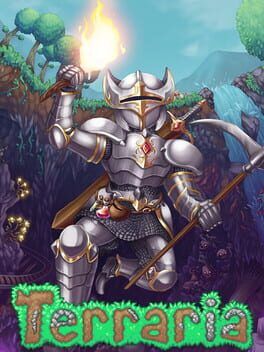

Terraria 1.4.6 begins crossplay with local network play across PC, Mac, consoles, and mobile, but full online crossplay is still a later phase.
Image: IGDB
Store links: Terraria on Steam
Terraria crossplay is live, but only the first layer has opened
Terraria 1.4.6 has launched with Crossplay Phase One, giving players on different platforms a new way to share worlds, provided they are on the same local Wi-Fi or wired network and every device is running version 1.4.6. That is the concrete change Re-Logic is leading with in its launch messaging, and it comes with an important catch: this is local network crossplay first, not the finished internet-wide Terraria crossplay many players have been waiting for.
According to Re-Logic’s announcement quoted by GamingOnLinux and mirrored through SteamDB’s patch notes listing, “for most people using the same Wi-Fi/wired network” any device with Terraria 1.4.6 should be able to play together without a multiplayer subscription. The supported device list in that announcement includes Xbox, PlayStation, Switch, Android, Apple, PC, and Mac. GamingOnLinux reported the update on November 25, while SteamDB lists the Terraria 1.4.6 update for November 24, 2026.
The tension is built into the phrase “Phase One.” Terraria crossplay is finally in public players’ hands, but Re-Logic is drawing a line between local cross-platform play now and easier online cross-platform joining later. For a game that has survived through craft, friction, discovery, and an absurd number of platform versions, this first release is a practical test of whether those worlds can begin talking to one another cleanly.
Which platforms are included in Crossplay Phase One
The phase one platform list is broad. Re-Logic’s announcement says Xbox, PlayStation, Switch, Android, Apple devices, PC, and Mac can participate when they are on the same local network and updated to Terraria 1.4.6. GamingOnLinux’s extracted changelog also states that cross-platform multiplayer games can be hosted and joined over local Wi-Fi from PC, Xbox, PlayStation, Switch, Google, and Apple platforms.
In plain play terms, this is aimed at households, dorms, meetups, and any setup where multiple devices can sit behind the same router. A PC player, a Switch player, a PlayStation player, and a phone player should, in most circumstances, be able to find one another through the local multiplayer flow if all copies are current. Re-Logic’s wording leaves room for edge cases, and the studio specifically asks players to report cases where a local session does not appear in the multiplayer menu.
The subscription detail is especially useful for console players. Re-Logic says local network crossplay does not require a multiplayer subscription. That makes this first phase cleaner for families and couch-adjacent groups than internet play, where platform-holder requirements can still enter the picture. It also explains why the first step is narrower than full online crossplay: local discovery avoids some of the account, matchmaking, and console network complications that arrive the moment everyone is connecting from different places.
How joining works now, and what the new menus are trying to solve
Terraria 1.4.6 does more than flip a compatibility switch. The update also rebuilds parts of the multiplayer interface around this new structure. The changelog cited by GamingOnLinux says the PC multiplayer UI has been redesigned so players can join or invite Steam friends from inside the game without opening the Steam overlay, see local network games ready to join, and view a list of dedicated servers with world information.
That matters because Terraria’s multiplayer has often depended on players already knowing the route: host locally, use Steam, manage IP addresses, or run a server. Crossplay Phase One tries to surface those paths inside the game, especially the local one. Re-Logic says games on the same network should appear in the Local section of the new multiplayer menu, which is the main behavior players should look for after updating.
PCGamesN reports that console and mobile players will also see changes to the multiplayer screen. According to that report, console and mobile versions have a new button in the top-right marked with purple and orange arrows. On consoles, it can be used to enable or disable crossplay. On mobile, PCGamesN says crossplay remains enabled because it is the platform standard. The result is a UI that is beginning to look like a shared front door rather than a different maze on every machine.
Dedicated servers work differently, especially on Switch
Crossplay Phase One is simplest when everyone is in the same building. Dedicated servers and remote play are where the caveats begin. Re-Logic’s announcement says players who know how to configure their router can send friends an IP address so they can connect as a server, and the changelog says Xbox and PlayStation now have support for joining dedicated servers online.
That does not make every console case equal. GamingOnLinux reports that console players need paid online subscriptions for their console online services when connecting to dedicated servers, with Switch called out as an exception because Nintendo blocks that path. PCGamesN gives the same broad split: PlayStation and Xbox users joining independently hosted dedicated servers need an online subscription, while Switch users cannot use privately hosted dedicated servers in any form because of Nintendo’s security and safety restrictions.
For players trying to plan a Terraria 1.4.6 session, the practical read is this: local network crossplay is the supported headline experience, and it is where the update is least encumbered by platform rules. Remote play through IP connection or dedicated servers is possible in some setups, especially for PC hosts and Xbox or PlayStation clients, but it demands more setup knowledge and may require console subscriptions. Switch owners should expect local crossplay and standard player-hosted worlds rather than private dedicated server access.
Full online crossplay is still a later promise, not today’s feature
Re-Logic is explicit that this is not the final form. In the announcement quoted by GamingOnLinux and PCGamesN, the studio says the first phase is about making it easier to play together on a local network with friends on different platforms. The second phase, Re-Logic says, will be about making it easier to join friends online across the internet regardless of platform, with more details to come as the team develops and improves crossplay.
That distinction should temper expectations around Terraria crossplay phase one. If your group is spread across cities, this update does not suddenly give you a seamless console-to-PC friend invite system across the open internet. If your group is under one roof, it may finally remove the old platform wall that kept a phone, console, and computer from comfortably sharing the same world.
There is also an implied testing role here. Re-Logic’s note that some local sessions may not display in the menu, and its request for players to report that behavior, frames phase one as both a feature launch and a live hardening period. Terraria’s sandbox is messy in the best way, with players wiring traps, flooding caves, summoning bosses, and dragging inventories across long-running worlds. Crossplay has to carry all of that, across devices with different input methods, platform policies, and network assumptions.
The rest of the Terraria update patch notes still matter
Crossplay is the headline, but the Terraria update patch notes include a few changes that touch the game’s wonderfully strange edges. Re-Logic added a new “creepy crawlies” seed that increases the amount of spider caves, according to the changelog cited by GamingOnLinux and PCGamesN. At the same time, the existing “Arachnophobia” seed has been changed so it no longer contains spider caves regardless of how many active seeds are used, and spider-like enemies such as Wall Creeper, Black Recluse, Jungle Creeper, and Blood Crawler will no longer appear under that seed behavior.
That pair of seed changes is small on paper and very Terraria in practice. One option turns the dial toward more skittering cave horror, while the other gives players with a specific discomfort a cleaner way to avoid it. For a game that thrives on secret seeds and self-directed challenge, both changes expand how players can tune the world before the first tree falls.
Balance and fix notes are present as well. PCGamesN reports that Homing Gem Staff shots which become hostile now stop homing. Patched’s breakdown of the 1.4.6 notes lists whip-tag changes for Cobwhip, Cool Whip, and Constellation, plus a fix for a server crash caused by rapidly connecting clients. Those are not the marquee attractions, but they sit close to the crossplay story because online stability and combat edge cases become more visible once more platform combinations are in the same world.
Should you update now or wait for phase two?
If your Terraria group plays in the same home or on the same local network, 1.4.6 is worth trying now. The update’s main benefit is immediate for mixed-platform households: no local multiplayer subscription requirement, a clearer multiplayer menu, and local discovery across the major Terraria platforms Re-Logic named. Players should make sure every device is updated to version 1.4.6 before troubleshooting anything else.
If your group plays remotely, the answer is more conditional. PC players and technically comfortable hosts may be able to use router setup and IP-based joining, and Xbox or PlayStation players can join supported online dedicated servers with the necessary online subscription. Switch players should be aware of the dedicated-server limitation reported by GamingOnLinux and PCGamesN. Anyone looking for frictionless online joining across all platforms should wait for Re-Logic’s second crossplay phase.
Terraria 1.4.6 is best understood as the foundation pour, not the ribbon cutting for every possible cross-platform scenario. It brings real crossplay into the live game, gives players a cleaner interface for finding local worlds, and exposes the platform-specific boundaries that still need solving. For a small-looking game with a colossal amount of accumulated systems beneath the surface, that is a sensible first dig: start where the network is closest, watch what breaks, then build the tunnel outward.