
Nacon Studio Milan has delayed Terminator: Survivors out of 2025, scrapped its early access launch, and dropped co-op entirely. Here’s how the plan changed, what the developers are saying, and what this pivot means for the game’s scope and identity.
From co-op early access to a very different plan
Terminator: Survivors was first pitched as an open world, co-op focused survival game that would grow in public. The plan was straightforward: hit Steam Early Access in October 2024, gather feedback on systems like base building and co-op play, then expand toward a full 1.0 launch on PC and consoles.
That roadmap slipped once already. In August 2024, Nacon pushed the early access debut into 2025, keeping the same general pitch of a small group of human survivors scavenging a post Judgment Day wasteland together. Multiplayer co-op and an iterative early access cycle were still at the center of the design and the marketing.
Fast forward to the end of 2025 and that structure has essentially been torn up. With just days left in the year, Nacon confirmed that Terminator: Survivors will no longer release in 2025 at all and that the early access launch on PC is off the table. The next time players touch the game, it will be as a full release rather than an evolving early build, and it will no longer be a co-op title.
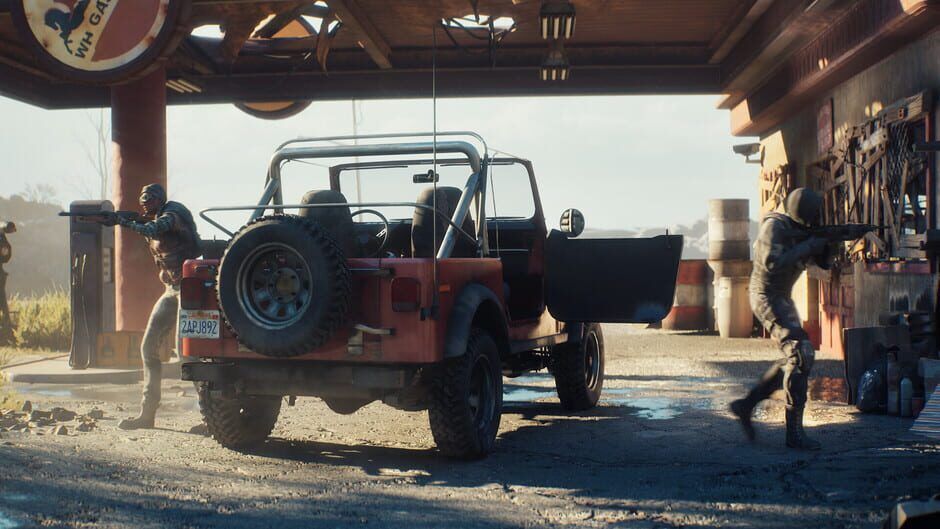
The new reality is that Terminator: Survivors is now positioned as a single player first, story driven survival experience with no public release window. Nacon is still referring to it as an open world shooter set after Judgment Day, but the way players are expected to move through that world has changed significantly.
What Nacon and the devs are actually saying
Across statements picked up by outlets like Video Games Chronicle, Kotaku, Gamespew, Niche Gamer and TheSixthAxis, Nacon and Nacon Studio Milan have given a fairly consistent explanation for the changes.
The first pillar is quality and first impressions. The studio says it does not want players’ first steps into the wasteland to feel like a work in progress. Instead of using Steam Early Access as a long public beta, the team now wants that first commercial build to be a complete and polished experience. That is a big shift in production strategy, turning what was going to be a phased rollout into a single, traditional launch.
The second pillar is focus. Creative director Marco Ponte explains that months of internal testing and conversations with players and Terminator fans pushed the team toward a hard decision. To deliver what they call the most authentic Terminator experience possible, they decided to put aside the cooperative multiplayer component entirely.
The messaging around that decision points to the feel of the game moment to moment. The developers talk about wanting to tighten up shooting, deepen exploration, and dial in the tension of being hunted by a T 800 across a hostile open world. In their view, the kind of pacing and vulnerability that suits a lone survivor fantasy does not line up neatly with synchronizing multiple players across the same map.
Nacon also frames the delay and co-op removal as giving the team more room to refine world design, narrative beats and atmosphere rather than splitting attention between netcode, matchmaking, balance for groups and solo play. The publisher is not committing publicly to a new date, describing the game instead as delayed out of 2025 while the studio regroups around the new scope.
One detail that matters for fans is that this is not being described as a content cut made for budget reasons so much as a refocusing. The language used in multiple statements is about concentrating resources on the single player experience and putting all of the development effort on making that one mode count.
How the project’s scope is changing
From a production standpoint, dropping both co-op and early access dramatically reshapes Terminator: Survivors.
The original version of the game had to account for party dynamics: how loot is shared, how base building scales with multiple players, how enemy AI reacts to four humans instead of one and how the iconic Terminator pursuer behaves when it can be kited, distracted or overwhelmed by a squad. Systems like progression and difficulty tuning had to stretch to cover both solo and co-op runs.
With co-op removed, those systems can narrow their target. Enemy encounters can be authored around a single player’s capabilities, which simplifies balancing damage, resource scarcity and stealth. The T 800 can be tuned to pressure one survivor without needing elaborate workarounds for players reviving each other or exploiting line of sight in ways that undermine the horror.
Early access being scrapped is a different kind of scope change. Under the old plan, content could be layered in over time. The team could ship a subset of regions, iterate on feedback, then roll out new areas, enemies and narrative threads in stages. Now, those pieces have to hang together at launch without relying on months of public iteration.
That means more work has to be locked down internally before going live. Narrative pacing, quest structure and long term survival loops need to be validated through closed testing instead of the broader stress test a paid early access period would have provided. The upside is that new players skipping an early access phase will not have to pick through half implemented quest lines or placeholder systems. The downside is that the team has less room to experiment in public and will need to be more confident in its design choices before shipping.
In practical terms, the scope is not necessarily shrinking so much as being rebalanced. Money and time that would have gone into networking, co-op specific content and maintaining an early access roadmap are now likely being channeled into level design, AI behavior, story content and polish passes on core survival mechanics.
A clearer single player identity
All of these decisions point toward a much clearer identity for Terminator: Survivors. Rather than trying to be an all purpose open world survival sandbox that happens to wear the Terminator license, it is now leaning into the fantasy of being one survivor in a hostile machine ruled wasteland.
The constant presence of a T 800 stalker makes more sense in a solitary context. A single player design can push stealth, evasion and the feeling of being outgunned in a way that is hard to sustain when players can lean on friends for backup. Choices about when to scavenge, when to fortify a hideout and when to risk moving through exposed territory gain more weight when one mistake can end a run.
There is still room within that frame for the broader features Nacon has talked about over the last year. Base building and community management can feed into a story about rebuilding pockets of human resistance. Open world structure lets the player approach objectives in different orders and carve their own route through Skynet patrolled ruins. Survival systems like resource management, crafting and risk rewarded exploration likely remain intact, but they are now being tailored tightly around solo play.
For the Terminator license specifically, this narrower focus may actually help tone. The films that fans tend to reference most are built on isolation, dread and the sense that the machines will eventually find you. Designing every mechanic around a single viewpoint character gives the developers more freedom to chase that mood without constantly adjusting for how it might play with three friends talking over voice chat.
What fans should expect next
In the near term, the most immediate takeaway is that Terminator: Survivors is slipping into a quieter phase of development. With no 2025 date and no early access marker on the calendar, there is not a clear public milestone to count down toward.
That does not mean the project is in trouble by default. What it signals is that Nacon and Nacon Studio Milan want space to realign the game’s systems with its new single player only scope before recommitting to a schedule. Cutting a full multiplayer layer and reshaping progression will take time, especially for a studio that was originally planning to lean on early access for ongoing feedback.
For players, it is reasonable to expect a more traditional rollout from here. Instead of a small early access slice, look for the next big beat to be a refreshed gameplay reveal that emphasizes solo survival, followed eventually by a full date announcement across PC and consoles. Nacon has also been pushing sign ups for closed playtests, which suggests the studio will still rely on external feedback, just in a more controlled way than a public early access launch.
The important context is that this is not a pivot away from the project’s core promise. It is still an open world survival game in a post Judgment Day setting where you scavenge, build up a foothold for humanity and try to stay one step ahead of Skynet. The main difference is that the experience is being designed around a single perspective instead of a group, and the team is opting to release it in a finished state rather than grow it in public.
If Nacon Studio Milan can use the extra time to sharpen that vision, Terminator: Survivors could emerge as a more tightly focused take on the license than its original co-op oriented pitch suggested. For now, the wait will be longer, but the direction is clear: this is becoming a dedicated single player survival story rather than a shared world experiment.