
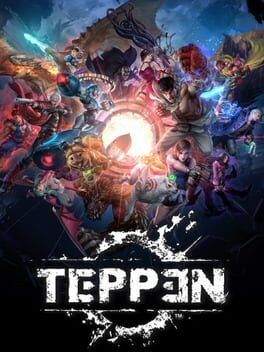

Capcom and GungHo’s crossover card battler Teppen is ending service in 2026, but an offline version will preserve its real time battles, wild collaborations, and place in live service history.
Teppen has always been a strange, stylish outlier in the crowded mobile card game scene. It fused Capcom fan service with a real time battle system years before Marvel Snap made snappy card games fashionable. Now, after nearly seven years of service, Capcom and GungHo have confirmed that Teppen’s online life is ending on March 30, 2026.
Unlike so many live service casualties, though, Teppen will not simply vanish. The developers are preparing an offline update that lets the game live on as a kind of preserved museum piece, where players can keep using the cards and heroes they spent years collecting.
When Teppen Goes Dark – And What Survives
According to the official announcements and follow up reports, Teppen’s online servers will shut down on March 30, 2026 at 20:00 PT (March 31, 2026 at 3:00 UTC). Jewel sales and other monetization are being wound down ahead of that date, and no one should expect new card sets or competitive balance patches once service ends.
The important detail is what happens next. Between the shutdown date and roughly a month afterward, players will be able to download or patch the app into an offline version. Once that update is applied and stored on your device, you can keep playing Teppen without connecting to the servers.
The offline build will not be a one to one recreation of the full live service experience. Features tied to online infrastructure, like ranked PvP, real time matchmaking and live events, will not work. Instead, the preserved version focuses on the elements that can reasonably be packaged into a self contained app. That means single player content and local style modes where your existing collection still matters.
Crucially, GungHo has said that you will still be able to “use the cards and more that you have collected in the offline game modes.” For a genre where entire collections typically evaporate as soon as the servers blink out, that one sentence is a quiet revolution.
A Capcom Crossover That Went Deeper Than Fan Service
When Teppen launched in 2019 it could have coasted on brand recognition alone. The pitch was simple: a crossover battler where Ryu could stare down Wesker while a Nergigante card slammed onto the board. In practice, Teppen took that crossover concept further than many expected.
The roster pulled from across Capcom history. There were the obvious anchors like Street Fighter, Resident Evil, Monster Hunter and Mega Man X. Eventually the game reached into deeper cuts such as Devil May Cry, Ace Attorney and Asura’s Wrath, treating them not as throwaway cameos but as pillars for full sets with storylines and bespoke mechanics.
Teppen’s single player campaigns stitched these series together in surprisingly earnest ways. Events would reframe familiar arcs, like Resident Evil’s bioweapon disasters or Monster Hunter’s apex predators, through the lens of a shared universe. The card art was consistently high quality, with original illustrations that often felt like the most lavish crossover Capcom had put together in years.
Those collaborations extended beyond characters. Mechanics and archetypes often paid direct homage to the games they represented. Monster Hunter cards leaned into ramping resource generation and giant, tempo swinging units. Resident Evil leaned on graveyard interaction and infection themes, playing with destruction, resurrection and corruption. Street Fighter focused on straightforward, aggressive tempo and powerful Hero Arts that reflected iconic supers.
What could have been shallow fan bait instead became a living anthology of Capcom’s back catalog, expressed through systems as much as aesthetics.
How Teppen’s Real Time System Stood Apart
Most digital card games trend toward turn based, asynchronous play. Teppen went in the opposite direction. Battles unfold in real time, with each player’s units marching down three lanes toward the opponent’s life total. When an attack line reaches a target, damage is dealt automatically unless something interrupts the path.
Cards still cost MP, but that resource refills continuously, not in discrete turns. You are constantly weighing whether to spend immediately to seize tempo or bank MP for a more explosive swing later. The result is a hybrid of lane based strategy and card combat where decisions rarely pause.
The one major slowdown is the Active Response system, which briefly freezes the board when an Action card is played. This creates short windows where both players can chain responses, stack buffs, counters or damage spells, then watch the whole stack resolve in a burst. It is the closest Teppen ever comes to the classic “stack” moments of traditional card games, yet it remains tightly timed and readable on a phone screen.
Layered on top are the Hero Arts, powerful once per match abilities tied to each hero. Ryu’s Shinku Hadoken style blasts, Morrigan’s resource manipulation or Dante’s aggressive finishers help define deck identity beyond the raw card pool. Building around a Hero Art is as important as picking your color combination, and many of the game’s most inventive decks sprung from that tension.
Compared to more traditional digital CCGs, Teppen felt like a fighting game translated into cards. Positioning, timing and meter management mattered as much as raw card advantage. That identity is a big part of why its preservation matters. There simply are not many other games that fill the same niche.
The Collaborations Fans Will Remember
Across years of updates, a handful of collaborations and expansions helped define Teppen’s legacy.
Early on, sets built around Resident Evil 2 and Monster Hunter World showed how far the team was willing to go with mechanical flavor. Later, crossovers like Mega Man Zero and Asura’s Wrath drove home that even relatively dormant Capcom IPs still had a pulse in Teppen. Seeing Asura show up with over the top artwork and cards that leaned into rage and escalation felt like a deliberate nod to fans who had waited years for any acknowledgment of that series.
Seasonal events and limited time campaigns often spotlighted stranger matchups. Phoenix Wright would stand opposite Dante, while characters like Chun Li or Jill Valentine anchored decks that blended martial arts, gunplay and horror tropes in ways only a crossover can get away with. These mashups were not just loading screen art. They influenced mechanics, narrative flavor text and even how new players came to understand Capcom’s history.
For a slice of the audience, Teppen became the place where Capcom’s fragmented universes could interact in a sustained, systemic way, rather than just cameos in a fighting game roster.
Preservation In A Genre That Rarely Gets It
Teppen’s shutdown is happening in a broader context where live service games, especially on mobile, are routinely switched off forever. Card battlers and gacha titles are particularly vulnerable, since they depend on server side logic, constant balance and monetization updates.
Many high profile games have not been so lucky. When online support for titles like Terra Battle or some region specific card battlers ended, the clients simply stopped working. Even PC and console games are not immune. Once servers for something like the original Duelyst were turned off, all of that bespoke art, music and design work became inaccessible without fan led resurrection projects.
This is why Teppen’s confirmed offline version matters beyond its own community. It sets a modern example of a publisher working with a mobile partner to produce an official, sanctioned way to keep a live service title playable after the revenue faucet closes.
The offline build will not preserve every single mode or social feature, and it certainly will not capture the feel of a live ranked ladder. But as a reference point for game historians, designers and players who want to revisit specific metas or campaigns, it is invaluable. It also provides a counterexample to the idea that mobile games must become unplayable the instant they stop making money.
Where Teppen Sits Among Sunsetted Live Service Games
If you zoom out, Teppen’s trajectory looks like a full arc for a niche but respected live service title. It launched amid skepticism about yet another mobile crossover, carved out a dedicated audience by being mechanically distinct, ran for nearly seven years and will bow out with a plan for long term preservation.
Compared to other sunsetting games, that sequence is unusually graceful. Some titles limp along with minimal updates before quietly disappearing, their shutdown notices giving players only weeks to say goodbye. Others experiment with partial offline modes that do little more than let you watch your old collection in a gallery.
Teppen is closer to the ideal of what a “good ending” for a live service game can look like on current platforms. There is a clear timeline, early communication, and most importantly a version of the game that can outlive the servers in a meaningful way.
From an industry standpoint, that approach also acknowledges something live service economics often ignore. Games like Teppen accrue value beyond their ongoing revenue streams. They shape how other designers think about mechanics like real time card combat, inform the future of crossover storytelling and become touchstones in the history of a publisher’s catalog.
A Legacy That Outlasts The Servers
When March 2026 rolls around, there will be a real sense of loss. The ranked queues will stop filling, seasonal events will end and the meta will freeze in place. But thanks to the offline update, Teppen’s most distinctive qualities will not disappear.
It will still be possible to boot up the app years from now, hear the familiar menu stingers and drop Ryu and Wesker on opposite sides of the board. You will still be able to flip through decks that weave together characters from across Capcom’s history, relive campaign story beats and appreciate an experimental battle system that never quite got the mainstream spotlight it deserved.
In a field where too many live service titles die without a trace, that counts as a small but meaningful victory. Teppen may be closing its doors, yet as an offline artifact of Capcom’s crossover ambitions and GungHo’s design experimentation, it is likely to be studied, emulated and fondly remembered long after the last ranked match has been played.