
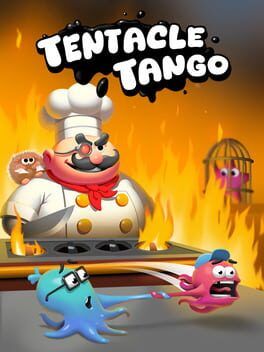

A closer look at Tentacle Tango’s two‑octopus, physics‑driven platforming and why its shared‑limb chaos feels tailor‑made for Nintendo Switch couch co‑op.
Tentacle Tango looks like the kind of game that will turn a quiet evening on the couch into a loud mix of laughter, accusations, and “one more try” runs. Coming to Nintendo Switch in 2026, Cable Nest’s co-op platformer stars two inseparable octopuses, Ten and Tango, who have to fling, swing, and flop their way through danger using a shared connection and wildly springy tentacles.
On paper it sounds simple: two players, two octopuses, reach the end of the level. In practice Tentacle Tango is a physics-first platformer where your every movement has knock-on effects. Tentacles stretch, compress, and recoil with a cartoon elasticity that makes even basic jumps feel alive. Push off a ledge with a little too much force and you might overshoot a platform. Swing too late and your partner might slam into a hazard. The game leans into this unpredictability, asking you to embrace the wobble rather than fight against it.
The core hook is that Ten and Tango are bound together. Their shared-limb style connection makes them feel less like two separate characters and more like one awkward organism that happens to be controlled by two human brains. You are constantly negotiating who anchors and who swings, who leads and who follows, and which one is about to ruin a near perfect attempt with a mistimed button press. Success comes from using that shared link as an advantage, turning it into a living rope you can wrap around platforms, hook onto edges, and use to slingshot each other through the air.
That same tether is what gives Tentacle Tango such strong couch co-op potential on Switch. The console is already home to a long list of chaotic co-op staples, from Overcooked to Heave Ho, and Tentacle Tango seems to slot right into that tradition. The physics-based movement demands constant communication, the kind that is better shouted across a living room than whispered into a headset. This is a game built for split Joy-Con sessions, with each player clutching a tiny controller and trying desperately to move in sync.
Levels are built around that coordination. Early stages tease you with simple gaps and low-stakes swings, letting you feel out the weight and stretch of each tentacle. Before long, the game starts layering in crumbling platforms, traps, moving hazards, and enemies that punish sloppy teamwork. Because the two octopuses share that central bond, any mistake tends to take both players down at once. You are not just sharing progress, you are sharing failure.
Despite the cute art style and cheerful oceanic aesthetic, Tentacle Tango is clearly aiming to be a skill-based challenge. Precision timing matters. Holding your swing a fraction of a second longer can be the difference between a perfect arc and an embarrassing plunge. You need to think about angles, momentum, and who is carrying whose weight at any given moment. The physics are not just a gimmick layered on top of standard platforming, they are the main ruleset you are learning to master.
For those willing to dig deeper, Tentacle Tango adds replayable hooks like time-focused leaderboards and achievements that reward true mastery. That structure could be a strong fit for short, repeatable sessions on Switch. It is easy to imagine pairs of players passing the console back and forth, chasing faster clears of a favorite stage or trying to prove which duo has the best tentacle control on the friends leaderboard.
Importantly, Cable Nest is not abandoning solo players. Tentacle Tango can be played alone, with one person taking responsibility for both octopuses. That turns the game into a kind of self-co-op challenge, forcing you to mentally split your focus between two characters stitched together by physics. It will likely be the harder way to play, but it also speaks to the flexibility of the core design. The shared-limb mechanics are strong enough to support comedic chaos with friends and precision practice runs on your own.
Tentacle Tango is still a ways off, with the Switch version planned for 2026, but the concept already fits naturally into the console’s local multiplayer lineup. It taps into the physicality of physics-based movement, the intimacy of shared-limb control, and the social energy that comes from sitting next to a friend while everything falls apart on screen. If Cable Nest can keep its levels inventive and its controls responsive without sanding away the clumsy charm, Tentacle Tango has a real shot at becoming a new couch co-op staple for Nintendo Switch.