

Lightspeed LA has confirmed layoffs after internal reviews and playtesting, while reports say Tencent’s Last Sentinel has effectively stalled after years of trying to build a premium open-world GTA rival.
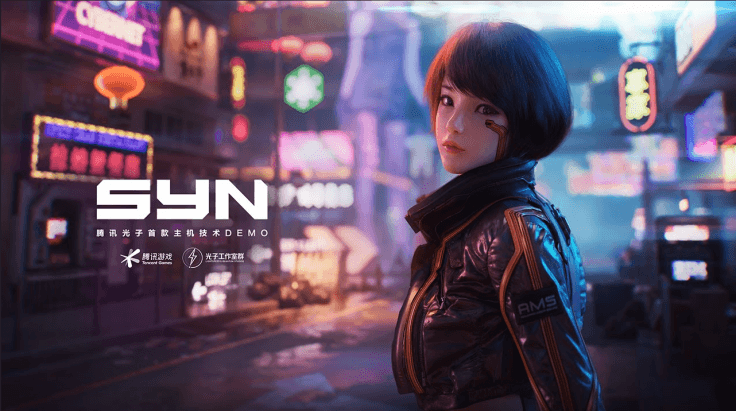
Image: player.one
Lightspeed LA Confirms Cuts as Last Sentinel’s Future Turns Cloudy
Lightspeed LA has confirmed layoffs after what it described, via a LinkedIn statement cited by TechSpot, as “extensive internal reviews and play-testing” and a “shift” in creative and development direction. Multiple outlets, including PC Gamer, Kotaku, Wccftech, and TechSpot, report that roughly 80 people were affected at the Tencent-backed studio behind Last Sentinel.
That is the firmest fact in a story surrounded by tension. Tencent has not publicly announced a cancellation of Last Sentinel in the source material provided. TechSpot and Wccftech both say Tencent disputes that the game has simply been canceled, while Kotaku reports that a spokesperson told Bloomberg, “Lightspeed LA remains open and continues to build games,” suggesting that some version of the project may still continue.
The reported picture is harsher. Bloomberg’s reporting, as summarized by Kotaku, Wccftech, and TechSpot, says Tencent decided not to move forward with Last Sentinel as it stood after a development review. TechSpot characterizes the project as “effectively dead,” while Wccftech says the game has “effectively been shut down,” with the important caveat that Tencent disputes that framing.
For players, that means there is no confirmed release window, no confirmed platform plan in the supplied sources, and no public gameplay demonstration to judge. For the industry, the Tencent game layoffs are a cleaner signal: even with a global publisher, veteran hires, and years of runway, a premium open-world competitor is one of the hardest products in games to force into existence.
The Open-World Ambition Was Clear, but the Execution Was Reportedly Unstable
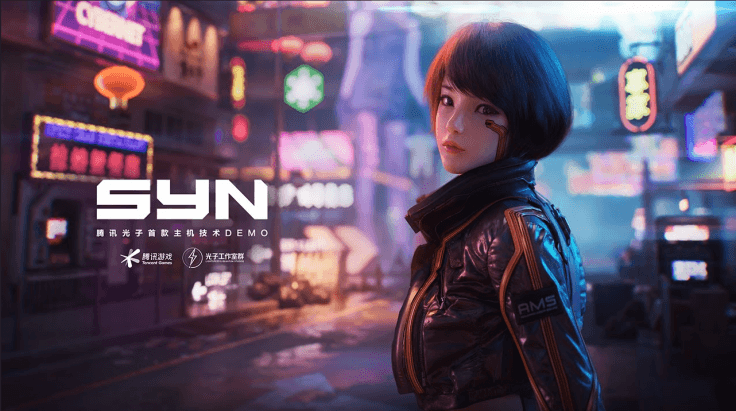
Last Sentinel was pitched publicly as a sci-fi open-world action game, and the reporting around it has consistently framed the project as Tencent’s attempt to build a Grand Theft Auto-style competitor through its California-based Lightspeed LA studio. Kotaku notes that the game received a glossy cinematic reveal at The Game Awards 2023 and was billed around former Rockstar Games talent. Wccftech describes the project as a cyberpunk open-world crime game with a female protagonist in a science-fiction reimagining of Tokyo, built around a large vertical city, traversal, driving, and freeform play associated with Rockstar’s games.
That pitch made sense on a strategy slide. Tencent had a studio led by Steve Martin, a former head of Rockstar San Diego, and according to Wccftech, Lightspeed LA recruited developers from companies including Naughty Dog, Rockstar, and Blizzard. TechSpot says the studio was established under Tencent’s LightSpeed Studios and tasked with building an open-world sandbox game featuring vehicle theft, drawing comparisons to GTA, Saints Row, Cyberpunk 2077, and Watch Dogs 2.
The problem, as reported by Bloomberg and relayed by Kotaku and Wccftech, was not the lack of ambition. It was the difficulty of converting that ambition into a compelling playable product. Kotaku says Bloomberg cited a lack of clear direction, vision, and good management, including issues around project head Steve Martin. Wccftech reports that sources described slow decision-making, missed deadlines, budget overruns, and a polarizing management style.
From a development-strategy perspective, that combination is dangerous in any genre. In a premium open-world game, it is lethal if not corrected early. These projects need stable creative pillars because every system touches every other system: driving affects world layout, traversal affects mission design, combat affects encounter density, and narrative structure affects how the city is paced. If the core loop is uncertain deep into production, adding people and money can amplify the confusion rather than solve it.
The Playtest Reports Point to a Core Gameplay Problem
The most damaging reported detail is not the layoff count. It is the playtest feedback. Kotaku, citing Bloomberg, reports that a playtest earlier this year “bombed” and that Lightspeed LA was given one last chance to improve the game’s quality. Wccftech says the early 2026 playtest generated near-unanimous negative feedback, with testers reportedly describing the game as not fun to play. AllKeyShop, also citing Bloomberg, says Tencent leadership issued an ultimatum to produce a substantially improved build by July or face cancellation.
Those are reported claims, not a public Tencent postmortem. But they explain why the Lightspeed LA layoffs read differently from a routine restructuring. A studio can survive a content cut, a feature reset, or a delayed reveal if the underlying game is coming together. Reports of poor playtest response after six years of development point to a deeper production problem: the playable center may not have matched the cinematic promise.
That gap was visible from the outside in one limited way. Kotaku notes that Last Sentinel had not shown gameplay years after its Game Awards reveal. TechSpot similarly points out that Lightspeed LA failed to show public gameplay after more than six years of development. Wccftech says development diaries released later were received as hype reels rather than meaningful gameplay demonstrations, with viewers noticing the absence of actual play.
A lack of public gameplay is not proof of failure by itself. Some studios hold footage until a marketing beat is ready. But when paired with reported negative internal tests and a late creative redirection, it becomes part of a pattern. The public-facing game remained cinematic while the internal game was reportedly struggling to prove its loop.
Tencent’s Premium Open-World Problem Is Scale, Not Funding Alone
The simplest read is that Tencent spent heavily and still could not buy a GTA competitor. TechSpot reports that Tencent invested more than $300 million into Last Sentinel across more than six years, while Kotaku describes the cost as hundreds of millions. Those numbers remain reported, not confirmed by Tencent in the supplied sources, but they fit the shape of a AAA open-world bet: long timelines, expensive staff, high technical demands, and brutal iteration costs.
The more useful read is that money was only one resource. Wccftech says Lightspeed LA had a team in the hundreds, while noting that Red Dead Redemption 2 involved a couple of thousand employees. AllKeyShop makes the same comparison, citing Rockstar’s use of over 2,000 developers on Red Dead Redemption 2 against Lightspeed LA’s smaller scale. The exact staffing totals are not independently confirmed in Tencent’s own statement here, but the strategic imbalance is obvious: a new studio was reportedly trying to match a genre leader built on decades of pipelines, institutional knowledge, tools, and production habits.
That is the key lesson behind these open world game layoffs. The premium sandbox genre punishes partial competence. A good-looking city is not enough if driving feels loose, missions lack rhythm, combat lacks weight, or traversal fails to make the map feel readable. Likewise, hiring veterans from successful studios does not automatically recreate the old studio’s production culture. Talent arrives as individuals; shipped open-world quality comes from systems, tools, leadership, and years of shared iteration.
Tencent has proven it can operate at enormous scale in other parts of gaming, especially through live-service ecosystems and investments. Last Sentinel, as reported, tested a different thesis: whether a global conglomerate could construct a Western-facing premium open-world contender through a new AAA studio. The reported outcome suggests that this category resists brute-force entry more than investors might like.
The Layoffs Fit a Wider Pattern in Tencent’s Western AAA Push
TechSpot places Lightspeed LA alongside other Tencent-backed North American efforts that ran into trouble. The outlet reports that TiMi Montreal, established by Tencent’s TiMi Studio Group to create AAA games for Western audiences, closed earlier this year after five years without releasing an original game. TechSpot also says Los Angeles-based Team Kaiju shut down in 2023 after canceling an unannounced project.
Kotaku similarly frames the apparent failure of Last Sentinel as coming as Tencent pivots away from AAA gaming. That is an interpretation based on reported studio outcomes rather than a detailed Tencent strategy memo in the supplied material. Still, the pattern matters. Tencent’s Western AAA effort was not a single project risk. It involved creating or backing studios aimed at high-end games for global audiences, then waiting through long development cycles before any market validation.
This is where the business incentive collides with the production reality. A mobile or live-service portfolio can spread risk across multiple products, regions, and monetization models. A premium open-world action game concentrates risk into one expensive launch. The game has to impress technically, creatively, and commercially at the same time. If a major internal review says the game is missing the mark, the rational corporate move may be to stop spending rather than chase sunk costs.
That is cold comfort for the roughly 80 affected workers reportedly hit by the Lightspeed LA layoffs. It also complicates the idea that Tencent can simply redirect capital into the next Western AAA opportunity. The difficulty is not locating veteran developers or choosing a popular genre. The difficulty is building a studio that can make consistent high-quality decisions for years before the public can even see whether the bet worked.
What Is Actually Confirmed for Players Right Now
For anyone who saw Last Sentinel’s reveal and hoped to play it, the practical guidance is simple: wait for an official update before treating the game as an upcoming release. The source material does not include a release date, price, platform list, system requirements, preorder plan, or gameplay showcase. There is also no supplied storefront listing to indicate availability.
Confirmed through reporting on the studio’s statement, Lightspeed LA remains open and has undergone layoffs tied to internal reviews, playtesting, and a creative-development shift. Reported by Bloomberg and summarized by Kotaku, Wccftech, TechSpot, and AllKeyShop, Tencent decided not to move forward with Last Sentinel in its current form after poor playtest results and years of troubled production. Disputed by Tencent, according to TechSpot and Wccftech, is the clean conclusion that the game has been outright canceled.
TechSpot reports that remaining staff are being moved to an unannounced open-world project led by creative director Todd Papy, and that some Last Sentinel code or gameplay elements may be reused in the new game and other Tencent titles. Treat that as reported information, not a public product roadmap.
The bigger competitive lesson is already visible. Chasing Grand Theft Auto is not a pricing problem, and it is not solved by labeling a game cyberpunk, cinematic, or veteran-led. It requires a studio that can lock vision early, prove fun quickly, and sustain massive interdisciplinary execution across years. The reported Tencent cyberpunk game collapse shows how expensive it becomes when those pieces do not align.