

Crema’s new Temtem: Project Downbelow signals a Kickstarter-powered, universe-first strategy after Temtem and Swarm. Here’s what the pitch tells us about the studio’s next phase and the key questions industry watchers and prospective backers should want answered before the campaign launches.
Temtem’s next chapter will not be a traditional sequel, but it will be familiar. With Temtem: Project Downbelow, Crema is returning to the franchise that put the studio on the map, and it is once again turning to Kickstarter to help define what comes next.
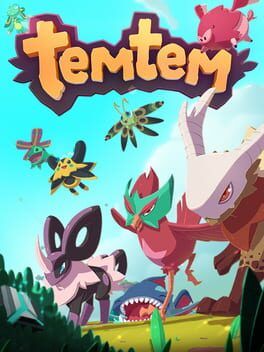
Project Downbelow has only been teased so far as an action adventure RPG set in the Temtem universe, with creature collecting and co op at its core. A short announcement and a single piece of key art are doing most of the heavy lifting. Beyond that, Crema is deliberately holding details back for when the Kickstarter page goes live.
For an industry still watching how post hit studios manage their follow ups, this quiet reveal offers a useful signal: Crema is choosing to build outward from Temtem rather than pivot away from it, and it is using crowdfunding not simply as a cash infusion but as a way to test where the community wants that universe to go.
A post Temtem strategy built on the same universe
Temtem reached 1.0 as a full live service creature collecting MMO and has since been reinforced by Temtem: Swarm, a spin off that applied the IP to a different format. Project Downbelow continues that pattern. Instead of committing to Temtem 2 as another large scale, service heavy undertaking, Crema is carving the universe into smaller, more focused projects.
Positioning Project Downbelow as an action adventure RPG with co op moves the studio toward something structurally leaner than a traditional MMO while still leaning on the same strengths. The Temtem IP offers an established roster of creatures, recognizable locations like the Airborne Archipelago, and a lore base that the team can both reuse and twist. Talking about “answering the call of the Downbelow” and highlighting a new, more subterranean or isolated setting lets Crema introduce new biomes and narrative hooks without discarding what players already know about the world.
From an industry lens, this is a cautious expansion strategy. Crema is staying in its lane, but it is narrowing the scope of each experiment. It is betting that Temtem’s identity as a social, cooperative creature collecting universe can support different game structures, from swarm style spin offs to focused co op adventures, without fragmenting the audience beyond recognition.
Why Kickstarter again and what that implies
Crema’s decision to return to Kickstarter matters as much as the game’s genre description. Crowdfunding was instrumental to the original Temtem, both as a financing tool and as a marketing amplifier. Going back to that well for Project Downbelow suggests a few things about how the studio views its current position.
First, it indicates that Temtem’s success was meaningful but not so transformative that the studio can casually self fund ambitious new projects at scale. Crowdfunding becomes a way to de risk a new spin off, particularly one that may diverge from the core MMO’s expectations. The Kickstarter page will double as a focus group and demand test, showing not just how many players want more Temtem, but how many want this specific flavor of Temtem.
Second, it implies that Crema still sees value in the kind of community construction that Kickstarter offers. By revealing only a limited pitch now and promising more information with the campaign, the team is staging the hype cycle. The moment the campaign opens, it can deliver a concentrated information dump, stretch goals, and community milestones that keep Temtem visible across social channels and press cycles.
Finally, going back to Kickstarter keeps expectations frameable. Instead of silently developing a follow up that fans may assume has AAA scale that the budget cannot match, Crema can openly present Project Downbelow as a scoped experience, tied directly to what the community is willing to support financially.
How Project Downbelow fits into a franchise roadmap
The timing of this new project is not accidental. Crema is in the process of shepherding Temtem: Swarm toward its 1.0 launch, which means the original MMO world is stable, and the studio can reassign creative bandwidth to the next tentpole. Announcing Project Downbelow before Swarm fully lands sends a clear message that the Temtem universe is not a one off or even a simple two product line. It is a playground Crema intends to inhabit for the long term.
This approach mirrors what other mid sized studios have done to turn a single breakout success into a sustainable IP platform. Rather than jumping to a new genre or world, they iterate within the same fiction with different mechanical experiments. For Temtem, that has meant an MMO, a smaller scale spinoff, and now a cooperative action adventure that keeps creature collecting intact but has permission to remix everything else.
For partners, storefronts, and platform holders, that consistency is useful. It offers a recognizable brand that still has room to surprise, and it gives Crema the ability to talk about Temtem as a universe across multiple SKUs and engagement models instead of a single closed product.
What we know so far about Project Downbelow
At this early stage, confirmed details are intentionally sparse. Crema has labeled Project Downbelow as an action adventure RPG that maintains Temtem’s defining pillars of collecting and cooperative play. It is explicitly set in the Temtem universe, and the teaser art hints at new environmental themes, including a rough, possibly volcanic or rooted landscape that looks distinct from the Airborne Archipelago’s bright floating islands.
There is no information yet about platforms, release windows, monetization plans, or the degree to which the experience will be persistent or runbased. The team has not said whether existing Temtem species will dominate the roster or whether Downbelow will function as a vanguard for more experimental designs that might later flow back into the mainline universe.
This deliberately thin reveal is a marketing choice. It points prospective backers to the upcoming Kickstarter as the definitive information drop and reserves some flexibility for Crema to massage design details in response to community feedback during the campaign itself.
Key questions prospective backers should want answered
Because the pitch is still so high level, the Kickstarter campaign will bear the burden of translating Temtem: Project Downbelow from a logo and setting tease into a concrete product proposition. For industry observers and serious backers, there are several areas where clarity will matter.
The first is scope. How large is Project Downbelow relative to Temtem and Swarm, both in terms of content footprint and production budget. Backers will want to understand whether they are funding a compact, replay driven co op adventure or the foundations of another long tail live service. That answer will shape expectations for post launch support, balance patches, and expansion content.
The second is systems. The phrase “action adventure RPG” can cover an enormous range of possibilities. The campaign will need to specify how real time the combat is, how deep the creature collection and progression loops go, and whether co op is drop in and casual or structured around more demanding party coordination. For Temtem’s existing audience, the handling of creature synergy, elemental interactions, and shared resources will be critical signals of how connected Project Downbelow feels to the main MMO.
The third is continuity. One of the big questions for fans is whether progress in Temtem or Temtem: Swarm will have any bearing on Downbelow. Even cosmetic rewards, account level recognition, or subtle nods to prior accomplishments can make the universe feel cohesive. Conversely, a hard reset may be cleaner for balance and onboarding, but then the campaign should articulate why that clean break is the right call.
The fourth is monetization and platform strategy. Given that the original Temtem reached across PC and consoles, backers will be watching for clear statements about launch platforms, cross play, and any post launch monetization plans. If Downbelow is not built as a live service, that should be explicit. If it is, then the Kickstarter needs to explain how backer rewards interact with in game economies.
The fifth is production and risk management. Kickstarter backers have become more sophisticated since Temtem first campaigned. Many will expect transparent timelines, milestones, and contingency plans. With a known IP and a track record of shipping an MMO and a spin off, Crema can speak more concretely this time about team size, development phases, and how it plans to keep Project Downbelow on track alongside ongoing support for other Temtem titles.
What this means for Crema and the Temtem IP
Temtem: Project Downbelow looks like a statement of intent from Crema. Rather than chasing a new genre or IP in a crowded market, the studio is doubling down on the world that has already gathered an audience, but is doing so in a configurable, player validated way. Kickstarter offers the feedback loop and demand gauge, while the Temtem universe offers creative continuity and brand leverage.
For the wider industry, Project Downbelow is a case study in one path for post hit studios that sit between indie and AAA scale. It shows how a team can maintain momentum without overextending, how it can reuse assets and lore without making a straight sequel, and how it can keep players invested by inviting them into the funding and design conversation early.
The real test begins when the Kickstarter page goes live. That is when Crema’s restrained reveal will need to translate into a clear, confident production plan and a feature set that feels both comfortably Temtem and meaningfully new. Until then, Temtem: Project Downbelow stands as a signal that the Downbelow is not about leaving Temtem behind, but about digging deeper into what that universe can support next.