
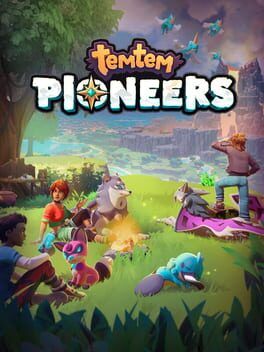

Temtem: Pioneers rode a hugely successful Kickstarter to reshape the monster-taming MMO into a co-op survival sandbox with deep mod support and a PvP playground. Here is how Crema is evolving the brand and what it means for players.
Temtem: Pioneers is not just another monster-taming spin-off. Off the back of a Kickstarter that blew past its initial goal and cleared multiple stretch milestones, Crema is using this project to pull Temtem into a new space: a survival-focused, multiplayer sandbox where players can bend the rules, tinker with the world, and treat PvP as a playground instead of a ladder.
The original Temtem was a tightly structured MMO, very much in conversation with Pokémon’s competitive scene and progression model. Pioneers pivots hard. It trades linear routes and badge checks for a harsher, open frontier called the Downbelow, then layers co-op survival, free-form base building, and real-time combat on top. That shift in identity is exactly why the Kickstarter matters: it gave Crema room to pitch a riskier evolution of the brand directly to fans, and the response shows there is an audience ready for Temtem as more than just a monster-battler.
Crowdfunding numbers help tell that story. The campaign sailed past its funding target within its first day, then cruised over the 550,000 dollar mark before wrapping, enough to unlock late stretch goals like custom game modes and the PvP Playground. Those add-ons are not simple extras. They are the pillars that push Pioneers from “Temtem with survival mechanics” into something closer to a systems-driven sandbox.
The PvP Playground is where that philosophy is most visible. Instead of building another ranked ladder, Crema is creating a space where you can bring Tems at max level, with full access to gear and builds, then dive into battles with minimal friction. The goal is a casual, drop-in environment for experimentation, spectating, and community-run formats, not a pressure cooker of MMR anxiety. That matters for a survival game, because progression can be punishing and uneven. By equalizing variables inside the Playground, Crema separates competitive tinkering from the long-term grind of keeping your character alive in the Downbelow.
Equally important is the mod support conversation that emerged as the Kickstarter was winding down. Crema has been clear that Pioneers is meant to be toyed with. The studio has talked about letting players create and share content within guiding rules, from tweaking balance and loot to more ambitious overhauls and custom game modes that sit on top of the main ruleset. This fits neatly with one of the upper stretch goals that focused on customizable modes designed to make the game more accessible and replayable for a wider audience.
At the same time, Crema knows it is shipping an online survival game, not a purely single player sandbox. The team has called out the need for guardrails around mods in shared spaces. Expect a clear separation between official servers that enforce vanilla rules and modded environments where communities can go wild. That structure lets hardcore players and competitive fans keep a stable ecosystem, while tinkerers can spin up their own experiences without breaking the economy or trivializing progression for everyone else.
Layered over those systems is Crema’s broader attempt to reposition Temtem itself. After putting the original game into a maintenance-focused state and sunsetting other experiments, the studio is now using Pioneers to reframe the IP as a flexible creature-collecting universe instead of a single MMO ruleset. Survival crafting in a dangerous underworld, real-time combat using over 200 Tems, and co-op exploration of a largely untamed map are not small deviations. They broaden what “a Temtem game” can be, while still leaning on the brand’s strengths in team composition and battle readability.
The survival structure in particular changes how players relate to their Tems. These creatures are no longer just battle units for turn-based ladders. They are work partners that help with traversal, resource gathering, and day-to-day survival in the Downbelow. The Kickstarter pitch highlighted Tems as multipurpose tools, weaving them into building, crafting, and exploration in a way that pushes the series closer to other creature-driven sandboxes while retaining its distinct visual and combat identity.
That context is what makes the Kickstarter success more than a vanity metric. By funding Pioneers directly through its community, Crema can justify investing in features that often get trimmed from traditional mid-budget projects, like robust mod tooling and unranked PvP spaces that do not directly feed a battle pass or seasonal grind. It is an experiment in trusting players to generate some of the game’s long-term value by building their own modes and social structures.
Looking forward, the open questions are less about whether Pioneers will launch and more about how far Crema is willing to go with that sandbox vision. How powerful will mod tools really be? Will the PvP Playground grow into a hub for community-run formats and tournaments? Can the studio maintain Temtem’s competitive DNA in a game where survival and experimentation sit at the center? What the Kickstarter has already proved is that there is demand for those questions to be answered.
If Pioneers delivers on its promises, it will not just be another survival spin-off chasing the current trend. It could be the project that finally cements Temtem as a flexible, community-shaped monster-taming universe where official content and player-made sandboxes coexist. The Kickstarter’s success has given Crema the mandate and the budget to try, and now the future of the Downbelow depends on how well that balance is struck.