
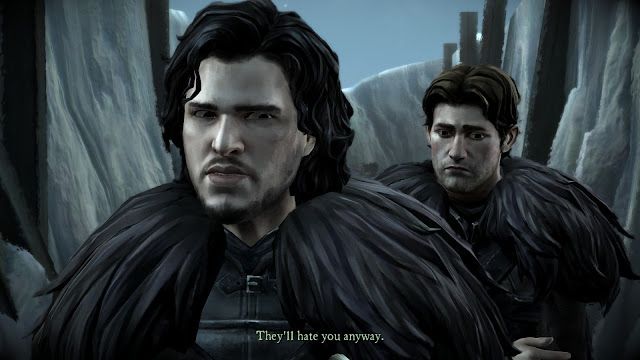
Telltale’s Game of Thrones is drawing fresh attention, but its limited choices, HBO-era strengths, and murky availability make it a complicated 2026 recommendation.

Image: choicestgames.com
A rediscovered Westeros game with no clean comeback story
The renewed attention around Telltale Game of Thrones is coming from recommendation culture, franchise nostalgia, and hard-to-verify download listings rather than an official 2026 revival. Polygon recently pointed readers back to Game of Thrones: A Telltale Games Series as the closest available video game to the tense atmosphere of HBO’s original show, while a current unofficial SteamRIP page advertises a “direct download” for the six-part series. The tension for anyone searching “Telltale Game of Thrones 2026” is immediate: people are talking about the game again, but the source material provided for this piece does not include an official re-release announcement, a live storefront product page, a new publisher statement, a price, or a confirmed modern platform plan.
That makes this a different kind of old-game recommendation. The question is not simply whether the Game of Thrones adventure game holds up as a story. It is whether a 2014 to 2015 episodic Telltale series, built around HBO continuity and the studio’s familiar choice-driven format, still earns the effort of tracking down in 2026. Based on the available reporting and listings, the answer is yes for a narrow audience, with serious caveats. If you want a playable political tragedy that moves with the rhythm of the show’s peak seasons, it still has a case. If you want a modern RPG, meaningful branching outcomes, clean availability, or a definitive ending that resolves every thread, this is a much harder sell.
Where it sits in Game of Thrones game history
Game of Thrones has never had a single consensus-defining video game in the way its world seems built to invite. Polygon’s broader look at the franchise’s gaming history argues that HBO’s series, despite its cultural dominance from 2011 to 2019, has still not produced a truly great video game. The article cites A Game of Thrones: Genesis from 2011, notes its 53 Metacritic score, and says the 2012 RPG Game of Thrones did not fare better. Later mobile and browser-based projects expanded the license, but Polygon frames the field as scattered rather than crowned by one essential adaptation.
That context helps explain why Telltale’s version keeps coming back into the conversation. Polygon notes that Game of Thrones: A Telltale Games Series released episodically from December 2014 to November 2015, during the original show’s run, and told a story alongside HBO’s timeline. It begins after the Red Wedding, follows House Forrester, and runs concurrently with the end of season 3 into season 4. The Wiki of Westeros page categorizes the game under non-canon media, so this is not a missing chapter of the television story or George R.R. Martin’s novels. It is a licensed side tragedy staged in the shadow of familiar events.
That placement is also its advantage. Instead of attempting to simulate all of Westeros, Telltale narrows the frame to one vulnerable northern house loyal to the Starks. That is a smart dramatic lane for a studio known for pressure-cooker conversations, sudden reversals, and characters trying to survive systems much larger than themselves. The game’s best pitch in 2026 remains the same one it had at launch: you are not conquering Westeros, you are trying to keep a doomed-looking family from being crushed by it.
The Forrester hook still has teeth
Polygon’s recommendation describes the game as following several members of House Forrester, a northern noble family on the losing side of the Red Wedding. The unofficial SteamRIP page, while not an authorized storefront, describes the same setup in listing-style language: House Forrester is loyal to the Starks of Winterfell, caught in the War of the Five Kings, and pulled into warfare, revenge, intrigue, and horror while the Seven Kingdoms tear themselves apart. It also identifies the game as a six-part episodic series set in the world of HBO’s show.
That is still a strong narrative engine. Telltale’s format works best when the player is forced to speak before the room goes cold, when silence can wound as much as a blade, and when the next scene feels like it is already closing in. Game of Thrones gives that structure a natural tempo. King’s Landing scenes can turn a polite answer into a trap. Northern scenes carry the weight of occupation and revenge. The Wall gives the story another register, colder and more physical, without turning the game into an action title.
The HBO connection also matters. Polygon reports that some cast members, including Emilia Clarke and Peter Dinklage, reprise their roles. The SteamRIP page says players meet characters from the HBO show and visit familiar locations such as King’s Landing and The Wall. Those details help the game mimic the texture of the television series at a time when many licensed games settled for surface-level branding. The recognizable faces can create a ceiling, since canon characters are unlikely to be radically altered by your choices, but they also give the Forresters’ invented crisis a sharper sense of proximity to the main story.
As a piece of pacing, the setup remains compelling. The playable perspective shifts between members of the Forrester household and, according to Polygon, a Forrester squire. That multi-character structure lets Telltale cut between political negotiation, family leadership, and survival under pressure. When it works, the game feels like an ensemble episode built around people who never get the luxury of acting from complete information.
The choice problem is the price of admission
The main caveat is the same one that has followed many Telltale games, and Polygon is direct about it. The outlet says player choices and narrative decisions influence how the Forresters’ stories play out, but “player choice only goes so far.” Polygon gives concrete examples: a certain character is bound to die in episode 1 no matter what, similar plot turns occur regardless of player action, and one ally can appear to withdraw support only to return later still offering allegiance because the story requires it.
That does not make the game worthless, but it changes how it should be approached. If you enter Telltale Game of Thrones expecting a branching political simulator, you are likely to collide with the machinery behind the curtain. The better framing, also suggested by Polygon, is to treat it almost like a TV show where you occasionally decide what characters say. That may sound like faint praise, but for this particular license it can work. Game of Thrones has always been driven by scenes where people choose a posture, a lie, a threat, or a concession while the larger board remains brutally indifferent.
In action-adventure terms, this is less about mechanical mastery than narrative timing. The “combat rhythm” is the rhythm of conversation prompts, quick decisions, and the dread of knowing that no clean route exists. There are moments of physical danger, but the set pieces are designed as interactive drama rather than skill tests. The blade lands because the scene has been built to make it land, not because the player failed to parry on frame twelve.
That distinction will divide players in 2026. The best Telltale games are often remembered for emotional consequence rather than systemic freedom, but modern audiences have also become sharper about the difference between a choice that changes tone and a choice that changes structure. Game of Thrones is exposed on that front. Its strongest decisions are about role-playing a character under pressure. Its weakest are the ones that imply control the game is not prepared to grant.
It works best for viewers who know the show
Polygon notes that familiarity with the source material is important, and that cuts both ways. The game’s parallels to the Starks, including a Forrester daughter navigating danger in King’s Landing, are clearer if you know HBO’s Game of Thrones. The setting after the Red Wedding also assumes the player understands why Stark loyalty is politically dangerous and why northern pride can become a death sentence.
For returning fans, that makes the game a useful time capsule of the show’s middle-period identity. It is focused on family collapse, hostage diplomacy, dangerous courts, and the sense that every room has already been poisoned before the player enters. Polygon’s recommendation argues that the challenges facing House Forrester rival those faced by their Stark allies in the show and novels. That is a strong claim, but it captures the game’s appeal: it borrows the show’s moral weather and places a smaller house directly under the storm.
The downside is that knowing the show can also flatten suspense around major HBO characters. If a familiar figure is alive later in the series, you should not expect Telltale’s side story to rewrite their fate. Polygon specifically warns that knowing how the show plays out has downsides while playing. In practical terms, the invented characters carry the real risk, while canon characters often function as immovable forces. That can be satisfying if you want to feel powerless in Westeros. It can be frustrating if you want to outplay it.
Newcomers have a different problem. The game may not be the best first Game of Thrones game for someone with no context, because much of its urgency comes from borrowed history. The Red Wedding, Stark loyalty, and King’s Landing’s danger are not explained as fresh fantasy concepts so much as activated memories for viewers. In 2026, the ideal player is someone who has seen enough of the HBO series to understand the stakes but wants a side story rather than a full rewatch.
Availability is the biggest 2026 caveat
The practical issue is harder to resolve from the available source material than the creative one. The provided Steam source is a Steam Community page for Game of Thrones - A Telltale Games Series, not a supplied active Steam store product page with a visible buy button, current price, publisher, or supported platform list. The source packet also includes an unofficial SteamRIP page advertising a free direct download, identifying the release as PC, listing “CODEX,” and describing it as “pre-installed.” That is not the same as an official retail channel.
Because the supplied sources do not show an authorized 2026 sale page, readers should be cautious. There is no confirmed new edition here, no verified remaster, no stated upgrade path, and no sourced announcement that Telltale Game of Thrones has returned to digital storefronts. If you already own the game on a legitimate account or physical platform, the question is whether it is worth reinstalling. If you do not own it, the question becomes whether you can obtain it through a lawful channel in your region. Unofficial “free download” pages may be visible in search, but their presence should not be confused with availability from a publisher, platform holder, or licensed store.
The unofficial PC listing does provide some useful historical technical context, with the caveat that it is not an official current storefront. It lists Windows XP Service Pack 3, a Core 2 Duo 2GHz or equivalent processor, 3 GB of RAM, an ATI or NVIDIA card with 512 MB of VRAM, DirectX 9.0, 3 GB of available storage, and a note saying Intel integrated graphics are not recommended. Those requirements reflect an older PC adventure game rather than a demanding modern release, but they do not answer modern compatibility questions such as Windows 11 behavior, controller support status, cloud saves, ultrawide presentation, or storefront entitlement issues.
That uncertainty should shape the recommendation. Do not buy a questionable key or download from a site simply because the search result looks current. Look for legitimate ownership options first, confirm whether all six episodes are included, and be wary of any listing that cannot clearly identify the seller, rights holder, platform, and version.
So, is Telltale Game of Thrones still worth playing in 2026?
For the right player, yes. Telltale Game of Thrones remains one of the stronger attempts to translate HBO’s political dread into an interactive format, even if Polygon’s broader assessment of Game of Thrones games is right that the franchise still lacks a truly great, definitive video game. Its House Forrester story gives the series a clean dramatic focus, its multi-perspective structure keeps the pressure moving, and its use of HBO actors and locations gives it a texture many licensed adaptations lack.
The caveats are significant. Polygon’s criticism of limited agency is central to the experience, not a minor blemish. Some outcomes are fixed, some apparent consequences bend back toward the required plot, and the game is better understood as a guided narrative with role-playing inflection than a deeply branching adventure. The Wiki of Westeros categorizes it as non-canon media, so lore-focused players should treat it as a side work. Availability is also unresolved in the provided sources, with no official 2026 storefront or re-release details included and unofficial download pages filling the search space.
If you already own it and miss the dangerous, mid-series tone of HBO’s Game of Thrones, it is worth revisiting with calibrated expectations. Play for atmosphere, performances, family stakes, and the feeling of making bad choices in worse rooms. Do not play because you expect to reshape Westeros. If you are hunting for the best Telltale games, this sits below the studio’s most essential work for agency and closure, but it remains a fascinating fit between license and format. In 2026, the game’s value is real, but so is the friction around finding it cleanly and accepting the narrow blade of choice it actually gives you.