
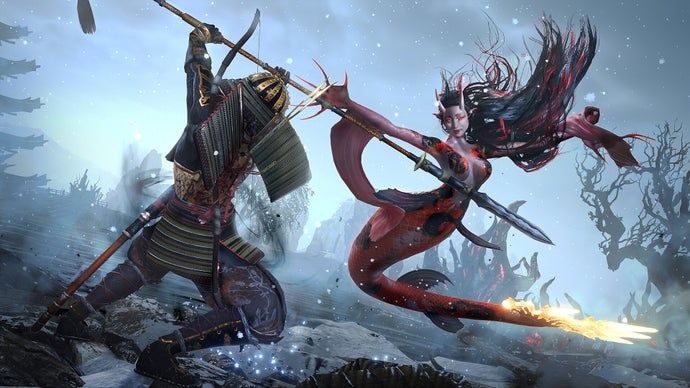
Team Ninja producer Kohei Shibata says the Nioh studio uses AI for QA and verification, but argues that deciding what makes a game fun must remain human work.
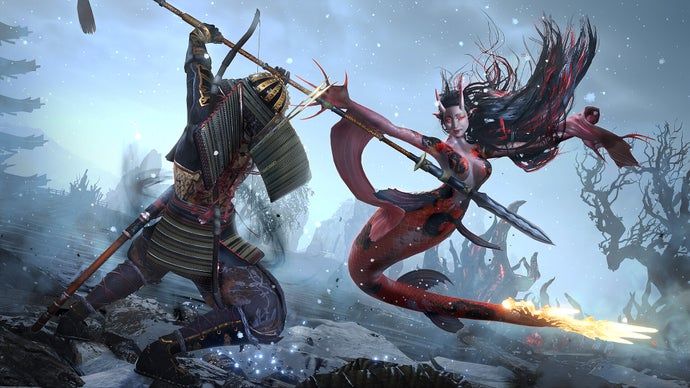
Image: gamevaro.com
Team Ninja is using AI, but not to decide what makes its games fun
Team Ninja is already using AI in its development pipeline for quality assurance and verification work, according to producer Kohei Shibata, but the studio is drawing a clear boundary around creative decision-making. Speaking to INVEN Global during GCON 2026 in South Korea, Shibata said the Nioh and Wo Long: Fallen Dynasty studio uses AI “in QA and various verification tasks to streamline certain workflows,” as quoted by Eurogamer and reported by GamingBolt, PC Gamer, Kotaku, and GamersExtra.
The immediate tension is obvious. Team Ninja’s reputation is built on games where feel, timing, punishment, and reward are calibrated with unusual precision. In that context, using AI for testing sounds practical, but using AI to define challenge would cut directly into the studio’s core design identity. Shibata’s position is that AI can reduce time spent on repetitive work, while the essential judgment behind a game’s difficulty and enjoyment still belongs to developers.
GamingBolt quotes Shibata as saying AI can “shorten task times,” giving developers more time to work on “elevating the game’s overall quality.” He called AI beneficial in that production-support sense, while adding that Team Ninja is still evaluating how best to implement a technology he described as new. The studio has not announced a broader AI roadmap, and the available reporting does not say that Team Ninja is using generative AI to create finished art, writing, levels, animations, or combat systems.
That distinction matters because “AI in game development” now covers a wide range of practices, from automated QA support to generative asset production. Team Ninja’s public stance, as presented through Shibata’s interview, is closer to tool-assisted production than AI-led creation.
The studio’s argument starts with QA because testing is measurable work
The clearest confirmed use of Team Ninja AI tools is QA and verification. Those are areas where automation has an obvious production logic: games create vast numbers of repeated states, inputs, edge cases, and failure conditions, many of which can be checked more efficiently by tools than by manual testing alone. Shibata did not provide a technical breakdown of the systems Team Ninja uses, so it would be a mistake to infer specific machine-learning models, generative systems, or proprietary tools from his comments.
What he did provide is the studio’s production philosophy. Repetitive tasks that every project must perform can be streamlined with technology, while the saved development time should be redirected toward quality. In practical terms, that suggests AI is being framed as a way to find friction faster, verify behavior more efficiently, and reduce the labor cost of routine checks. It does not, based on the sources provided, indicate that AI is replacing combat designers, animators, level designers, or narrative staff.
That is an important separation for readers following game development AI QA debates. Automated assistance in testing has a different risk profile from using generative AI to produce assets that ship in a commercial game. QA tools are judged by whether they catch defects, expose inconsistencies, and free human testers and developers to examine more complex problems. Generative creative tools raise separate questions about authorship, labor, training data, style, and whether the work fits the intent of the game.
Team Ninja has only confirmed the former category through Shibata’s comments. Anything beyond that remains unannounced. GamingBolt specifically noted that whether Team Ninja plans to use AI in other parts of development remains to be seen, and Shibata himself said the studio is continuously evaluating appropriate uses.
Human judgment is central to Team Ninja’s version of difficulty
Shibata’s comments land differently because Team Ninja’s games often live or die by the difference between difficulty and unfairness. Kotaku’s report on the same INVEN Global interview notes that Shibata and producer Masakazu Hirayama discussed how games such as Nioh, Ninja Gaiden, and Wo Long rely on timing, player movement, responsiveness, and readable enemy behavior. Those are design questions where a technically correct system can still feel wrong if the tuning misses the player’s perception of control.
According to Kotaku, Shibata described Nioh as “samurai action,” built around stillness, observation, and striking at the right opening. Hirayama described Wo Long in terms of aggressive Chinese martial arts action, where offense and defense flow into each other. Those statements are useful context for the AI discussion because they explain what Team Ninja believes developers are actually protecting. The work is not only whether a hitbox triggers or a state transition functions. It is whether the player understands why they lost, whether the input response feels fair, and whether punishment creates learning rather than resentment.
Eurogamer highlighted Shibata’s point that in Team Ninja’s approach, player failure should not feel like the game’s fault. Kotaku quotes him on responsiveness: when a player presses a button, the character must move as intended, while poor reaction or exaggerated movement creates frustration or awkwardness. Those are qualitative calls built from play feel, iteration, and taste.
That is the strongest reason Team Ninja’s position is more specific than a standard corporate reassurance. The studio is not only saying humans should remain involved because that sounds good in a heated AI debate. It is tying human authorship to the design grammar of its own games, where one mistuned dodge window or sluggish animation cancel can change the entire meta of a boss fight.
Shibata’s line: AI should serve the game, not become the goal
The clearest statement from Shibata is also the one that sets the boundary for Team Ninja’s current AI posture. As quoted by GamingBolt and Eurogamer, he said: “What matters fundamentally is that a game becomes fun when crafted by human hands. Repetitive, simple tasks that anyone must perform can be streamlined using technology. But ultimately, deciding how to craft the game and what makes it enjoyable must be done by humans. Using AI itself should never become the goal. I believe the principle that humans must think for themselves and finish the game will remain unchanged in the future.”
That last sentence is doing a lot of work. It separates production efficiency from creative delegation. In a strategy game, a patch that saves clicks is valuable only if the player’s decisions remain meaningful. In action design, a tool that accelerates verification is valuable only if designers still decide the shape of risk, reward, and mastery. Shibata’s phrasing treats AI as an efficiency layer, not as a design authority.
There is still ambiguity here. Team Ninja has not published a policy document, a tool list, or a detailed explanation of where the studio would refuse to use AI. The public record from this interview is a producer’s position, not a binding industry standard. It also leaves open how the studio defines “simple” or “repetitive” tasks, and how it would evaluate future tools that blur the line between verification and creation.
Still, the principle is clear enough: the Nioh studio AI approach, as currently described, is to use technology where it can shorten production tasks while keeping the responsibility for fun, feel, and final craft with human developers.
Team Ninja’s stance fits a wider industry split over generative AI
The interview arrives during a broader fight over AI in game development. GamingBolt notes that generative AI remains a hot-button subject, with companies taking different positions on whether and how it should be used. The same report cites Capcom’s recent statement that it has no plans to implement AI-generated assets in its games, while still exploring AI as a way to improve efficiency and productivity in development areas including graphics, sound, and programming.
That comparison is useful because Capcom’s position, as quoted by GamingBolt, resembles Team Ninja’s in one crucial respect: both frame AI as a contributing technology for process improvement rather than a replacement for shipped creative output. Capcom’s statement is more explicit about assets, saying, “We will not implement assets generated by AI into our games.” Team Ninja, based on the sources here, has not made that exact same asset-specific pledge. Its comments are broader and centered on the idea that humans must decide what makes the game enjoyable.
Other parts of the industry are moving faster or facing sharper pushback. GamingBolt references criticism around Embark Studios’ use of generative AI for ARC Raiders, while Eurogamer points to larger publishers such as Ubisoft and Epic Games pursuing AI more aggressively. Eurogamer also cites a recent report estimating that around 40 percent of game developers were using AI in some fashion, even as many developers expressed concerns about harm.
That context makes Shibata’s middle-ground position notable. It is neither a rejection of AI tools nor an open-ended embrace of AI-first production. It is a workflow argument: use automation where the task is repetitive and verifiable, but keep creative accountability with people. For players skeptical of AI-generated content, that may be the minimum acceptable line. For studios under schedule and cost pressure, it is also the line most likely to survive contact with modern production realities.
The unanswered question is how far support tools will creep into creation
The practical reader takeaway is limited but concrete. If you are looking at Team Ninja’s upcoming or current projects and wondering whether AI has been confirmed as part of their development, the answer from Shibata’s interview is yes, but specifically in QA and verification workflows. If you are asking whether Team Ninja has announced AI-generated characters, environments, combat systems, or story content, the provided sources do not confirm that.
The harder question is where the boundary will sit in a few years. QA and verification can influence design indirectly. A tool that flags problematic encounters, unusual player deaths, animation inconsistencies, or balance outliers could shape what developers inspect first. That does not mean the tool is designing the game, but it can affect the production agenda. For a studio like Team Ninja, whose games depend on the precise relationship between challenge and fairness, the safest version of AI support is one that expands the team’s visibility without replacing its judgment.
Shibata’s warning that using AI should never become the goal is the most forward-looking part of the interview. The industry incentive will always be to save time, reduce costs, and ship complex games under pressure. The design risk is that efficiency metrics become confused with quality. Faster verification can help a difficult action game, but only if the final call still comes from developers who understand how a duel, boss pattern, parry window, or recovery animation feels in the player’s hands.
For now, Team Ninja’s stated position is measured: AI can help the studio test and verify, but the craft of deciding what is fun remains human-led. In an industry still arguing over where automation ends and authorship begins, that is a meaningful line, even if the future will test how firmly studios can hold it.