
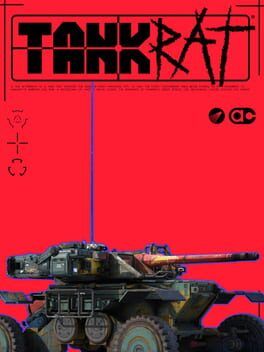

Previewing TankRat as a scrap-to-survive mecha action game, how it expands on TankHead’s roguelike roots, and smart angles to ask the devs about its evolving scavenging combat loop on PC and PS5 ahead of Spring 2026.
TankRat is not just “TankHead 2.” It is Alpha Channel taking the weird, rusty dream of its roguelike tank-builder and stretching it over a much bigger frame. Announced during The Game Awards 2025 and coming to PC and PS5 in Spring 2026, TankRat keeps the core fantasy of scraping by in a post‑apocalyptic metal graveyard, but pulls the camera back to aim at a larger world, a broader journey, and a more deliberate scrap‑to‑survive loop.
You are still Whitaker, a human mind projected into machines to survive the Event Containment Area. That region was a mystery box in TankHead, a backdrop for runs. In TankRat it becomes a place to cross. The pitch is simple and grim. Humanity clings to myths of Highpoint, a last city that might hold a cure for the spreading metallic corruption. Everything between you and that rumored sanctuary is Dead Zone, a scrapyard wilderness ruled by colossal titan machines that function as roaming checkpoints and executioners.
That shift in scope reframes what was once a run‑based gauntlet into something closer to a steel‑plated road trip. The structure seems designed to preserve the tension of permadeath and improvisation while embedding it inside a longer, more authored pilgrimage across the wasteland. Instead of “start a new sortie, see how far you get,” TankRat wants each engagement, detour, and boss kill to feel like one more step toward the horizon.
At the heart of that journey is the scrap‑to‑survive combat loop. TankHead already understood the joy of carving pieces off enemy machines and welding them onto your own chassis mid‑campaign. TankRat pushes that idea harder and cleaner, turning every encounter into a resource puzzle. When you sight a convoy of corrupted walkers in the distance, you are not just deciding whether you can win the fight. You are judging whether their limbs, cannons, and armor plates are worth the risk.
The basic rhythm looks like this. Spot a threat, engage on your own terms, blow it apart piece by piece, then roll your drone and recovery systems in to pick the battlefield clean. Every destroyed machine is potential fuel for your evolving frame. You are not merely looting color‑coded drops. You are dismantling a body to build a new one, slot by slot. Alpha Channel describes this with the line “every kill is an upgrade,” and the design backs that up. Survival is directly chained to your willingness to dismember the opposition and staple the spoils onto yourself.
That scavenging focus affects how you fight as much as how you build. You are encouraged to think about surgical damage instead of simple time‑to‑kill. Disabling weapons without destroying them, targeting joint clusters or power cores, and preserving the parts you actually want becomes part of the challenge. A badly aimed barrage might obliterate the very railgun you were hoping to harvest. In practice that turns long‑range duels and close‑quarters brawls into tense decisions about what you can afford to sacrifice, both in your current loadout and in the junk you could be wearing after the smoke clears.
TankRat’s expanded scope builds outward from that loop. Where TankHead channeled its roguelike structure into a series of discrete sorties, TankRat looks more like a long desert crossing dotted with high‑stakes arenas. Titan‑class enemies loom over that landscape as both bosses and mobile loot chests. Beating one does more than tick a box. It potentially redefines your entire build, flooding you with exotic wreckage to pick through. Those apex battles become the inflection points in a longer campaign, where a lopsided, improvised machine might suddenly harden into a specialized monster killer or a walking artillery platform.
That progression still wears its roguelike DNA openly. Alpha Channel has spoken in the past about how permadeath, randomized routes, and emergent builds gave TankHead its bite, and TankRat looks set to preserve that, even as it folds in a clearer destination and a more continuous journey. Run‑to‑run variance in parts, enemy types, and route options should keep each trip through the Dead Zone feeling unstable, with the scrap you find dictating your tactics more than any fixed skill tree.
It also gives the team a chance to sharpen the “what you take becomes what you are” thesis that sits at the center of their fiction. Whitaker is not piloting a single legendary mech. He is an idea of a person, endlessly soldered into new frames of stolen metal. When a run ends, the world moves on, but the player’s understanding of what combinations worked and how those changes felt carries forward. The metagame is not about grinding numbers as much as it is about learning which physical configurations can survive in different slices of the Event Containment Area.
With TankRat still a ways off, it is also the perfect time to start thinking about interview angles that dig into those roguelike influences instead of just asking “Why mechs?” The most obvious line of questioning is about how the team has balanced run‑based unpredictability against the more continuous journey to Highpoint. Asking where they draw the line between a classic roguelike reset and a more campaign‑driven structure should surface interesting details about meta‑progression, persistent unlocks, and how much of each run’s history lingers in the world.
Another smart angle is to talk about loot philosophy. Instead of generic drops, TankRat hinges on discrete, physical components. Pushing the developers on how they avoid “choice paralysis” when you are staring at a field of wreckage could lead to discussion of categorization, part synergy, and UI design built specifically for scavenging. You might also ask how they decide which parts are allowed to show up early, which are gated behind bosses or deep zones, and how the randomization system avoids builds that are technically viable but miserable to play.
There is also fertile ground in asking about failure. Roguelikes thrive on losing runs that still feel meaningful. TankRat’s fiction gives Alpha Channel a lot to work with here. You can ask whether your failed crossings leave any imprint on the Dead Zone, from changed enemy patrols to more subtle narrative echoes, and whether they are experimenting with any form of “legacy scrap” that follows you between attempts without turning the game into a straightforward grind.
Lastly, it is worth drilling into how they want TankRat to feel on a pad versus mouse and keyboard, especially with PS5 in the mix from day one. Roguelike tension depends heavily on responsiveness. Asking how they tune aim assist, camera behavior, and damage readability at high speeds, and how haptics are used to sell the sensation of bolted‑together junk tearing itself apart in motion, should give console players a better sense of where TankRat sits on the spectrum between methodical tank sim and quick‑cut action game.
TankRat’s promise is that it preserves the sharpest parts of TankHead’s design while building a bigger world around them. The scrap‑to‑survive loop is still the magnetic center of everything. You hunt, dismantle, and rebuild under constant pressure, trusting that the warped machine you have sculpted from your enemies will carry you one battlefield farther toward Highpoint. If Alpha Channel can keep that improvisational heartbeat strong inside a more expansive structure, TankRat could turn its rusted carcass fields into one of the most distinctive mecha action playgrounds on PC and PS5 when it rolls out in Spring 2026.