
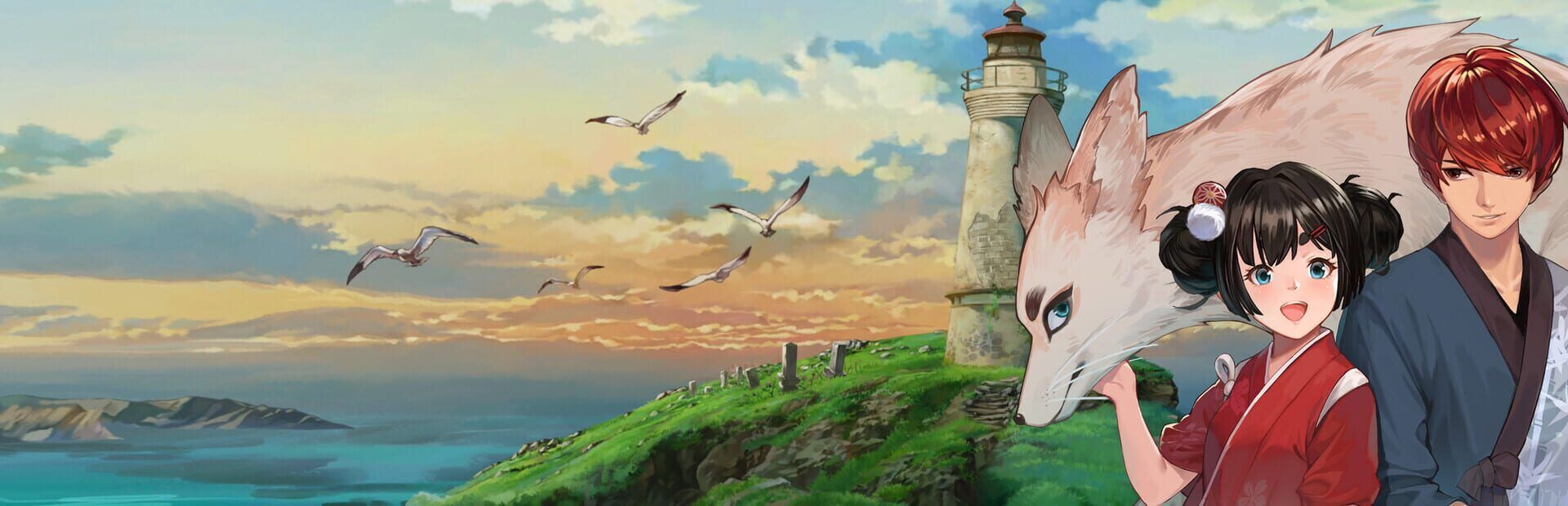
Tales of Seikyu leaves early access with a huge 1.0 update that adds marriage, more romance options, and a true endgame loop. Here is how the full release changes the cozy farming‑life formula.
Tales of Seikyu has always pitched itself as a cozier take on the Stardew-style farming-life sim, only with folklore creatures, yokai transformations, and an inn to run instead of a rundown farmhouse. With the 1.0 launch on June 11, it finally feels like the game has caught up with that pitch.
The full release does more than flip the “out of early access” switch. It locks in a proper ending to the main story, layers in real endgame progression, and turns the social side of Seikyu into something much closer to a full romance RPG thanks to expanded partners, new events, and long-requested marriage.
1.0 at a glance: a complete Seikyu
Version 1.0 brings Tales of Seikyu’s content in line with what players expect from a modern farming-life sim. The main story, which previously cut off partway through the threat of the old gods, is now fully playable from your arrival in Seikyu to its climactic conclusion. That means the inn management and farming loops finally sit inside a complete narrative rather than a string of side jobs.
What was once a cozy but slightly directionless sandbox now has an arc. You still grow crops, clean up fields, cook for guests, and explore dungeons, but these tasks are better tied into story quests and character moments that keep nudging you forward. 1.0 also tightens a lot of small systems: quest tracking is clearer, early friction points in traversal and tool upgrades are smoothed out, and key features like fox form are treated as milestones instead of background flavor.
Most importantly, 1.0 adds the long-promised marriage system and finishes fleshing out the cast of romanceable villagers, turning Seikyu into a place you can actually put down roots.
Romance in a town full of spirits
Romance was already a core draw during early access, but the 1.0 update transforms it from a half-finished system into a proper relationship sim. There are now 20 romance options in total, spread across humans, yokai, and other supernatural residents. Three new romanceable villagers join the pool for 1.0, and several existing characters gain extra dialogue, heart events, and quests that make them feel more like leads than background NPCs.
The heart system remains familiar: talk to people daily, give them gifts, and show up for their story beats to raise affection. The big shift is density and payoff. It is much harder now to exhaust a character’s scenes in a single season, and the new events are better woven into their day-to-day schedules instead of triggering only at arbitrary map locations.
The Last Word on Gaming gifts guide highlights how fleshed out the system has become. Characters have distinct “loves” and “likes” that map directly onto their personalities: the blacksmith Hephaestus covets gold ore and crafted ingots, food-focused villagers fall for elaborate dishes like Lun’s Beef Stew or Elsa’s Beef Curry, and bookish types lean into coffee and refined teas. You can grind relationships efficiently by spamming universal favorites like White Crystal, but the more interesting route is learning each villager’s quirks, chasing recipes, and using your farm and inn to create tailored gifts.
That gift economy ties romance back into the core sim layer in a satisfying way. Growing crops is not just about profit; it is a pipeline for the meals and materials that make your chosen partner light up.
Marriage and the tenth heart payoff
The defining addition in Tales of Seikyu 1.0 is marriage. You can now fully commit to your favorite villager after reaching the tenth heart event. Rather than just slapping a wedding cutscene on top of maxed friendship, the system treats marriage as the end of one arc and the beginning of another.
Reaching ten hearts involves more than just showering someone with their favorite items. You will need to see character-specific story beats, some of which ask you to engage in core mechanics like dungeon delving for rare resources, inn renovations, or festival events where your presence influences how the town perceives your would-be spouse.
The proposal and wedding sequences give Tales of Seikyu a welcome sense of ceremony that many farming-life sims still lack. They are not as elaborate as the most scripted romance RPGs, but they do react to who you chose and what you have done around town. Post-marriage life is not purely cosmetic either. Your partner’s schedule, dialogue, and involvement in certain late quests shift once you tie the knot, and in some cases you gain practical benefits such as stronger support in combat spaces or unique recipes and shop interactions.
If there is a catch, it is that these post-marriage benefits are subtle. Players who want obvious mechanical bonuses for their choice might find the changes too light. For role-players and story-first fans, though, the way marriage softly re-threads your partner into village routines lands well.
Gifts, birthdays, and the long courtship grind
The 1.0 release leans hard into the long-term satisfaction of building relationships. Birthdays are now one of the most important days on your calendar. Bringing a loved or liked gift on that date delivers a huge affection spike, effectively turning birthdays into mini-goals that you can plan an entire planting cycle around.
Because many of the best gifts come from cooking, mining, or fishing, you are constantly nudged to deepen your mastery of other systems to be a better partner. Chasing down the ingredients for Nyotengu’s beloved Sakura Wine or the perfect fish dish for Miss Ama forces you out into the wider map. Those loops make Seikyu’s new romance content feel less like a side menu and more like the glue holding together the various slices of the sim.
From a design perspective, this expanded gift web is one of the clearest ways Tales of Seikyu meaningfully evolves the genre. It is not just about who you talk to, but how your economic and crafting choices ripple through your social life.
Endgame progression: life after the final quest
The other big question around 1.0 is what happens once the story credits roll. Earlier builds of Tales of Seikyu could feel like they ran out of steam once you hit the edge of early access content. The full launch addresses that with a firmer endgame loop.
After finishing the main storyline and handling the immediate fallout, the game subtly pivots from narrative urgency to long-horizon town building. The inn becomes less a fixer-upper and more a canvas for optimization and aesthetic expression. Late-game upgrades unlock, and high-end crops, rare guests, and elite dungeon tiers start to matter more.
Some of this progression is standard farming-life sim fare, such as chasing the last tool tiers or spamming high-value crops. Tales of Seikyu adds a couple of twists. Because the town is steeped in folklore, certain late-game activities tie into yokai lore, letting you push your fox form and other transformations in more meaningful ways. There are optional challenges and repeatable encounters that keep dungeons relevant past the point where you only need them for story key items.
Romance and marriage also become part of the endgame. Maxing hearts with multiple villagers, seeing their post-marriage scenes, and fine-tuning birthday and festival routes can easily soak up another in-game year or two. The social calendar offers just enough friction that you cannot see everything in a single efficient run, which gives the game real replay value.
The downside is that if you are looking for highly structured, discrete endgame dungeons or roguelike-style challenge modes, Seikyu still leans more toward open-ended cozy play. The emphasis is on polishing your farm-inn hybrid, not slamming up against brutal tests of skill.
Does Tales of Seikyu change the farming-life formula?
Taken as a whole, the 1.0 update nudges the genre in several subtle but meaningful ways rather than reinventing it outright.
On the familiar side, you still have the expected loop of tending fields, chatting up neighbors, exploring dangerous zones for resources, and slowly mastering seasonal rhythms. Those fundamentals are comfortable and immediately approachable to anyone who has bounced between Stardew Valley, Story of Seasons, and Disney Dreamlight Valley.
Where Tales of Seikyu feels fresher is in how tightly interconnected its systems have become. Gifts and romance are not a parallel track; they are woven into farming, cooking, mining, and innkeeping. Progress on your land directly fuels your relationships, and your social choices feed back into how you experience story beats and late-game content.
The complete main story gives more structure than most peers, taking cues from narrative-heavy RPGs without sacrificing the slow life pacing. The yokai transformations give dungeoneering a qualitative difference from other sims. And the sheer breadth of romance options at launch, plus proper marriage, sets a high bar for social depth right out of the gate.
It is not a revolution. The core template remains the laid-back, multi-system slow burn that fans of the genre already love. But within that template, 1.0 Tales of Seikyu demonstrates how much stronger a cozy game can feel when its romantic, economic, and narrative layers are designed to support each other instead of existing as separate checklists.
Should you jump in at 1.0?
If you bounced off earlier builds because they felt thin or unfinished, the 1.0 release is the right time to return. The addition of marriage, the full roster of romanceable villagers, the completed story, and the soft but satisfying endgame loop make Seikyu feel like a real place you can live in, not just visit for a weekend.
For new players, Tales of Seikyu now stands as one of the more distinctive cozy sims on PC and consoles. It is not the most mechanically hardcore farming game, nor the most cinematic narrative adventure, but it threads its various systems together with more intent than many of its peers. The result is a full release that does not just tick the usual boxes of the genre. It quietly pushes them a little further down the road, toward a future where cozy games care as much about what happens after the wedding as they do about the chase.