
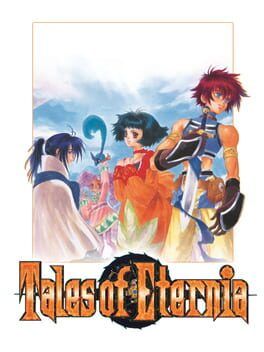

A PEGI rating has quietly outed Tales of Eternia Remastered for Switch. Here is why this leak is credible, how it fits Bandai Namco’s modern Tales roadmap, and what fans should expect from a proper upgrade of the PS1 and PSP classic.
The PEGI Leak: How Real Is Tales of Eternia Remastered?
A new PEGI rating for something called Tales of Eternia Remastered on Nintendo Switch has surfaced online, and for long-time Tales fans it reads less like a wild rumor and more like the latest move in a very clear strategy.
Ratings-board leaks are historically one of the most reliable early signals of upcoming releases. PEGI and other regional boards only rate games once a publisher submits a near-final product or a concrete SKU. That makes this listing more than simple database noise. Bandai Namco has not announced the project yet, but from a business and catalog perspective, a Tales of Eternia remaster is exactly the kind of low-risk, high-heritage move that fits what the publisher has been doing with the series over the last few years.
Why Tales of Eternia Still Matters
Originally launched on the PlayStation in 2000 in Japan (and 2001 in the West under the Tales of Destiny II name in North America), Tales of Eternia sits right at the cusp of the series going from experimental to truly defined.
It pushed the Linear Motion Battle System forward with snappier real-time combat and more expressive character abilities, while still keeping 2D sprite work and classic overworld exploration. Its cast, led by Reid, Farah, and Meredy, is still fondly remembered for its skits, humor, and the mix of fantasy and light sci-fi themes. It also spawned a short anime adaptation, the kind of multimedia presence that underscores how big it was for Namco at the time.
The game later returned on PSP in Japan and Europe, but never reached a broad global audience in portable form. North America famously missed that PSP release altogether. For anyone outside the PS1 original’s reach, Eternia has been locked behind aging hardware and patchy availability for over two decades.
That scarcity is what turns a basic Switch port into something more significant. For many players, a remaster would be the first official, accessible way to play Eternia in years, and the first time it has any realistic chance at reaching a new generation.
From PS1 and PSP to Switch: Why This Listing Stands Out
The PEGI listing highlights Nintendo Switch specifically, which is notable for three reasons.
First, Eternia has never been on a Nintendo system. The Tales series has a long history across PlayStation hardware and has flirted with Nintendo platforms through Symphonia and later releases, but this would finally pull a classic PS1-era entry into the Nintendo ecosystem. For Switch owners who joined the series with more recent releases or only know Symphonia and Vesperia, Eternia would fill in a major historical gap.
Second, Switch has become the de facto remaster hub for Tales. Bandai Namco has systematically moved earlier entries onto the platform in cleaned-up forms, building a soft anthology: Vesperia Definitive Edition, Symphonia, and other refreshed titles have all arrived there. Adding Eternia fits the clear pattern of putting legacy Tales content into a portable-friendly catalog where turn-based and action JRPGs thrive.
Third, the Switch audience is uniquely receptive to classic RPGs. The system’s library is packed with retro-styled new games, ports of PS1 and PS2-era titles, and nostalgic reissues. Eternia’s 2D art and side-scrolling combat are visually well suited to the hardware and screen resolutions, without needing the kind of visual overhaul that a more modern 3D entry would demand.
Is Switch the Only Platform, Or Just the First One Named?
The PEGI leak explicitly mentions Nintendo Switch, which has prompted speculation that Eternia Remastered might be exclusive. That is possible, but there are several reasons to be cautious about jumping to that conclusion.
Ratings boards often list platforms in waves based on what a publisher submits first. It is common to see one system appear before others are rated, even when a project is ultimately multi-platform. In some cases, publishers stagger submissions intentionally to time marketing beats or to meet different regional requirements.
For Bandai Namco, the broader Tales remaster pattern has been mixed. Vesperia Definitive Edition hit multiple platforms. Symphonia Remastered arrived on everything. Some of the more recent refreshes, however, have focused on Switch first when the primary goal was to capture that portable RPG audience.
If Bandai Namco views Eternia as a mid-tier nostalgia play rather than a flagship remaster, it could prioritize Switch as the lead platform and then expand later to PlayStation, Xbox, and PC. Eternia’s PS1 and PSP roots make it a natural fit for PlayStation in particular, where retro and classic JRPG collections are becoming a quiet draw on PS4 and PS5. PC is another likely candidate because the Tales series has slowly but consistently expanded there, and Eternia would add historical depth to that catalog with minimal technical risk.
A true Switch-only release cannot be ruled out, especially if there are licensing or cost constraints, but compared to Bandai Namco’s behavior with other classic Tales entries, treating Eternia as a one-platform remaster would be surprisingly conservative.
Eternia’s Legacy in the Tales Catalog
For Bandai Namco’s internal roadmap, Eternia fills an important evolutionary slot between the early experimenters and the series entries that broke more widely in the West.
Mechanically, Eternia is where the combat pacing, character roles, and skill flow start to feel close to what fans later experienced in Symphonia and Vesperia. It is still a 2D battles-on-a-line game, but with more fluid combo potential and party synergy than earlier titles. For players coming back from more modern action JRPGs, a well-tuned Eternia remaster could still feel responsive and readable.
Narratively, Eternia balances light-hearted party dynamics with higher-stakes multi-world conflict that would later become something of a Tales trademark. Its skit system, worldbuilding, and mix of comedy and drama are the blueprint for what many fans now think of as the series identity.
From a preservation and brand perspective, leaving Eternia stuck on aging discs and a region-limited PSP release creates an awkward gap in the Tales timeline. A remaster solves that by curating the series history and making it easier for new fans of recent entries to trace the design lineage backwards.
What a Credible Remaster Should Offer in 2026
Remasters of PS1 and PSP-era RPGs vary wildly in ambition. Some are mostly resolution bumps, others take the opportunity to add substantial quality-of-life features and interface revisions. Given Bandai Namco’s recent track record and the expectations of modern Tales fans, a credible Eternia remaster would likely focus on several key areas.
The most basic expectation is an across-the-board visual clean up. That means higher resolution character sprites, sharper backgrounds, and UI elements that scale properly to 1080p output on TV and still read clearly in handheld mode. Simple filtering and upscaling will only go so far, so a mix of redrawn interface assets and carefully handled sprite scaling is the likely route.
Secondly, performance should be absolute. Eternia’s original combat was built around fast real-time decisions. Ensuring a consistent frame rate both in handheld and docked modes is essential if the remaster is to feel snappy and not like a museum piece.
From a usability standpoint, modern Tales ports typically add quality-of-life improvements such as faster text, optional message speed settings, quick save options, and remappable controls. Eternia’s PSP version already made some adjustments to fit portable play, so it would not be surprising to see the remaster pick up or refine those ideas with multiple save slots, suspend saving, and perhaps an option to speed up certain animations or skits.
One of the most requested upgrades for legacy RPG reissues in general is some form of battle speed or encounter tuning. While Tales is more action-driven than turn-based, features such as encounter rate adjustments, battle retry convenience, or experience modifiers could help new players enjoy the story without grinding fatigue, particularly for those approaching Eternia as one of several remasters in a backlog.
Audio is a wild card. Tales of Eternia has a memorable soundtrack and voice work tied tightly to its original era. A careful remaster could provide higher fidelity audio, cleaner voice samples, and perhaps expanded language options, though licensing and archival constraints might limit how far Bandai Namco can go.
Cosmetic improvements such as artwork galleries, music players, and series-lore extras would also make sense in a 2026 remaster. These features are relatively inexpensive to implement and reinforce the positioning of Eternia Remastered as both a playable classic and a preserved artifact of JRPG history.
How Eternia Fits Into Bandai Namco’s Broader Tales Strategy
Zooming out, the suspected Tales of Eternia Remastered is not just a nostalgic nod. It aligns with several strategic goals Bandai Namco appears to be pursuing for the Tales brand.
First, it supports a shift toward catalog depth. Instead of relying purely on new flagship releases, Bandai Namco has been making key back-catalog entries easily accessible and visible across modern platforms. Each remaster not only sells on its own terms but also acts as a soft marketing funnel for the latest mainline releases.
Second, it helps diversify the series image. Many newer fans primarily associate Tales with the more polished 3D look of Vesperia or even more recent entries. Eternia shows a different side of the franchise, one rooted in expressive 2D art and a tighter, more obviously anime-inflected presentation. Putting that side of Tales on a mainstream, current platform strengthens the brand as a multi-era, multi-style RPG lineage rather than a narrow slice of modern anime action.
Third, Eternia fills in an international access gap. Bringing it to Switch, and potentially to other platforms later, normalizes series history globally. That makes long-term fans easier to retain between big tentpole releases and makes the catalog less fragmented between regions.
Finally, remasters like Eternia are relatively low risk compared to full new games. They extend the life of existing assets, keep the Tales name in circulation, and can be slotted into quieter release windows while larger projects are in development. As long as they avoid technical stumbles or bare-minimum treatment, they help maintain goodwill among the fanbase.
What To Watch For Next
Until Bandai Namco formally reveals Tales of Eternia Remastered, details about platforms, features, and release timing remain speculative. The PEGI listing, combined with the company’s visible remaster strategy and Eternia’s position in the series timeline, makes this leak feel very credible.
The key signals to watch will be whether the announcement later confirms additional platforms beyond Switch, how prominently the remaster is positioned in marketing, and whether early footage suggests a thoughtful upgrade or a purely functional port. Those answers will determine whether Eternia Remastered is simply a long-overdue way to replay a classic or a stronger statement about how Bandai Namco plans to treat the rest of the Tales back catalog in the years ahead.