
A retrospective on Takashi Tezuka’s four-decade influence across Mario, Zelda, and Yoshi, the design philosophies he helped define, and what his retirement means for Nintendo’s next creative generation.
Nintendo’s latest financial report quietly confirmed a seismic shift inside the company. On June 26, Takashi Tezuka will retire from his role as Executive Officer, closing the book on more than 40 years of work that helped define how Mario jumps, how Zelda dungeons feel, and how Yoshi turns experimentation into joy.
It is hard to find another designer whose fingerprints touch so much of Nintendo’s identity. Tezuka joined in 1984, still a university student, and within a year he was assistant director and designer on Super Mario Bros. Soon after he directed the original The Legend of Zelda, then Super Mario Bros. 3, Super Mario World, A Link to the Past, and Yoshi’s Island. In recent years he served as producer or supervisor on Super Mario 3D World, Super Mario Maker, Breath of the Wild, and Super Mario Bros. Wonder.
Across those projects you can trace a consistent design philosophy: playful clarity, dense possibility, and systems that quietly teach you how to play. As Nintendo prepares for life after Tezuka, that philosophy may be his most enduring legacy.
Building the language of Mario
When players talk about how Mario "feels," they are usually talking about ideas Tezuka helped codify. Super Mario Bros. did not just introduce precise jumps and power-ups. It built a dictionary of visual cues and cause-and-effect rules that would carry through the next four decades.
Blocks that look slightly suspicious often hide secrets. Coins guide your eye toward safe jumps. Enemies are arranged in patterns that invite you to try a move, then raise the stakes in the next screen. These concepts are easy to take for granted now, but in 1985 they were being invented on the fly.
Tezuka’s work as director of Super Mario Bros. 3 sharpened this language. That game is obsessed with variation grounded in consistency. The player understands that a Goomba behaves like a Goomba wherever it appears, which gives designers permission to surround it with increasingly wild ideas. Kuribo’s Shoe, airships, maze-like fortresses, overworld maps, mini-games, and power-ups like the Tanooki Suit all play within established rules. The world feels surprising because the underlying grammar is so stable.
Super Mario World pushed further into expressive level design. On SNES, Tezuka oversaw a Mario that could store power-ups, explore a more cohesive overworld, and discover branching exits that reshaped the map. Again, the key is clear communication. Secret exits are hinted at through off-kilter geometry or oddly placed coins. Ghost houses turn into puzzle-box levels that rarely explain themselves in text but are carefully staged so curiosity is always rewarded.
Even as he moved into higher-level production roles, you can see this lineage in later Mario games he shepherded. Super Mario 3D World rebuilds that classic clarity in 3D, structuring each level around a single idea that is introduced, twisted, then paid off in a finale. Super Mario Maker and its sequel are perhaps Tezuka’s most explicit statement: they hand Mario’s design language to players and trust that those rules are robust enough to support millions of stages.
Zelda and the power of readable worlds
If Mario is where Nintendo refined its moment-to-moment feel, Zelda is where Tezuka’s influence shows in structure and world logic. Directing the original The Legend of Zelda and A Link to the Past, he helped define how Nintendo builds spaces that feel mysterious but never incomprehensible.
The first Zelda relies heavily on pattern recognition and inference. Bombable walls, hidden staircases, and cryptic hints are placed just logically enough that players can connect the dots. A Link to the Past takes that philosophy and wraps it around a more linear narrative and dual-world structure. Every dungeon is a knot of interlocking shortcuts, keys, and locked doors, designed so that experimentation nudges you toward the correct solution.
Tezuka’s approach to Zelda is less about sprawling lore and more about how each item changes the way you read a space. The hookshot is not just a traversal tool, it is a new verb that recontextualizes old rooms. The same mindset reappears decades later in Breath of the Wild, which he oversaw as production supervisor. Even though that game is credited primarily to a younger team, its systemic consistency feels like a natural evolution of Tezuka’s early work.
In Breath of the Wild the Sheikah Slate powers are simple and predictable, but combining them in an open environment leads to wild outcomes. The game takes the old Zelda promise of "try something and see what happens" and spreads it across an entire physics-driven world. It is the 8-bit bombable wall idea applied to hills, weather, and fire.
Yoshi and playful experimentation
Tezuka’s legacy is not limited to structure and rules. It also lives in tone. During Super Mario World’s development he helped co-create Yoshi, famously pushing for Mario to ride a dinosaur after earlier hardware made that concept difficult. Yoshi’s eventual starring roles in games like Yoshi’s Island reveal another side of Tezuka’s design instincts.
Super Mario World 2: Yoshi’s Island embraces a hand-drawn, storybook aesthetic that was almost defiant in the mid-90s, as rival consoles chased realism. Mechanically, it transforms platforming into playful problem-solving. Flutter jumps, egg throws, and enemy transformations enable a wide range of expressive play. Stages invite you to poke at every corner and experiment, with puzzles that are forgiving enough to keep momentum but intricate enough for completionists.
This balance of softness and challenge echoes through later Yoshi titles and into other "gentler" Nintendo projects in which Tezuka was involved, from certain Animal Crossing entries to the approachable yet tricky design of modern 2D Marios.
Guiding Nintendo from director to mentor
After the SNES era Tezuka’s role gradually shifted from hands-on director to producer and executive. He became general manager of Nintendo’s EAD division alongside Shigeru Miyamoto, and later an executive officer at Nintendo EPD. That put him in a position to shape culture as much as individual games.
Look at Super Mario Maker, a project he produced. On paper it is a level editor, but its real value is educational. It reveals how professional Mario stages are taught, escalated, and subverted. The game’s tools gently push players toward good habits, from coin trails that show jump arcs to clear midpoints and staging. It is a teaching tool for the Nintendo way of building levels, distilled from decades of Tezuka’s experience.
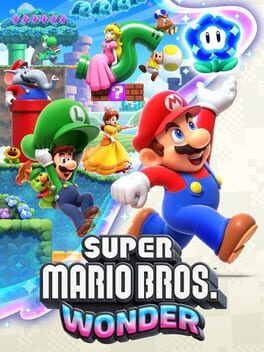
Super Mario Bros. Wonder, the most recent 2D Mario he produced, feels like a deliberate handoff moment. Younger directors and designers deliver some of the strangest, most playful ideas the series has seen in years, but everything is grounded in the same legible logic that has defined Mario since the Famicom. Wonder Flowers distort levels with musical set pieces, stampedes of enemies, and offbeat transformations, yet each scenario is clearly communicated and contained. It is chaos wrapped in structure, a design trick Tezuka has relied on for decades.
The design philosophies Tezuka leaves behind
Across Mario, Zelda, and Yoshi, several core principles run through Tezuka’s work.
First is readable complexity. Games he touches rarely hide rules from the player. Surfaces, shapes, and enemy behavior are designed so that you can infer how things work without a tutorial screen. This ensures that when surprises do occur, they feel like extensions of what you already know rather than arbitrary exceptions.
Second is playful iteration. Levels tend to introduce one idea, test you on it, then twist it. This pattern is obvious in classic Mario stages, but you can see the same cadence in Zelda dungeons and Yoshi’s Island’s set pieces. It is a rhythm that has quietly influenced countless other platformers and action-adventures.
Third is trust in curiosity. Tezuka’s games consistently reward players for poking at the edges. Secret exits in Super Mario World, heart pieces in A Link to the Past, and collectibles in Yoshi’s Island are placed so that the act of exploring is satisfying in itself. You learn that slightly unusual patterns usually mean something is hidden, and the game rarely betrays that trust.
Finally, there is a commitment to warmth. Even in their hardest moments, Tezuka’s games lean toward bright colors, inviting worlds, and humor. Enemies are often more charming than menacing. Failure is frequent but rarely punishing enough to break the spell. That sensibility has become synonymous with Nintendo as a whole.
Retirement and the next creative generation
Tezuka’s retirement arrives during a wider generational shift at Nintendo. Other long-serving figures like Hideki Konno and Kensuke Tanabe are also stepping back, while Shigeru Miyamoto focuses increasingly on films and theme parks rather than direct game direction. Many of the key creatives behind Switch-era hits are from a younger cohort that grew up playing the very games Tezuka shipped.
In practical terms, much of the handover has already happened. Breath of the Wild and Tears of the Kingdom were led by directors like Hidemaro Fujibayashi and producers such as Eiji Aonuma, with Tezuka acting in support and oversight roles. Super Mario Odyssey and Wonder were driven by newer directors under his production umbrella. The fact that these titles still feel unmistakably "Nintendo" suggests that Tezuka’s design values are now institutional rather than personal.
The question is how those values will evolve without his day-to-day guidance. One likely outcome is more experimentation within familiar frameworks. Wonder shows that Nintendo’s younger teams are comfortable pushing Mario into weirder territory, knowing that the underlying grammar is solid. Future 2D or 3D Mario games could lean harder into asymmetrical multiplayer, user-generated content, or systemic interactions while preserving clear communication and approachable controls.
For Zelda, Tezuka’s exit may further solidify the series’ shift toward large, systemic worlds. Breath of the Wild’s success has given Nintendo permission to pursue bold structural changes as long as they preserve readable rules and rewarding exploration. Younger designers who cut their teeth on shrine design and open-world encounters are now in a position to define what Zelda looks like for an entirely new audience.
Yoshi and similar character-driven series may benefit from a renewed focus on expressive art styles and accessibility. With the heavyweights of the Famicom era stepping back, there is room for teams that grew up with Yoshi’s Island to reinterpret its playfulness for modern players, possibly through smaller-scale projects or downloadable experiments alongside marquee releases.
A legacy built to outlast its creator
Takashi Tezuka’s retirement marks the end of an era, but his greatest achievement might be that Nintendo is prepared to move on without losing itself. Over four decades he helped build not just individual classics, but a shared design language that spans Mario, Zelda, Yoshi, and beyond.
That language prizes clarity over opacity, curiosity over instruction, and joy over spectacle. It lives in every ? Block that hides a secret, every dungeon room that folds back on itself, every Yoshi level that encourages one more experiment. As Nintendo’s next creative generation steps up, they are not starting from scratch. They are speaking in a dialect that Tezuka helped write, with the freedom to invent new phrases for players yet to grow up with their first Mario or Zelda.
Whatever Nintendo’s next hardware or headline franchise looks like, the quiet rules behind the fun will still be there. That may be the clearest sign of Tezuka’s influence. He helped design games that teach you how to play them, and in the process, he taught Nintendo how to keep reinventing itself without losing its heart.