
How the quiet co-architect of Mario and Zelda is handing off the executive keys while staying in the design trenches as a producer.
Nintendo’s late June shareholder meeting confirmed a milestone that had been looming over the company’s fanbase for months. After more than four decades at the company, Takashi Tezuka has stepped down from his role as an executive officer. On paper that sounds like the end of an era, the moment when one of the studio’s most important creative figures finally walks away.
But Tezuka insists that is not what is happening. He is shedding a corporate title, not his influence on Nintendo’s games.
In a Q&A at the meeting, he clarified that he will continue at the company as a production-focused producer. Rather than leaving outright, he is moving out of the boardroom and back toward the day-to-day work of nurturing projects. For a developer who has always seemed more comfortable behind the controller than behind a podium, this feels less like a retirement and more like a realignment.
The architect behind Mario’s “second voice”
Shigeru Miyamoto’s name is so tightly bound to Super Mario Bros. that it can be easy to forget how collaborative those early games were. Tezuka joined Nintendo in 1984 and almost immediately became Miyamoto’s closest creative partner on platformers and action adventures. While Miyamoto sketched characters and big concepts, Tezuka often took responsibility for turning those ideas into coherent worlds, rhythms and rules.
Super Mario Bros., Super Mario Bros. 3 and Super Mario World all carry his fingerprints. Tezuka drove level design, structure and pacing, the parts of a platformer that players feel long after they forget specific enemy placements. The sense that a Mario stage teaches you something, tests you on it, then twists it in a playful way owes as much to Tezuka’s sensibilities as to Miyamoto’s.
His influence only became clearer as the series expanded. Super Mario World 2: Yoshi’s Island took a mascot that was essentially a power-up and reimagined him as a protagonist, with levels built around flutter jumps, egg tossing and improvisation. Tezuka helped define Yoshi’s playful tone and looser physics, which in turn set the DNA for a whole branch of Nintendo’s platformers.
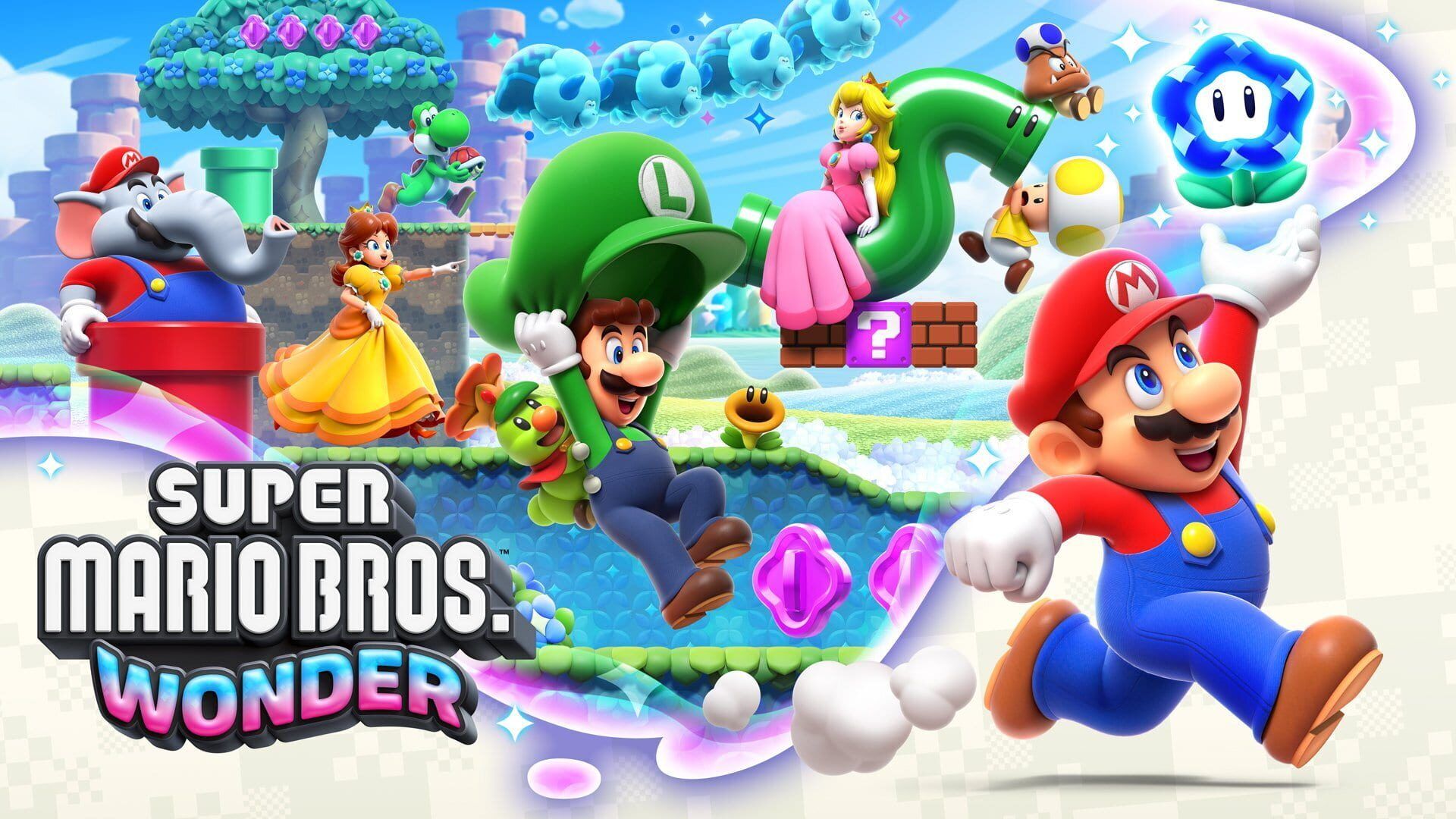
That same mix of clarity and whimsy continues right through to Super Mario Bros. Wonder, where he served as producer. Wonder’s shifting level gimmicks, badge-based abilities and co-op chaos are all built on a foundation that Tezuka helped codify: teach clearly, surprise constantly, and never let new ideas drown out simple, readable play.
Zelda’s worldbuilder and the rise of narrative texture
If Mario is where Nintendo perfects movement, The Legend of Zelda is where it perfects place. Tezuka’s role in defining Hyrule is sometimes overlooked, but he was vital on the original The Legend of Zelda and its successors. Where Miyamoto often approached the series from his childhood memories of exploring the countryside, Tezuka pushed for connective tissue: story hooks, characters, and a sense that the world had history.
Zelda II: The Adventure of Link leaned harder into RPG structure partly through his influence. Later, on titles like The Legend of Zelda: A Link to the Past and The Legend of Zelda: Link’s Awakening, he championed stronger narrative framing and distinctive personalities for NPCs. That attention to small character beats and tone paved the way for later entries to be more emotionally expressive without losing the series’ exploratory soul.
Tezuka’s approach to Zelda was always less about lore bibles and more about atmosphere. Villages needed to feel lived in, dungeons needed an identity beyond their gimmicks, and the journey needed quiet moments to contrast with boss fights. Those priorities echo in how Nintendo approaches worldbuilding today, from the playful NPCs of modern Mario games to the environmental storytelling threaded through its newer IP.
A quiet shaper of Nintendo’s development culture
Over the years, Tezuka’s responsibilities broadened past individual projects. As an executive officer, he became one of the key figures shaping Nintendo’s internal development culture. Even in that role, he pushed against the stereotype of the distant executive. Colleagues often described him as a hands-on mentor who stayed close to teams.
Internally, he advocated for an environment where experimentation is protected but rigor is non-negotiable. Concepts could be wild, but controls had to feel right, visual communication had to be readable, and failure states had to stay fair. That balance is core to how modern Nintendo games are built. Designers are encouraged to pitch strange mechanics, yet every prototype is tested for charm and clarity before it graduates into a real feature.
He was also an important bridge between generations. As the company scaled Nintendo EPD and spun up multiple Mario and Zelda lines, Tezuka helped codify processes that had once lived only in veteran designers’ heads. He turned instinct into shared language: how to structure a world map, when to introduce a power-up, how to design a level that works for both kids and speedrunners.
This mentorship role is exactly what he says he wants to lean into as a producer. By stepping away from corporate responsibilities, Tezuka can spend more time in reviews, playtests and one-on-one feedback sessions, passing on techniques he once absorbed through proximity to Miyamoto.
What stepping down actually changes
The confusion around Tezuka’s status came from how “retirement” was framed. Nintendo’s financial documents and early news reports focused on him leaving his role as executive officer, which in a Western context often reads as full retirement. His recent clarification draws a sharper line between corporate governance and day-to-day game creation.
Practically, this shift means he will no longer be part of the group that sets Nintendo’s high-level business strategy. He will not be in the same meetings about hardware roadmaps, organizational charts or quarterly guidance. That influence now falls more squarely to a younger cadre of executives who have grown up inside the Switch era.
Creative oversight, however, is another story. As a production producer he can choose where his time has the most impact. On flagship Mario titles, he can still weigh in on the feel of a jump or the logic of a world map. On experimental projects, he can act as a safety net, making sure they still meet Nintendo’s standards for usability and coherent design.
In some ways, this could increase his tangible footprint on upcoming games. Administrative duties tend to swallow time. Removing those responsibilities frees him to spend more days in front of development kits and fewer in front of slide decks.
Mario, Zelda and the next generation of custodians
Tezuka’s transition comes as Nintendo prepares for a hardware shift and positions a new generation of creators in the spotlight. Super Mario Bros. Wonder was itself pitched as the work of a younger team, even as veterans like Tezuka and Miyamoto provided guidance from a distance. That model of creative succession, where elders steer rather than drive, is becoming standard across the company.
For Mario, that means future 2D and 3D entries are increasingly likely to be directed by designers who grew up playing his work instead of making it. Their instincts on difficulty, humor and pace are shaped by decades of Nintendo history and a modern understanding of player expectations. Tezuka’s continuing presence as producer offers continuity. He can question when something drifts too far from the series’ core while still encouraging experiments like Wonder’s chaos-inducing Wonder Flowers.
Zelda is already walking a similar path. After the reinvention seen in Breath of the Wild and Tears of the Kingdom under Hidemaro Fujibayashi, Tezuka’s historical perspective helps ensure that even radical shifts still feel like Zelda. He has seen the series survive side-scrolling detours, handheld reimaginings and tonal swings. That experience is valuable when evaluating bold pitches for what comes after the open-air Hyrules.
Behind both series is a deeper cultural commitment that Tezuka has helped reinforce: Nintendo games must be approachable without being disposable, playful without being throwaway. It is a philosophy that outlives job titles.
A legacy that is still in motion
Looking back across Tezuka’s career, it is tempting to treat this executive step-down as a convenient endpoint. The narrative symmetry is strong. He joined Nintendo shortly after the Famicom era started reshaping the industry, helped build Mario and Zelda into global fixtures, then rose to the executive floor as those series became pillars of a platform empire.
Yet the story he and Nintendo are telling is different. Rather than a curtain call, this is a pivot. He appears less interested in being the public face of the company and more interested in staying close to its work. For fans worried that the “soul” of Nintendo might walk out the door with his retirement notice, that distinction matters.
If anything, Tezuka’s move highlights how the company now treats experience as a resource to be circulated instead of a trophy to be retired. By keeping him in a producer seat, Nintendo preserves a living link to the design philosophies that made Super Mario Bros., The Legend of Zelda and their descendants so enduring.
Takashi Tezuka may no longer be an executive officer, but his real job has not changed. He is still one of the people teaching Nintendo how to be Nintendo, one prototype, one level and one mentoring session at a time.