
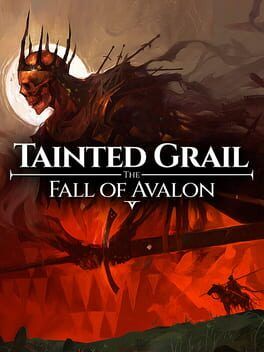
With Tainted Grail: The Fall of Avalon passing 1 million sales, we look at how its “indie Skyrim” pitch, smart updates, and steady word of mouth turned a dark Arthurian experiment into a credible stopgap for Elder Scrolls fans.
Tainted Grail: The Fall of Avalon has quietly crossed a threshold that very few first person open world RPGs outside the AAA space ever reach. Questline Studio and Awaken Realms have confirmed that the dark Arthurian adventure has now sold over 1 million copies across PC, PlayStation 5, and Xbox Series X|S, not long after the launch of its first major expansion, Sanctuary of Sarras.
For a game that began life as a modest Early Access curiosity built around a board game license, that number matters. It suggests that Tainted Grail did not just catch a brief Steam front page spike and fade. It found a real audience and kept it, long enough to make the “indie Skyrim” label feel less like marketing and more like a reasonable way to place it in the current RPG landscape.
From Early Access oddity to open world contender
Tainted Grail’s path to 1 million runs through a familiar modern route for ambitious indies. The game moved through Early Access on PC first, iterating on combat, interface, and quest design while slowly building a niche following. The 1.0 launch in May 2025 was the real inflection point, with a sharper opening, better onboarding, and an overhauled main quest that gave its bleak Arthurian setting a stronger throughline.
Where many open world projects in this tier struggle is simply scope. Players have lived in Skyrim for more than a decade, and even big budget competitors typically pitch something narrower. Tainted Grail aimed higher than most. Across its regions it offers 50 to 70 hours of main adventuring, with hundreds of side quests, optional dungeons, and small environmental stories. That scale, combined with first person combat and spellcasting that immediately reads as Elder Scrolls adjacent, made it easy for players to understand what it was trying to be.
The difference is tone. Avalon is not a power fantasy postcard. It is a broken, rotting island where Arthurian myths have curdled. Knights are not paragons, the Round Table is only a memory, and most quests resolve to hard compromises rather than clean victories. That darker angle gave Tainted Grail an identity that kept it from feeling like a simple tribute act, even while it wore its inspirations on its sleeve.
The “indie Skyrim” pitch that actually landed
Marketing an RPG as “like Skyrim” is usually a quick way to get players’ expectations to a place no mid budget project can survive. In Tainted Grail’s case, the comparison ended up working because the overlap is tangible in the basic verbs. You explore in first person, raid ancient tombs, sneak past or backstab enemies, loot everything that is not nailed down, and sink points into builds that let you lean into archery, melee, or magic.
Crucially, Questline made the island feel dense rather than wide for its own sake. Villages are layered with factions and local grudges. Forest clearings hide text heavy micro stories that often end in new gear or a moral punch. The game leans on writing and choice consequences more than systemic simulation, which fits the smaller budget but also helps it distinguish itself from Bethesda’s approach.
That mix proved easy for creators and press to sell. Coverage and storefront copy framed it as an indie attempt at that Elder Scrolls feeling, except drenched in grim Arthurian myth. For players burned out on waiting for The Elder Scrolls 6, that sounded less like hyperbole and more like permission to give it a shot.
Ongoing updates that built confidence
Hitting 1 million a few months after an expansion is no accident. Post launch support has been a big part of why Tainted Grail kept selling instead of doing the usual steep decline after launch.
Early on, Questline spent its patches on fundamentals. Performance on lower spec PCs and consoles improved, quest bugs were hammered out, enemy encounters were tuned to feel less spiky, and quality of life additions made the clunkier parts of the experience easier to live with. Players who bounced off the Early Access version often returned later to something more cohesive.
Sanctuary of Sarras, released in May 2026, signaled a shift from fixing to expanding. The add on adds a new region with roughly 15 hours of content, folds in an extra progression layer, and delivers fresh gear and builds. That kind of expansion tells newcomers that the game is alive rather than abandoned and gives on the fence buyers a clear “complete package” moment.
For a mid sized RPG, that perception is critical. Big studios can weather a rough launch and promise multiple years of patches. Smaller teams need to prove faster that the game you buy today is better than what launched yesterday. Tainted Grail has done that steadily, and the sales milestone is evidence that players noticed.
Word of mouth in a hungry niche
Even with a strong hook, Tainted Grail was never going to match AAA marketing spends. Its ascent instead looks much more like the classic slow burn. Steam impressions, Reddit threads on r/Games and RPG focused communities, and console players sharing “Skyrim but grimmer” clips did as much work as official trailers.
Several things helped that word of mouth stick. First person RPGs of this type are surprisingly rare outside the Elder Scrolls lineage, which means there is real pent up demand. The game’s ties to a recognizable board game and Awaken Realms’ existing tabletop fanbase gave it an initial pool of curious buyers. Once those players started describing a janky but ambitious open world where choices often mattered more than polish, it fit the exact profile of a cult favorite.
Streaming also played a part. Open world questing with reactive outcomes makes for good live content, and the dark fantasy aesthetic looks striking in screenshots and thumbnails. Around launch it even managed to outdraw some older Bethesda titles on Twitch for a time, putting it in front of precisely the audience most likely to care.
By the time the 1 million sales announcement arrived, Tainted Grail’s reputation had settled into a comfortable groove. It is the game friends recommend with caveats, along the lines of “If you can handle a bit of jank, this absolutely scratches the Elder Scrolls itch.” For a studio of Questline’s size, that reputation is gold.
How it stacks up as an Elder Scrolls alternative
So the big question: if you are one of the millions waiting for The Elder Scrolls 6, is Tainted Grail a real alternative or just a stopgap curiosity?
As a pure replacement, nothing quite fills the specific mix of simulation, modability, and systemic chaos that defines Bethesda’s series. Tainted Grail does not offer that same breadth of sandbox interactions, housing systems, or long tail mod scenes. It is more authored, more focused on narrative branches and moral choices, and less on emergent accidents.
Where it succeeds as an alternative is in the emotive layer of exploring a dangerous world from a grounded first person perspective. You get the same rhythm of spotting a distant ruin, heading off the main road, and losing an hour to some side story that started with a corpse by the roadside. Builds feel distinct enough that rolling a new character with a different focus changes your approach to dungeons and boss encounters. Its darker tone and willingness to let things go badly also give questlines a bite that even some big AAA RPGs lack.
If you go in expecting a leaner, rougher, but more morally twisted take on the Elder Scrolls formula, Tainted Grail fits that bill well. It is not trying to be a full premium replacement as much as a distilled spin on the thing players miss.
What the 1 million milestone means for the genre
For the wider RPG space, Tainted Grail’s success is meaningful because it proves there is room between sprawling AAA epics and tightly scoped indies. An “indie Skyrim” is not just possible as a pitch. It is commercially viable if the execution understands where to scale back and where to lean in.
The game shows that aiming for a single player, story focused open world with strong quest writing and a recognizable fantasy hook can pay off without nine figure budgets. It also underlines the importance of Early Access used as a genuine development tool rather than a soft launch and the value of dropping a substantial expansion within a year to reenergize interest.
Perhaps most importantly, it broadens the menu for players. Instead of waiting a decade between mainline Elder Scrolls entries, RPG fans now have a growing roster of spiritual cousins that can keep that itch scratched. Tainted Grail is one of the clearest examples yet that a smaller studio can credibly step into that space and keep growing.
A credible stopgap while Tamriel sleeps
Taken in isolation, 1 million copies is a tidy milestone. In context, it is a statement that there is a sizable audience eager for this exact style of RPG and willing to live with some rough edges if the world feels worth inhabiting.
Tainted Grail: The Fall of Avalon will not replace Skyrim in the pantheon, and it is not trying to. What it has done is carve out a respected niche as the dark, scrappy cousin you turn to while Tamriel slumbers. For Questline Studio and Awaken Realms, that is a success story. For Elder Scrolls fans, it is one more credible journey to get lost in while waiting for that next long walk out of Helgen.