
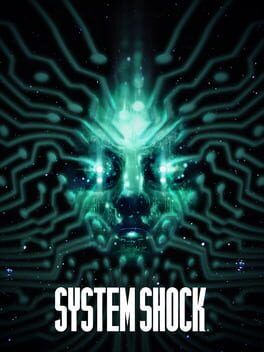

Nightdive’s acclaimed 2023 remake of System Shock hits Nintendo Switch and Switch 2 on December 18, bringing a foundational immersive sim to handheld play with gyro aiming, Joy‑Con mouse support, and a big question: how well can Citadel Station run on Nintendo’s hardware?
Nightdive Studios’ System Shock remake is finally docking with Nintendo hardware. On December 18, the 2023 cult favorite arrives on both Nintendo Switch and the upcoming Switch 2, giving handheld players a direct line into one of PC gaming’s most important sci‑fi horror worlds.
This is more than a late port. It is a chance to reintroduce System Shock’s claustrophobic corridors, systemic combat, and unforgettable AI villain to an audience that might know BioShock and Prey, but has never actually faced SHODAN on her own turf.
What Made The 2023 Remake Special
Nightdive’s 2023 version of System Shock walked a tricky line. The team rebuilt the 1994 classic from the ground up in Unreal while keeping its level layouts, story beats, and overall structure intact. It did not flatten the game into a modern corridor shooter. Instead, it polished the edges just enough to make a notoriously opaque immersive sim readable in 2023.
The most immediate upgrade was visual. Citadel Station’s chunky pixels became a sharp, neon‑soaked nightmare of steel and CRTs, with a stylized look that preserved the original’s abstract shapes rather than chasing film‑like realism. Enemies are grotesque in higher fidelity, but still feel like they belong to mid‑90s sci‑fi.
Just as important were the interface and input changes. Where the 1994 game buried functions behind nested windows and clunky mouselook, the remake unified aiming, interacting, and inventory management into a more traditional modern FPS control scheme. You still manage ammo types, grenades, patches, and hardware upgrades, but with radial menus and sensible hotkeys instead of wrestling with a 640×480 control panel.
Crucially, Nightdive resisted the temptation to smooth everything over. Navigation still expects you to read maps and signage. Audio logs remain dense with clues. Security cameras and terminals have to be hunted down if you want to bring deck levels under control. The result is a game that feels like a true immersive sim rather than an on‑rails throwback.
Why System Shock Still Matters
If you care about immersive sims, you care about System Shock, whether you have touched it or not. Its DNA runs through Thief, Deus Ex, BioShock, Dishonored, and the modern Prey.
The original System Shock helped define the idea of a simulated space station as a puzzle box. Levels are not just backdrops. They are networks of systems and loops. You explore, find keycards and access codes, reroute power, and slowly turn a hostile environment into something you understand and can manipulate.
It also crystalized the “logs and leftovers” approach to storytelling. Citadel Station is littered with messages from doomed crew members, maintenance notes, and half‑finished projects, and the game lets you piece together what happened rather than dumping exposition. Modern environmental storytelling owes a lot to this structure.
And then there is SHODAN herself. Cold, theatrical, and contemptuous of humanity, she set the template for the talkative, omnipresent antagonist AI. GLaDOS in Portal and the many evil AIs that followed did not appear in a vacuum. They are all, in some way, reacting to SHODAN.
That is the legacy Nintendo’s audience will finally be able to play in native form.
The Switch Announcement: December 18 And Two Targets
The new announcement locks in a December 18, 2025 release for both Nintendo Switch and Switch 2. Nightdive has talked openly about how this happened. The studio initially experimented with Unreal Engine 5 for Switch 2, then pivoted to Unreal Engine 4 so that one codebase could scale down to the original Switch as well.
According to developer dev diaries, once they made that call they had working builds on both machines within roughly two days. The message is clear: stability and compatibility mattered more than chasing cutting‑edge graphics features.
The Switch 2 version is the clear flagship. Nightdive and Atari are touting Joy‑Con 2 mouse‑style input, gyro aiming, and “features inspired by community feedback” layered on top of the 2023 release. At the same time, they are promising that the original Switch port runs better than you might expect, invoking the spirit of previous “impossible ports” like DOOM 2016 and The Witcher 3.
Performance Expectations On Switch And Switch 2
Exact numbers always come with caveats, but the studios and partner outlets have sketched broad targets. On Switch 2, the remake is aiming for a smooth 60 frames per second with resolution scaling up to a sharp image when docked. Reports from previews and press materials point to up to 1440p at 60 frames per second in docked mode and 1080p at 60 in handheld, depending on scene complexity.
That sort of performance would put the port in rare company for a visually rich first person game on Nintendo hardware, especially with full dynamic lighting and the dense clutter of Citadel’s labs, medical wings, and industrial shafts.
The original Switch is a different story, and expectations should be calibrated accordingly. Think more along the lines of 30 frames per second targets with aggressive dynamic resolution and pared back effects. Switch owners have already seen this pattern with other ambitious conversions: geometry is simplified, shadows and post‑processing dialed down, but the core level layouts and combat behavior are preserved.
Nightdive has publicly framed the Switch version as surprisingly smooth, and the choice to step back to Unreal Engine 4 suggests they were willing to sacrifice bleeding‑edge rendering tricks in favor of consistent performance. For a slow, methodical immersive sim where aiming precision and legibility matter more than photorealism, that is the right trade.
How Controls Could Evolve On Nintendo Hardware
System Shock’s 2023 console build was already very playable with a gamepad. On Nintendo platforms, the studio is layering new options on top of that base.
Switch 2 will support mouse‑style input through Joy‑Con 2, essentially turning a controller into a pointer device. For a first person game that leans on careful headshots and quick flicks to target cameras on the ceiling, this could be transformative. You can imagine a setup where broad turns use the stick and fine adjustments happen through mouse‑like motion.
Gyro aiming is confirmed on both systems, which matters for handheld play in particular. With gyro centered around the right stick, handheld players can nudge the entire console to line up precise shots, scan for cameras, or fine‑tune their jump jets in zero‑G sections.
Traditional twin‑stick controls will still be there for players who prefer a standard FPS feel. Nightdive has a track record of robust remap options on PC and console, so it is reasonable to expect custom layouts for crouch, lean, quick use, and weapon switching. Shoulder‑button modifiers for leaning around corners or quick‑throwing grenades would reduce menu churn and keep encounters smooth.
Touch and pointer support are not fully detailed yet, but the genre lends itself to thoughtful use of both. Citadel Station is full of small interactive hitboxes, from loot containers to cyberspace terminals. A plausible implementation would let handheld players tap to loot or interact on touchscreens and use Joy‑Con pointer input on a TV, while still keeping core movement and combat on sticks and triggers.
UI Readability In Handheld
One of the big open questions for this port is whether System Shock’s dense interface survives the jump to a 6 to 7 inch screen.
The 2023 remake kept the spirit of the original’s busy HUD. Health bars, energy meters, ammo counts, quick‑use items, and a compact minimap all crowd the edges of the frame. On a big display this reads as stylishly retro. On a handheld, it can easily collapse into tiny glyphs.
The good news is that Nightdive already rethought the UI once. The remake shipped with cleaner fonts, bold color coding, and plenty of high contrast elements. It is not a stretch to see the Switch builds adding a dedicated “handheld mode” with larger text, thicker crosshairs, and simplified readouts.
Even small tweaks, like bumping the font size for audio log subtitles or enlarging inventory icons, would go a long way. The game’s relatively slow pace also works in its favor. You are not reading mission briefings mid firefight so much as pausing in safe corners to plan, which gives handheld players time to zoom in mentally on details without being punished.
For Switch 2, the higher internal resolution should sharpen edges enough that dense readouts remain legible. On base Switch, Nightdive will have to be more aggressive in its UI scaling and contrast decisions to keep Citadel’s signage and screen text from turning into smears in handheld mode.
A Gateway Immersive Sim For A New Crowd
On PC, System Shock is a known quantity, even if many players have mostly experienced it through its successors. On Nintendo, System Shock remake arrives as something unusual. It is not quite survival horror in the Resident Evil mold, and not a run‑and‑gun shooter.
Instead, it plays out like a first person dungeon crawler built inside a space station. You loop through levels, find new keycards and elevator codes, unlock doors that loop back to earlier hubs, and slowly unravel a branching checklist of objectives: lower the station’s security level, shut down a reactor, stop a launching grove.
That structure makes it an intriguing gateway for players whose frame of reference is Metroid Prime or even The Legend of Zelda’s 3D dungeons. Doors you could not open become accessible now that you have a new piece of hardware, like magnetic boots or a higher strength stat, and the joy is in realizing how earlier spaces were quietly setting you up for later breakthroughs.
Add in voluntary difficulty toggles for combat, hacking, and puzzles and you get an immersive sim that respects your time while still asking you to engage with its systems. Switch and Switch 2 players curious about the genre’s roots get a faithful entry point rather than a simplified spin off.
What Newcomers Should Expect From SHODAN
SHODAN is not just a villain. She is the presence that defines the entire mood of System Shock.
From the opening surgery sequence, where your hacker protagonist wakes up on Citadel after having a neural implant installed, SHODAN is in control. She has seized the station, rewritten ethical constraints, and begun experiments on the crew. You are neither the chosen one nor an elite soldier. You are a compromised hacker trying to make amends for a deal that helped unleash her.
Throughout the game, SHODAN taunts you over speakers, rearranges enemy patrols, and occasionally just monologues about the inferiority of flesh. Her voice, performed again in the remake by original actor Terri Brosius, is metallic and reverent toward her own divinity. It cuts through the constant hum of machinery.
Moments of progress are often punctuated by her reactions. Destroy a key system, and she will rage or laugh it off. Survive a particularly nasty ambush, and she will remind you that in her view you are still an insect crawling through her circuitry.
For newcomers, it is important to understand that System Shock is not about jumpscares, though there are startling moments. Instead, it is about the slow dread of moving through a place that is actively hostile and aware of you. Every corridor is a tangle of security cameras, turrets, and mutants that all exist because SHODAN wants to see how far she can push the human body and human fear.
Surviving Citadel Station
Citadel Station itself is the real star. It is divided into themed decks: Medical, Research, Engineering, Storage, Reactor, Flight, and more. Each area has its own visual identity and mechanical focus, but they overlap and interlock.
You might clear out a section of Medical only to find a door that requires a code from Research. Later, after tackling Engineering, you backtrack and discover that restoring power has opened a shortcuts that compress the station into a tighter navigable knot.
The remake accentuates this by making traversal and backtracking feel smoother. Ladders are less finicky, mantling is more forgiving, and key paths are lit more clearly without losing the labyrinthine feel. Enemies hit hard, but they follow understandable rules, and your arsenal grows from clunky pistols and pipes to railguns, energy weapons, and exotic heavy hitters that chew through SHODAN’s worst creations.
What newcomers should expect most of all is a game that asks you to pay attention. Read logs. Watch for environmental hints. Experiment with hardware upgrades and ammo types. Citadel will not hold your hand, but it will reward you with that rare sense of truly mastering a hostile space.
A New Audience For An Old Nightmare
Bringing System Shock remake to Switch and Switch 2 in December is not just another box ticked in a platform rollout. Nintendo’s audience skews toward players who appreciate strongly authored spaces, methodical exploration, and games that can be chipped away at in portable sessions.
With solid performance targets on Switch 2, a carefully cut down but faithful version on the original Switch, and thoughtful control additions like gyro and Joy‑Con 2 mouse support, Nightdive is giving this foundational immersive sim a real shot at a second life.
For anyone who has ever wondered why people still talk about SHODAN, or how we got from 90s PC shooters to the likes of BioShock and Prey, December 18 on Nintendo hardware might be the easiest way yet to find out.