
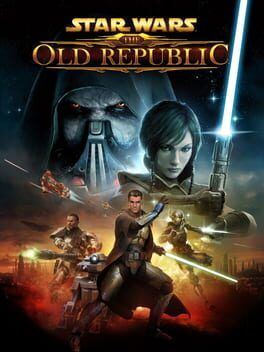
BioWare almost rebuilt Star Wars: The Old Republic into a KOTOR‑style RPG. Here is what James Ohlen’s “New Republic” reboot could have meant for Star Wars fans, why EA’s board shut it down, and what it tells us about SWTOR’s long‑term future.
BioWare nearly got a second shot at Knights of the Old Republic. Not with a numbered sequel, but by taking its ambitious MMO, Star Wars: The Old Republic, and rebuilding it into something much closer to a traditional, story‑driven RPG.
Former SWTOR director James Ohlen has now laid out just how far that plan went and how abruptly it died. The pitch, codenamed “The New Republic,” would have turned SWTOR into “KOTOR Online,” before EA’s board of directors stepped in and killed it. For Star Wars RPG fans, it is one of the clearest glimpses yet of the KOTOR successor they never got.
This is a look back at what that reboot was trying to fix, what it might have given the genre, why EA likely walked away, and what it all implies for SWTOR’s future.
What BioWare Wanted To Fix With “The New Republic”
When SWTOR launched in 2011 it was marketed as “a fully voiced story‑driven MMO,” but structurally it owed more to World of Warcraft than to KOTOR. Ohlen has since admitted that he had never played an MMO before being put in charge of a project that reportedly cost around $300 million to build. The result was a game torn between two identities.
On the one hand, SWTOR delivered eight fantastic class stories that often felt like mini KOTOR campaigns: companion loyalty, light and dark choices, personal villains and bespoke finales. On the other, everything surrounding that narrative layer was a familiar treadmill of kill quests, gear progression, and raid‑centric endgame design.
“The New Republic” pitch was an attempt to resolve that split. Ohlen has described it as a chance to “put right everything” he felt SWTOR got wrong. The intent was not a simple content expansion but a fundamental reorientation of the game toward BioWare’s single‑player RPG roots.
He spent roughly six months around 2015 building out the concept. It was imagined as a long‑term transformation rather than an overnight relaunch, gradually reshaping SWTOR into something you primarily play for narrative arcs and meaningful character progression rather than for endless MMO grinds.
KOTOR Online: What The Reboot Might Have Looked Like
BioWare has never published a design document for The New Republic, but between Ohlen’s comments and the trajectory of later expansions, you can sketch the broad outline of what “KOTOR Online” likely meant in practice.
The clearest signal is the way Knights of the Fallen Empire and Knights of the Eternal Throne turned SWTOR into almost a single‑player campaign. Chapters played out like episodes of a TV season, companions were heavily scripted, and group content sat off to the side. Those expansions feel less like a standard MMO update and more like a prototype of the reboot philosophy.
A full KOTOR‑style reboot probably would have pushed that even further. The leveling experience could have been streamlined into discrete, replayable story arcs. Class identity and personal choices would sit at the heart of the experience instead of being bookends to a shared grind. Group content would be framed around narrative context rather than item levels.
Most importantly, Ohlen has emphasized a shift toward finite, completable adventures. Much like KOTOR or Baldur’s Gate, the appeal would be that you can play through a major story, finish it, maybe roll an alt with different moral choices, then move on. In hindsight that forecast lines up neatly with what he is now saying as creative lead on Star Wars: Fate of the Old Republic: “A lot of players just want to play something and finish it.”
The pitch even attracted interest at Lucasfilm. Ohlen says Kathleen Kennedy and Dave Filoni both liked the concept, with Filoni suggesting a timeline adjustment of a few hundred years if Lucasfilm ever wanted to intersect it with other projects. This was not a fringe idea inside the Star Wars ecosystem. It was a serious attempt to make SWTOR the definitive narrative Old Republic platform.
For fans who still replay KOTOR every few years and look at live‑service models with suspicion, it is hard not to see The New Republic as the spiritual KOTOR 3 they never received.
Why EA’s Board Likely Killed The Reboot
If the leadership at BioWare Austin, Lucasfilm, and individual EA executives like Patrick Söderlund were open to the idea, why did it die at the board level?
Across interviews, Ohlen points to one blunt answer: money. SWTOR’s original development was infamously expensive, often pegged at about $300 million. It launched strong, but subscriptions declined quickly and the game shifted to free‑to‑play within a year. While SWTOR stabilized over time and built a loyal niche, it never became the WoW‑scale juggernaut EA had imagined.
Against that backdrop, asking for another huge spend on the same product was always going to be a hard sell. A true reboot using years of senior BioWare talent, reworked systems, broad narrative revamps, and likely modernized tech is not cheap. To a board still remembering the original write‑downs, The New Republic looked less like a high‑upside pivot and more like reopening an old wound.
There are other business‑side reasons it probably failed to clear the bar.
First, timing. Around 2015 EA was leaning heavily into live services built around recurring monetization and mass‑market reach. A pivot from a traditional MMO toward something more like a series of finite RPG campaigns might have been read as reducing long‑tail engagement. That ran directly against the live‑service orthodoxy that later produced games like Anthem.
Second, portfolio strategy. EA’s slate already included Battlefield, FIFA, and other heavy hitters. Star Wars licensing deals were also shifting, including projects at DICE and Respawn. If the board had to choose between backing a known cash generator, a new premium IP, or a risky, expensive reboot of a mixed‑result MMO, SWTOR was always the softest option.
Third, opportunity cost at BioWare. Studio leadership and senior writers were being pulled toward Dragon Age, Mass Effect, and eventually Anthem. Committing them to a multi‑year SWTOR rework would have meant other projects slipping further. From a high‑level view, keeping SWTOR on maintenance mode with periodic story drops may have seemed safer than betting the farm on a full reconstruction.
The cumulative message from EA’s board was simple: we already paid for this once. We are not paying again.
What Star Wars RPG Fans Lost
For Star Wars RPG fans, the canceled reboot hits a specific nerve. KOTOR I and II remain iconic precisely because they are focused, authored adventures. You build a character, make morally loaded choices, and see them through to a conclusion. The scope is big, but you are still living a story that feels like it belongs to you.
SWTOR always sat awkwardly between that fantasy and the demands of an MMO. Even at its best, your grand personal arc has to coexist with a world full of other chosen ones running the same flashpoints and repeating the same dialogue choices.
The New Republic was a rare chance to tilt that balance decisively back toward the RPG side while still leveraging SWTOR’s greatest strength, its absurd volume of voice‑acted Star Wars narrative. Imagine a modern KOTOR experience where your existing legacy, your stable of companions, and the game’s huge stable of planets evolve across big, discrete campaigns instead of fracturing into a dozen different systems competing for your attention.
That is what makes the story so bittersweet: this was not just a nostalgic pitch. It was an attempt to solve real structural problems with SWTOR and align it with where audience tastes were quietly heading. The rejection did not just keep SWTOR as it was. It also signaled a wider reluctance at big publishers to invest in narrative‑first live games unless they could promise Fortnite‑level returns.
In a parallel universe where The New Republic got a green light, the Old Republic era might have become EA’s prestige single‑player Star Wars platform, with SWTOR serving as the connective tissue for a sequence of authored campaigns instead of a traditional MMO treadmill. Instead, RPG‑leaning fans are left hanging between an aging MMO, a troubled KOTOR remake, and smaller‑scale narrative projects.
Fallout Inside BioWare
Ohlen has called the board’s decision “the beginning of the end” of his time at BioWare. That framing matters because it reveals how closely his identity as a designer was tied to making story‑first RPGs inside big franchises.
SWTOR’s rejection did not happen in isolation. Around the same period BioWare was grappling with Anthem’s chaotic development, Mass Effect: Andromeda’s mixed reception, and shifting corporate expectations around what its games should be. For a veteran who had helped define the studio’s golden age with Baldur’s Gate, KOTOR, and Dragon Age: Origins, being told that a carefully considered, story‑centric reboot was not worth the investment sent a clear message about priorities.
His eventual exit in 2018 and later burnout at Archetype underscore how punishing that era of live‑service expectations was on veteran RPG designers. The canceled reboot is not just a missed game. It is a microcosm of how pressure for endlessly monetizable games can grind down the people most invested in narrative craft.
Does SWTOR Still Have A Long‑Term Future?
Twelve‑plus years on, SWTOR is in a strange but familiar position for long‑running MMOs. It transferred from BioWare to Broadsword Online Games in 2023, a shift that effectively locked in its status as a “heritage” MMO: stable, modestly updated, designed to keep a dedicated community happy rather than to chase explosive growth.
From that vantage point, the rejection of The New Republic almost looks like EA’s informal verdict on SWTOR’s ceiling. The game is expected to persist, not transform.
Yet a quiet, steady future is still a future. SWTOR has survived where many licensed MMOs have not, largely because it offers something no other online game quite matches: fully voiced Star Wars role‑playing with light and dark choices, companion relationships, and a vast archive of story arcs to chew through.
In practical terms, that probably means SWTOR’s long‑term trajectory looks like this.
It continues as a mid‑scale MMO with slow but steady updates, the occasional new story beat, and quality‑of‑life work to modernize aging systems. Its population ebbs and flows with content drops and Star Wars media cycles. It remains a comfortable home for players who like the fantasy of living in the Old Republic era with friends and alts.
What it almost certainly will not become is the KOTOR Online that Ohlen imagined. Turning it into a pure narrative platform would require risks and investment that EA has already signaled it does not want to take.
There is a certain melancholy in that realization, but it also clarifies SWTOR’s value. Instead of waiting for it to evolve into something it is not, both players and developers can treat it as what it already is: a uniquely rich archive of Star Wars stories that can coexist alongside newer, more focused RPGs like Fate of the Old Republic.
The Old Republic’s Legacy, With Or Without The Reboot
BioWare’s canceled plan to reboot SWTOR into a KOTOR‑style RPG sits at the intersection of two realities. One is creative, driven by designers who see the potential in reshaping an MMO into a narrative playground. The other is corporate, driven by boards that remember nine‑figure budgets and insist on predictable returns.
For Star Wars RPG fans, The New Republic is likely destined to live as a “what if” scenario, a reminder that the people who built KOTOR did try to recapture that magic on a larger scale, and got further than anyone realized before being stopped.
SWTOR, meanwhile, keeps quietly orbiting in the background, sustained by a dedicated community and an enormous backlog of stories. It may never become KOTOR Online, but it also does not have to disappear for a new generation of Old Republic games to emerge. Instead, it stands as a living museum of a particular era of BioWare design, one that might yet inform how future studios blend authored storytelling with online worlds even if The New Republic itself never left the drawing board.